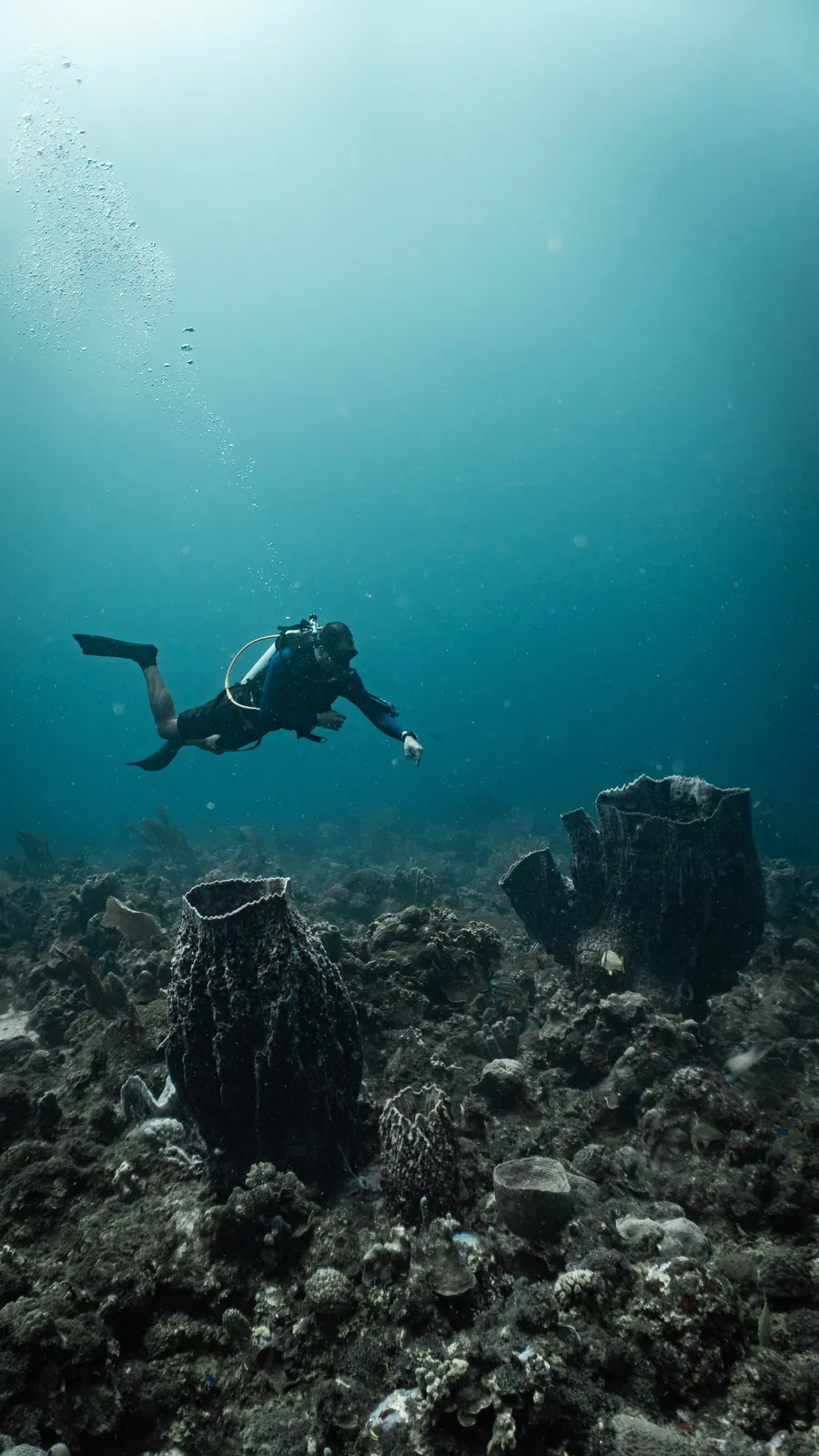
Sneezing with a regulator in your mouth sounds alarming, but it happens to divers all the time and is rarely a problem. Your body knows how to sneeze around the mouthpiece, and the reflex passes in an instant. Knowing what to expect removes the surprise, so you can simply carry on enjoying the reef.
Your regulator stays in place
When you sneeze underwater, the air and force are directed out through your regulator or around it, and out of your nose inside your mask. The mouthpiece is designed to be bitten gently and held by your lips, so a sneeze does not usually dislodge it.
Even if it did, you already know how to recover and clear a regulator from your training, which is exactly why we practice that skill so many times.
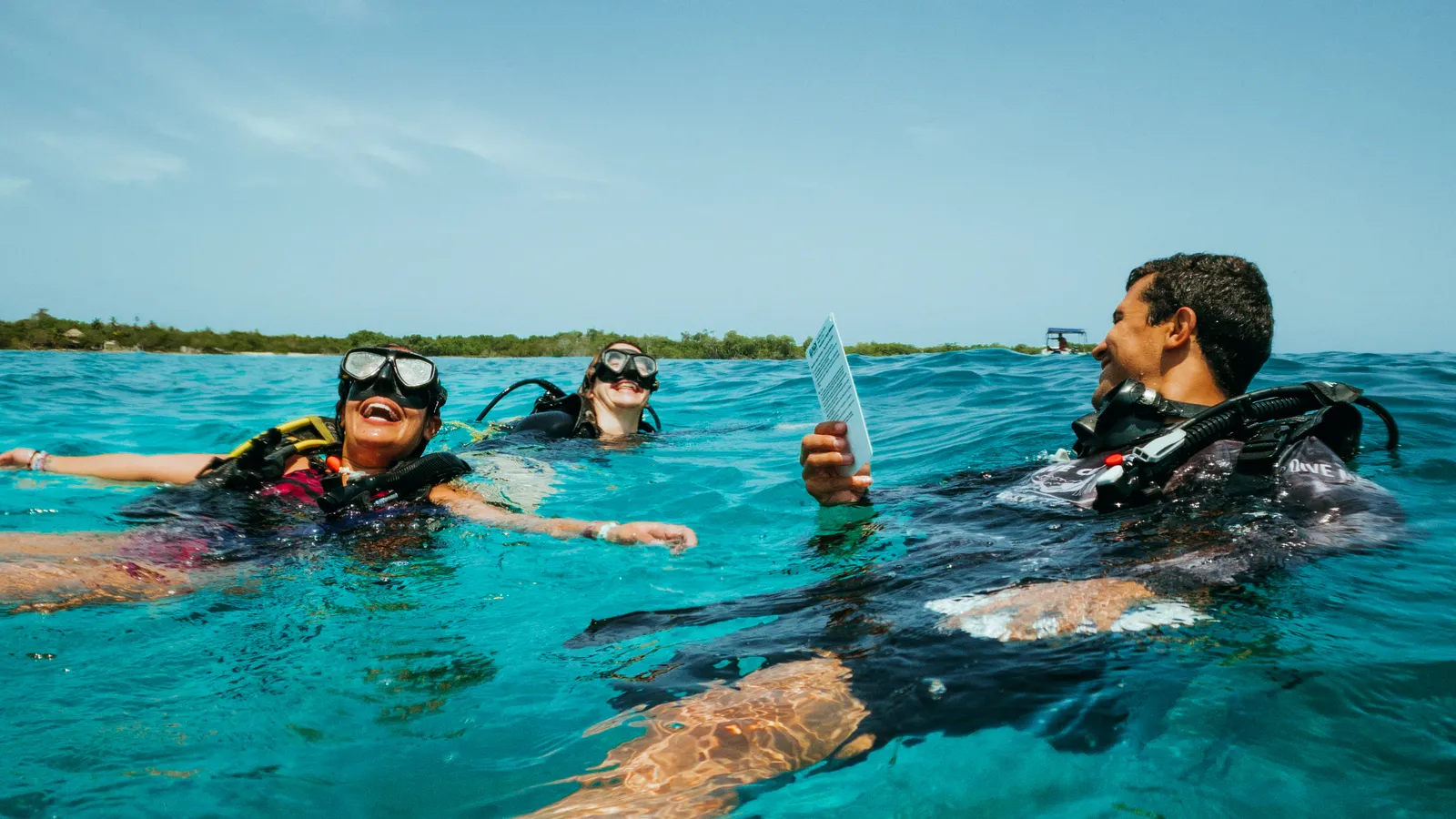
Your mask handles the rest
A sneeze often sends a little moisture into your mask. That is completely normal, and a quick mask clear, another basic skill you learn on day one, tidies it up in seconds.
Because your nose sits inside the mask, none of that reaches the water or bothers anyone. It stays a private, minor event.
If you have a cold, wait
The one time sneezing matters is when it signals congestion. A blocked nose or sinuses make it hard to equalize your ears, which can cause pain and a risk of barotrauma. If you cannot clear your ears comfortably, do not dive.
The safe rule is simple: never dive with a heavy cold, active sinus infection, or when you are relying on decongestants to breathe.
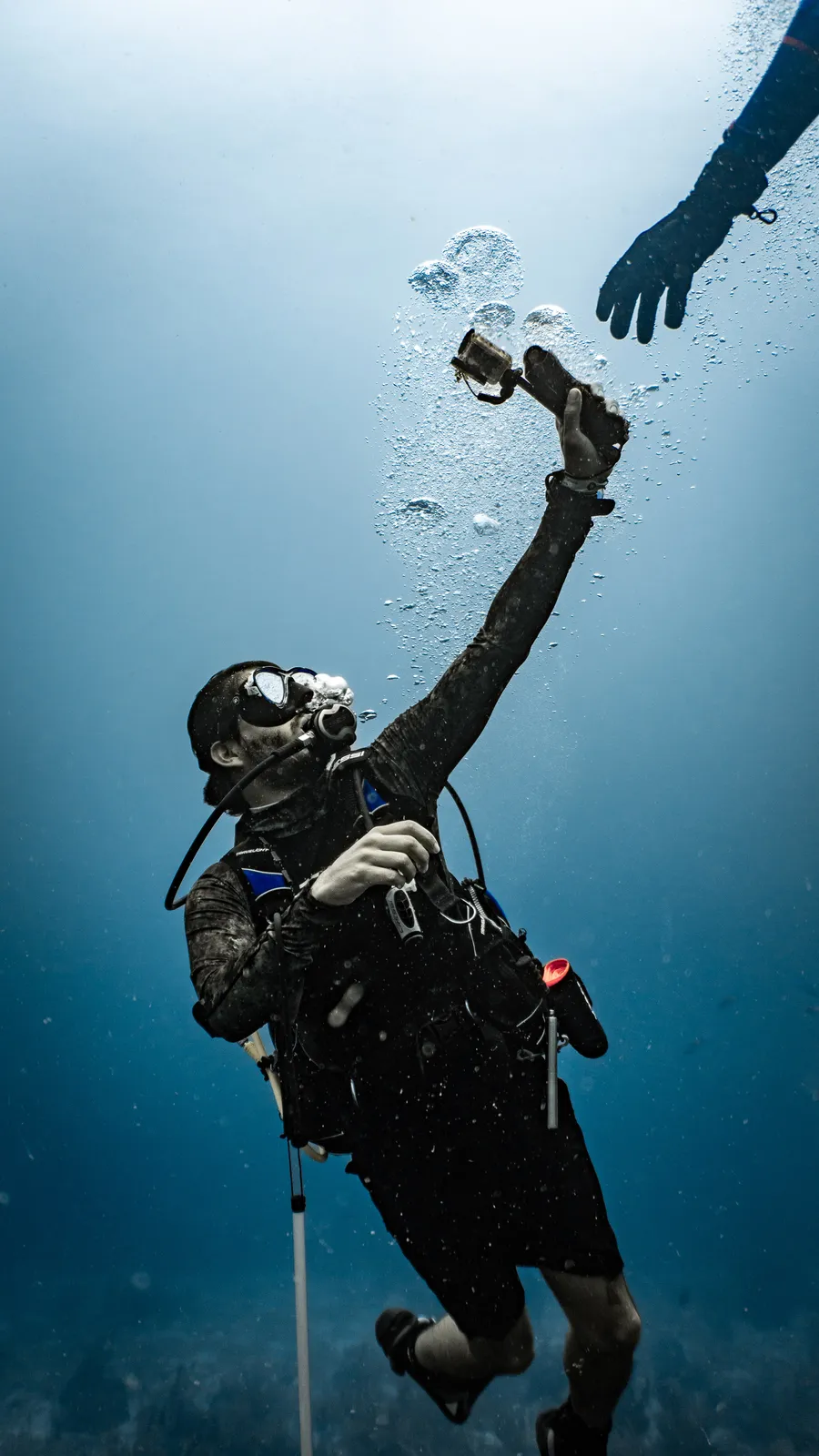
Do not fight the reflex
The worst thing you can do is tense up and try to suppress a sneeze forcefully, which can strain your ears or sinuses. It is much better to relax, let it happen naturally, and keep your airway easy.
Divers quickly learn that their body handles these reflexes on its own. Coughing and yawning underwater work the same way and are equally harmless when you stay calm.
Dive relaxed with us
Small surprises like a sneeze are exactly why we dive in calm, warm water with an instructor close by. Around Isla Fuerte our conditions are gentle and the visibility is generous from March to May and September to October, so there is time to pause and reset whenever you need.
New to all this? Our patient PADI instructors walk you through every reflex and skill. See our courses and dives and read more guides before you visit.
Important
This is general educational information, not medical advice. Always complete the medical questionnaire honestly, dive within your training and, if in doubt, consult a diving physician or contact DAN (Divers Alert Network). In an emergency in Colombia, the nearest hyperbaric chamber is in Coveñas.


