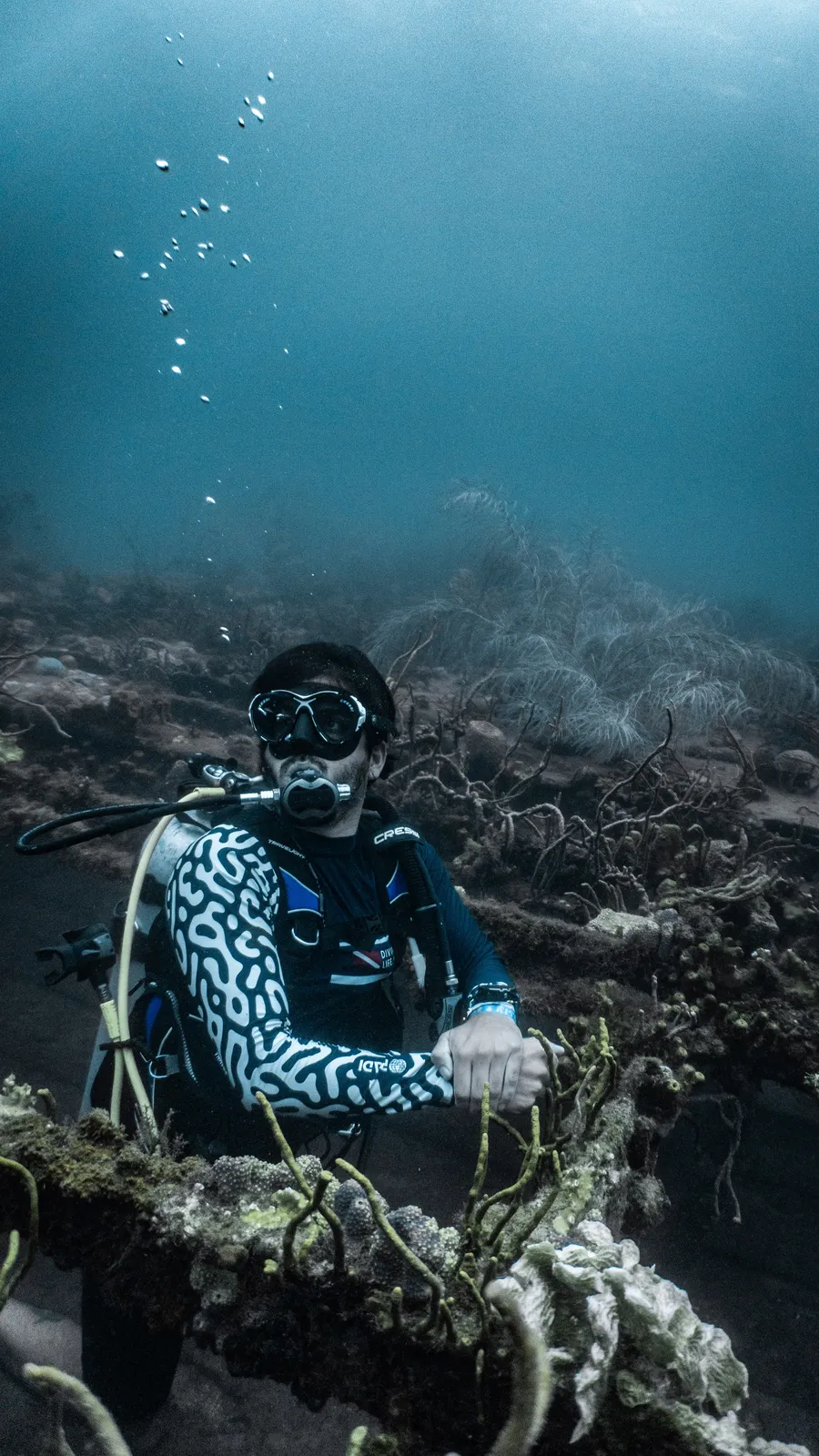
As you breathe compressed air at depth, your body absorbs extra nitrogen in proportion to the pressure around you. If you ascend too fast or stay down too long, that dissolved nitrogen can come out of solution and form bubbles in your blood and tissues. The result is decompression sickness, commonly called "the bends". It sounds frightening, but recreational diving done by the book keeps you far from the conditions that cause it, and understanding it is the first step to never experiencing it.
Why nitrogen is the culprit
The air we breathe is about 78% nitrogen, a gas your body does not use. At the surface this is harmless, but underwater the higher pressure forces more of it to dissolve into your tissues. The deeper and longer you dive, the more nitrogen builds up.
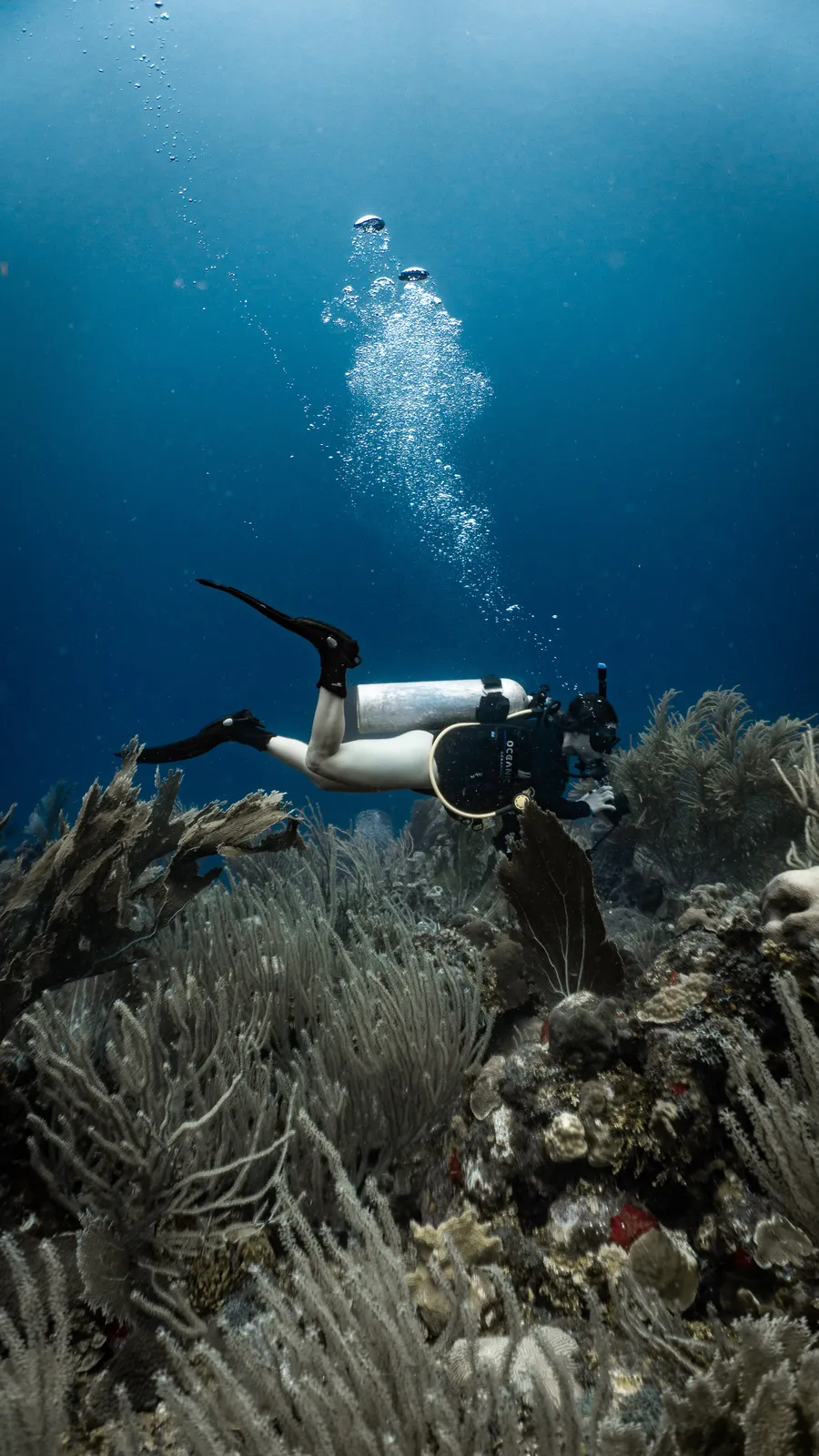
On the way back up the pressure drops, and your body needs time to release that gas gently through your lungs. A slow, controlled ascent lets the nitrogen leave as tiny harmless amounts rather than as bubbles.
Symptoms to know
Signs usually appear within minutes to a few hours after surfacing. They range from mild to serious, and any of them after a dive should be treated as an emergency:
- Joint or muscle pain, often in the shoulders, elbows or knees
- Unusual fatigue that feels out of proportion to the dive
- Skin itching, mottling or a blotchy rash
- Numbness, tingling or weakness in a limb
- Dizziness, confusion or trouble breathing
Do not wait to "see if it passes". Early oxygen and medical evaluation make a real difference.
How we prevent it in Isla Fuerte
At Nautilus we dive well within the no-decompression limits, ascend slowly, and finish every dive with a safety stop. Our warm water, a steady 27 to 29°C all year, means we are comfortable and relaxed rather than cold and stressed, which also lowers risk.
On deeper sites such as Bushnell, our advanced open-water wall, we plan conservative times and monitor every diver's computer. On the gentle reefs of Rosa Vieja we rarely even approach the limits.
Your safety net
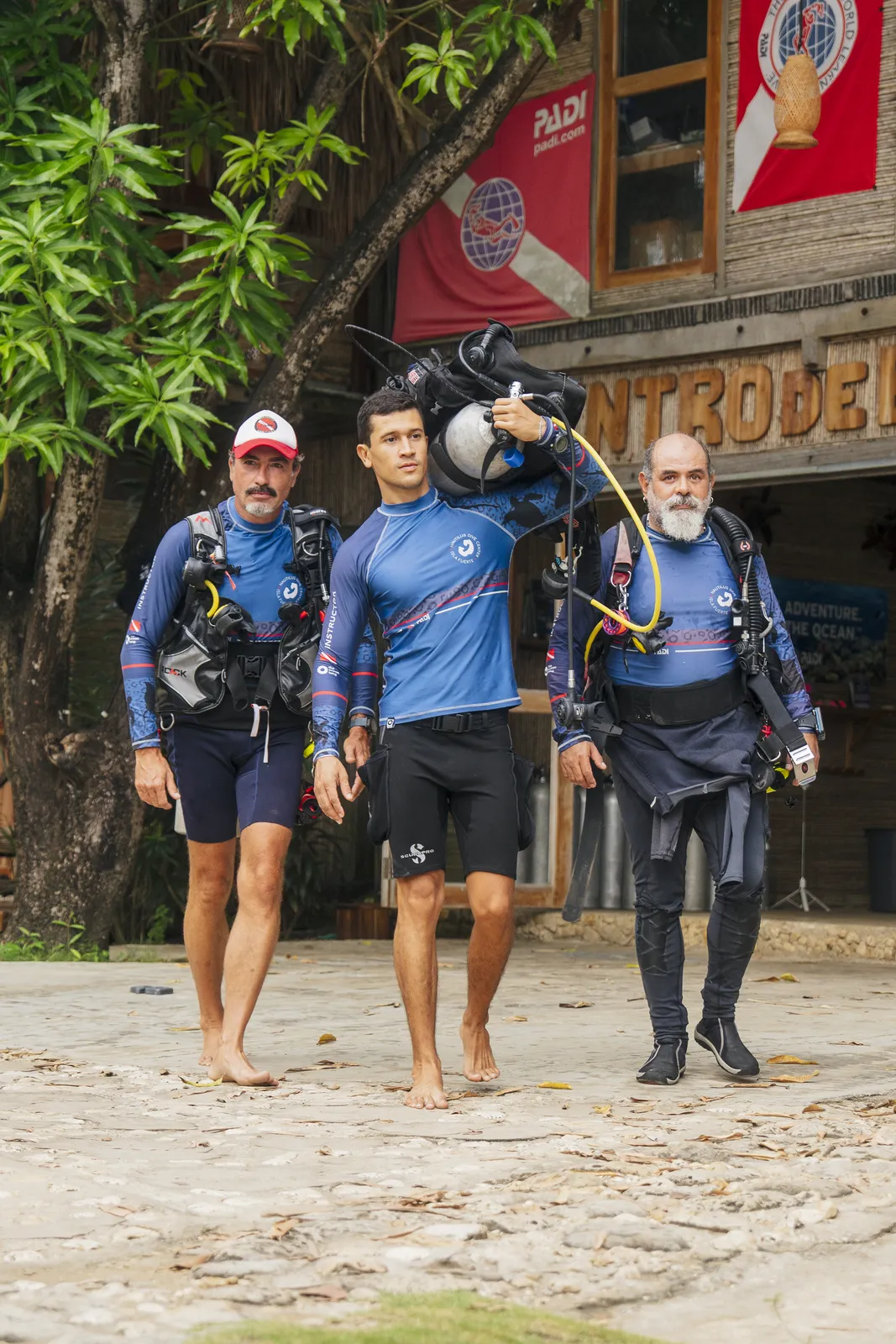
Every Nautilus service includes Magenta dive insurance, our instructors are PADI certified, and we carry emergency oxygen on the boat. The nearest hyperbaric chamber is in Coveñas, and the Divers Alert Network (DAN) advises on evacuation if it is ever needed.
Want to understand the numbers behind safe diving? Our courses and dives teach you exactly how to plan your own profiles, and you can browse more guides to keep learning.
Important
This is general educational information, not medical advice. Always complete the medical questionnaire honestly, dive within your training and, if in doubt, consult a diving physician or contact DAN (Divers Alert Network). In an emergency in Colombia, the nearest hyperbaric chamber is in Coveñas.