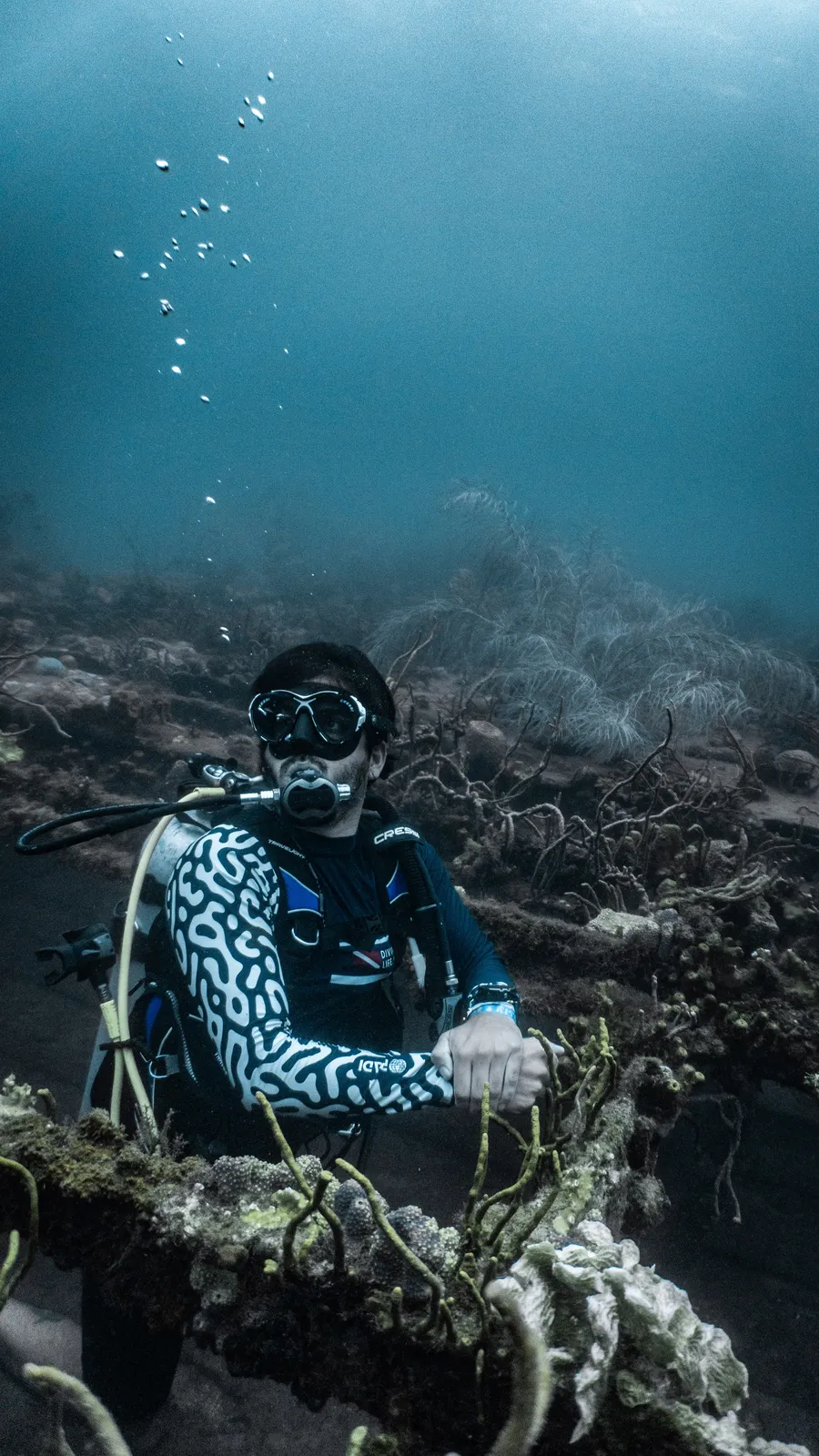
As you descend, water pressure squeezes the air space behind your eardrum. Your body needs to add air to that space to keep the pressure balanced, and if you do not, the growing difference pushes painfully on the eardrum. This is ear barotrauma, and it is by far the most common reason a beginner cuts a dive short. The good news is that it is completely avoidable with a habit called equalizing, which takes just a few seconds to learn.
How to equalize
The most common method is the Valsalva: gently pinch your nose closed and softly blow, as if blowing your nose, until you feel your ears "pop" and the pressure ease. Other divers swallow, wiggle the jaw side to side, or combine these.
The single most important rule is timing: equalize early and often, every meter or so as you descend, and always before you feel any pain. Once it already hurts, you have waited too long.
Descend slowly and feet-first
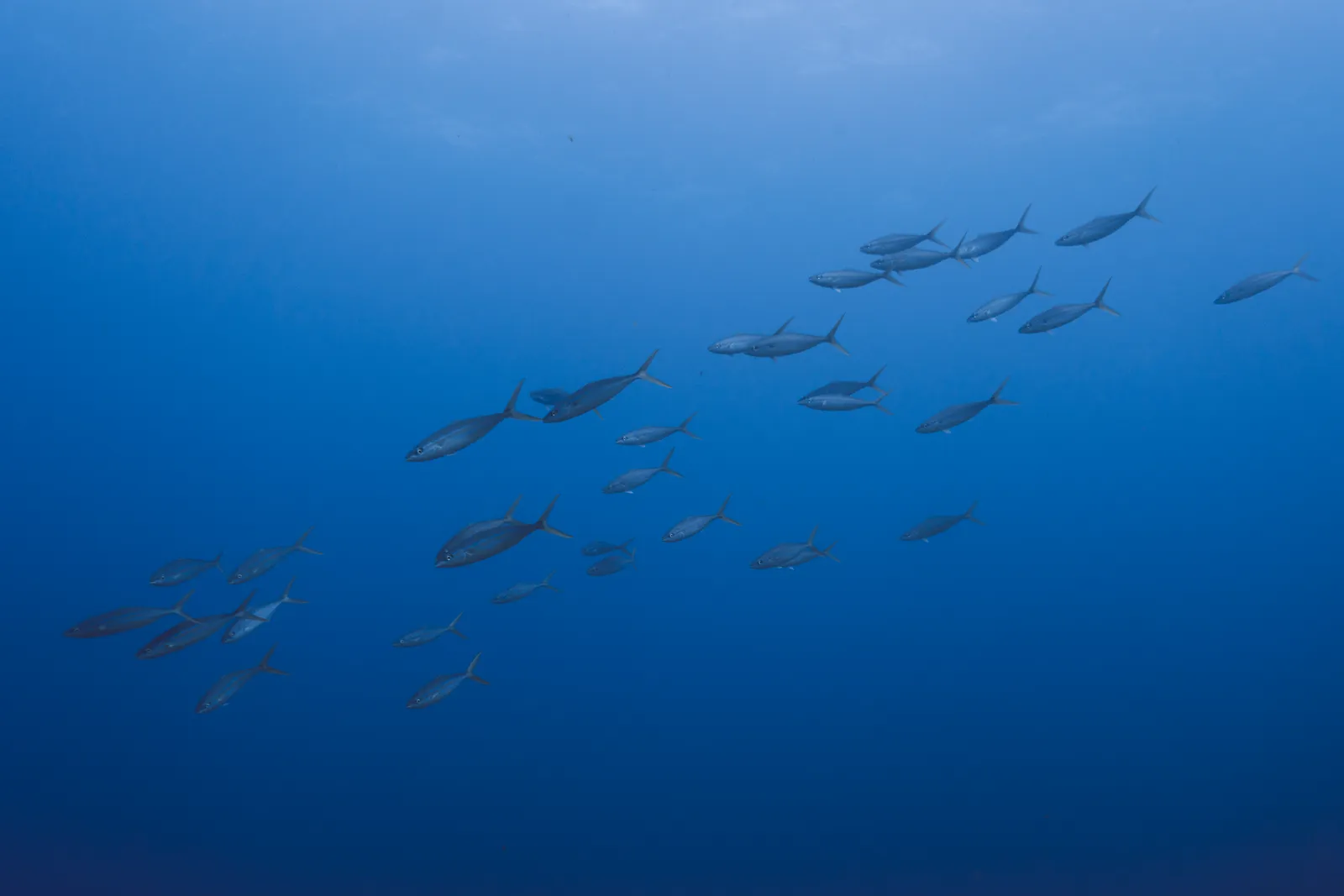
Going down head-first sends blood to your head and makes equalizing harder. Descending upright, feet-first and slowly, gives you full control and time to add air on each meter.
Use the mooring or anchor line when there is one. It lets you pause at any depth, equalize calmly, and go back up a little if you need to, all without drifting or sinking faster than you meant to.
If it hurts, stop
Never force a descent through pain. Pain means the pressure is not balanced, and pushing on only risks injuring the eardrum. Instead:
- Ascend a meter or two until the pain eases
- Equalize gently and let the ears settle
- Try the descent again, more slowly this time
If your ears simply will not clear, end the dive. On Isla Fuerte there is always another one, and our gentle sites like El Museo are a perfect place to practice.
Do not dive congested
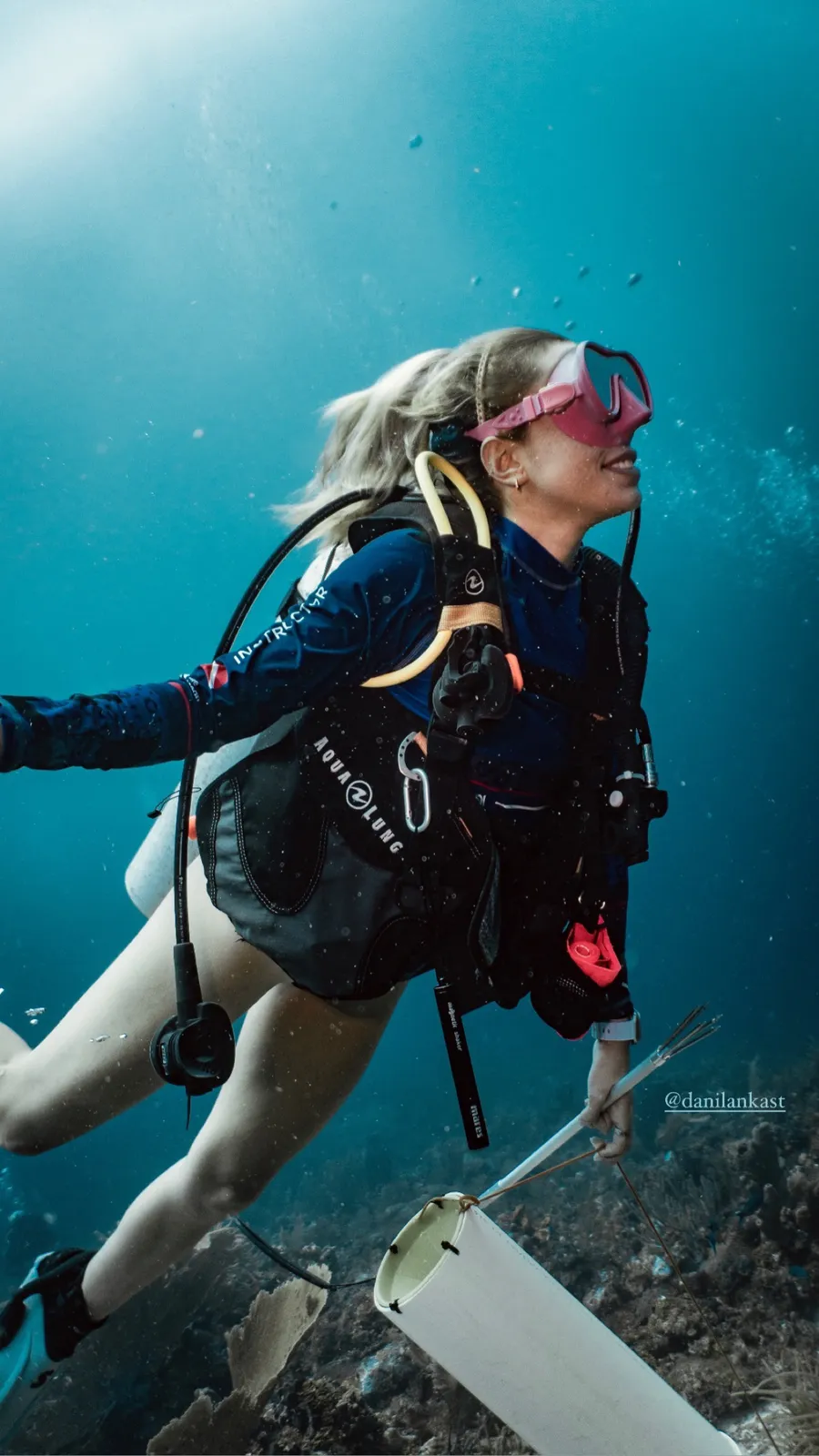
A cold, allergy or blocked nose makes equalizing difficult or impossible, because the passages that let air reach your ears are swollen shut. If you are congested, it is better to wait a day than to risk an injury that could keep you out of the water for weeks.
Planning your trip? Browse our courses and dives and more guides so you arrive rested, healthy and ready to descend comfortably.
Important
This is general educational information, not medical advice. Always complete the medical questionnaire honestly, dive within your training and, if in doubt, consult a diving physician or contact DAN (Divers Alert Network). In an emergency in Colombia, the nearest hyperbaric chamber is in Coveñas.