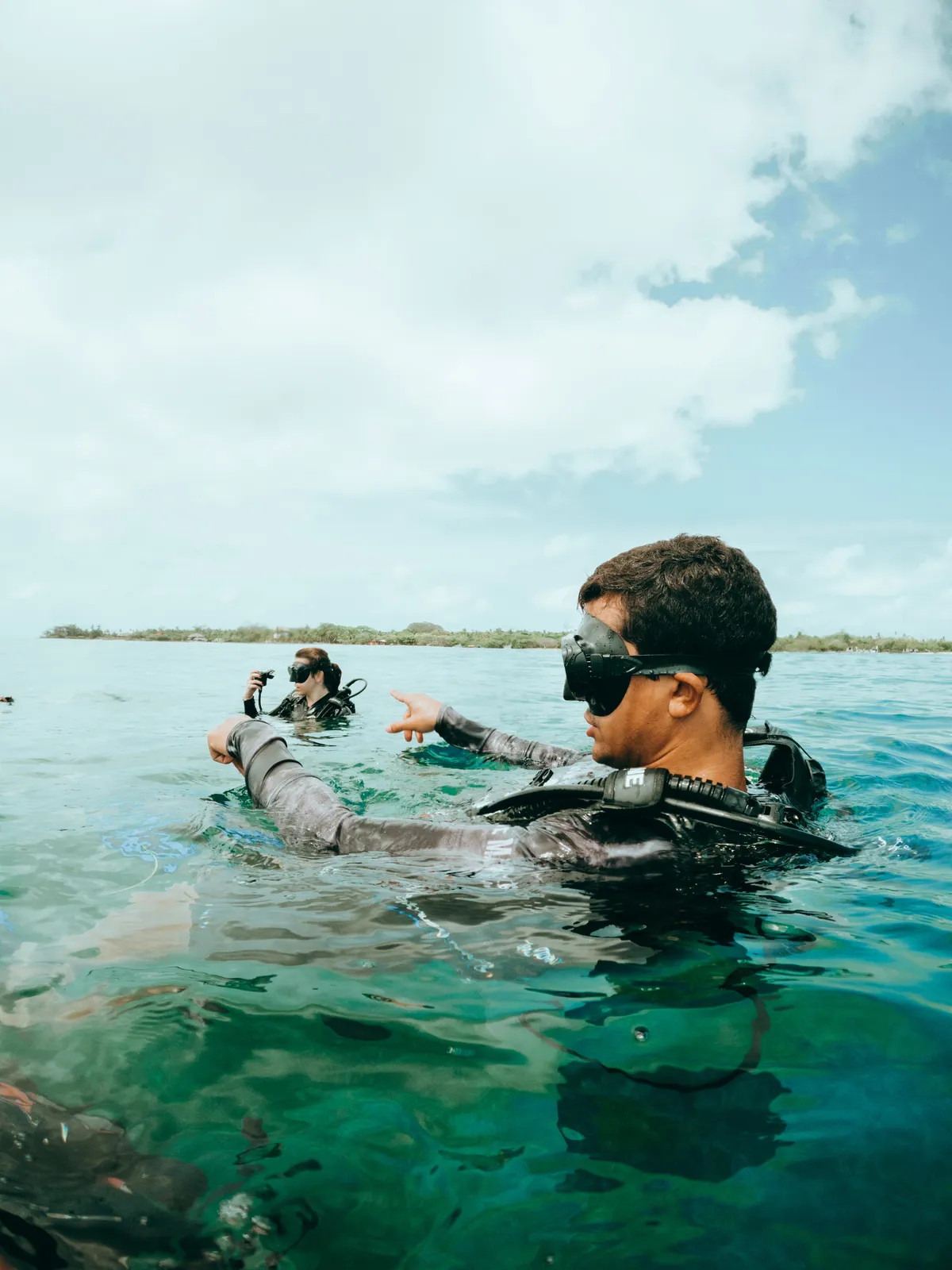
Running out of air is one of the most common fears for new divers, yet it is almost entirely preventable and rarely an emergency for a trained diver. You carry redundant options, your buddy is nearby, and you monitor your supply the whole time. Knowing the plan turns a scary idea into a manageable, practiced skill.
It builds up, it does not vanish
Your air does not disappear suddenly. You watch a pressure gauge or dive computer throughout the dive, and you are trained to turn back or ascend with a comfortable reserve still in the tank.
Modern regulators also breathe a little harder as pressure gets low, giving you a physical warning long before the tank is truly empty.
Your backup options
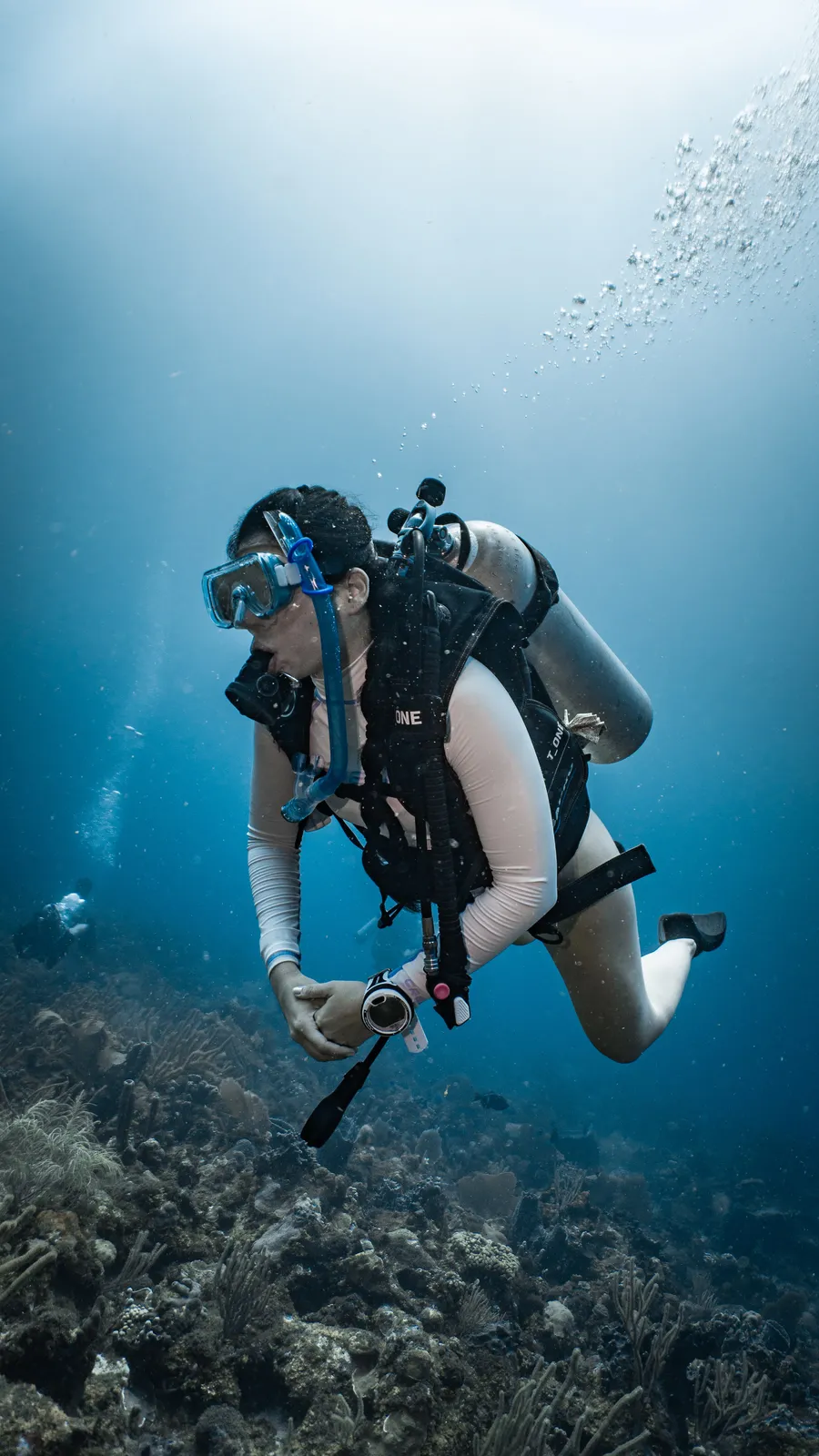
If your supply ever did run low, you have several trained responses:
- Signal your buddy and breathe from their alternate second stage, the octopus
- Ascend together slowly while sharing air
- As a last resort, make a controlled emergency swimming ascent, exhaling gently the whole way
These are core skills every diver practices in training, so they become calm, automatic actions rather than panic.
Prevention is the whole game
The reason experienced divers almost never run out is simple discipline: check your gauge often, agree on a turnaround pressure before the dive, and always surface with a reserve. Diving with a buddy means there is always a second air source within reach.
Good habits, not luck, are what keep your air supply from ever becoming a problem.
Staying calm is the real skill
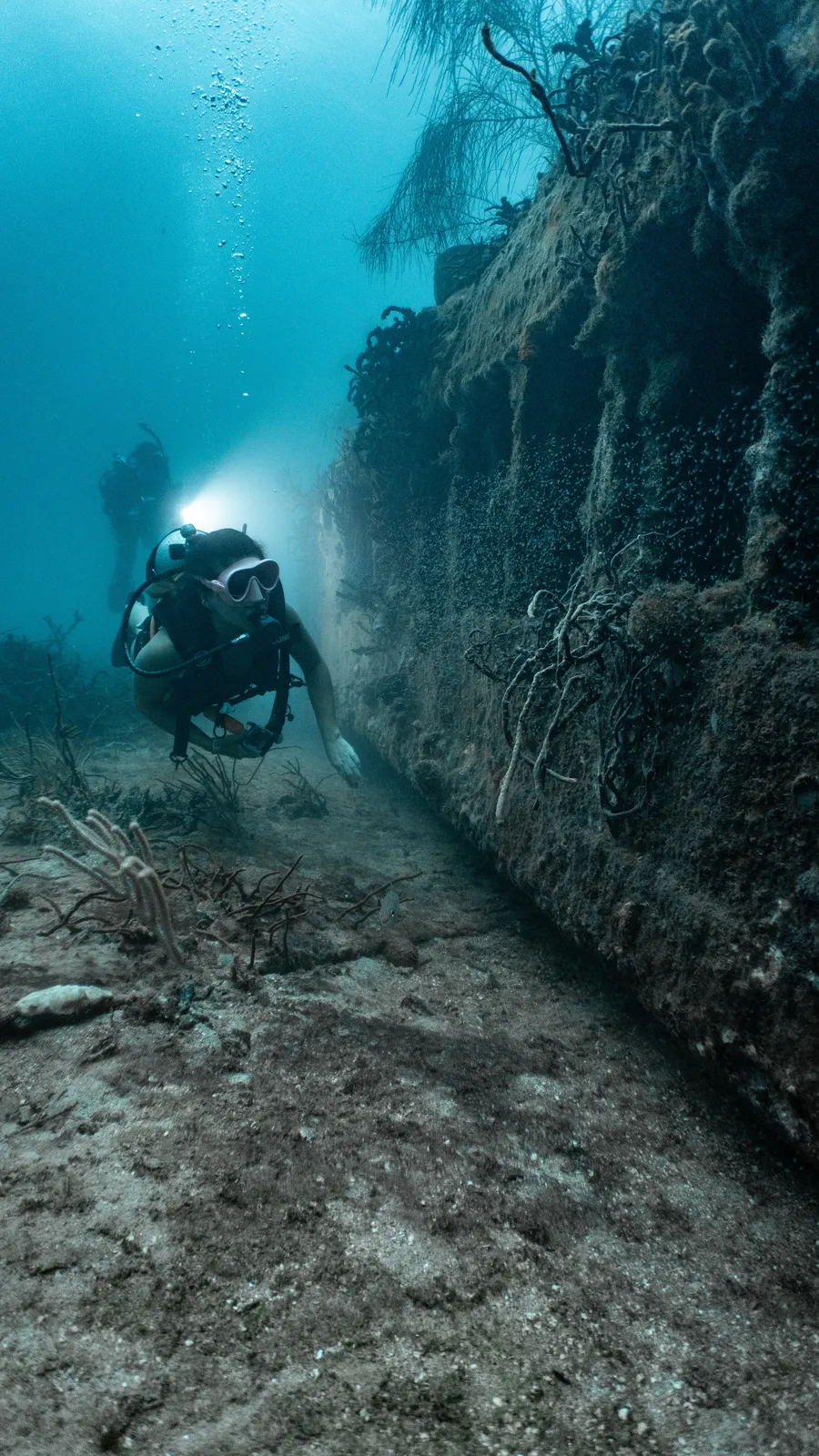
Almost every serious out-of-air story is really a story about panic, not about physics. A diver who keeps breathing slowly and thinks clearly has plenty of time to reach a buddy or the surface.
That is why training drills these responses until they feel routine. When your hands know what to do without thinking, a low-air moment becomes calm problem-solving rather than fear.
Practice it where it is easy
At Nautilus we drill air-sharing and gauge awareness until they feel second nature, all in the warm, calm 27 to 29°C water around Isla Fuerte. Small groups mean your instructor is always close, and every service includes Magenta insurance with emergency oxygen on the boat.
Want to build unshakable confidence with your air supply? Start with our courses and dives and keep reading more guides.
Important
This is general educational information, not medical advice. Always complete the medical questionnaire honestly, dive within your training and, if in doubt, consult a diving physician or contact DAN (Divers Alert Network). In an emergency in Colombia, the nearest hyperbaric chamber is in Coveñas.


