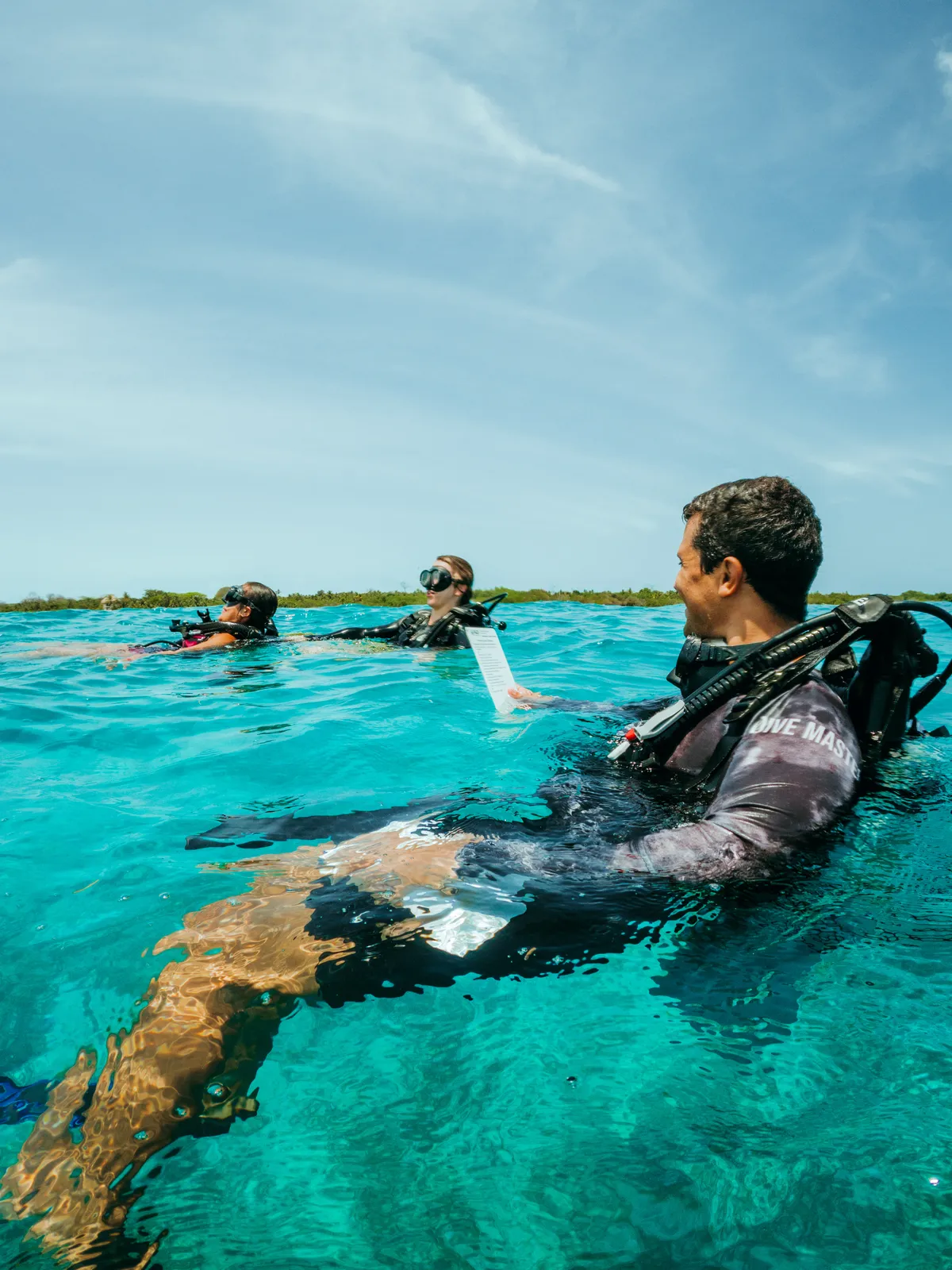
Swimmer's ear, known medically as otitis externa, is an infection of the outer ear canal that develops when water sits trapped inside for too long. It is one of the most common complaints among divers who spend several days in a row underwater, exactly the kind of trip many guests enjoy across the 29 dive sites of Isla Fuerte. It is uncomfortable but very preventable, and easy to manage if you catch it early. A few simple habits after each dive keep your ears healthy through a full week of diving.
What causes it
The ear canal has a delicate protective layer. When water lingers, especially warm seawater, it softens the skin and washes away the natural wax that keeps bacteria in check. Repeated wetting over consecutive dive days is the classic setup.
Warm tropical water like the 27 to 29 degrees Celsius we enjoy year-round is comfortable for us but also comfortable for bacteria, so multi-day trips deserve a little extra ear care.
Symptoms to watch for
Early signs include itching inside the ear and a feeling of fullness or blocked hearing. As it progresses you may feel pain, especially when you tug the earlobe, along with redness and sometimes a clear or cloudy discharge.
Do not confuse it with the sharp pressure pain of a squeeze during descent. Swimmer's ear develops between dives and lingers, while equalization pain comes and goes with depth changes.
Prevention after each dive
Rinse your ears with clean fresh water after diving, then tilt your head to each side to let water drain out and dry the outer ear gently. Avoid cotton swabs, which push wax and moisture deeper and scratch the canal.
- Dry your ears after every dive and swim.
- Tilt and tug the earlobe to help water escape.
- Consider drying drops if you are prone to it.
- Never insert swabs or fingers into the canal.
When to see a doctor
If pain, swelling or discharge appears, stop diving and rest the ear. A doctor can prescribe antibiotic ear drops, and diving with an active outer-ear infection risks making it worse and can affect your balance underwater.
Most cases clear within a few days of treatment. It is frustrating to sit out a dive, but the reef will still be there, and there is always another dive once your ear has healed.
Enjoy a full week of diving
With good ear habits, most divers complete a long trip with no trouble at all. Our PADI instructors are happy to remind you of the routine and keep an eye out during multi-day packages.
Planning several days across our sites? Browse courses and dives and read more guides to arrive prepared and dive comfortably from the first tank to the last.
Important
This is general educational information, not medical advice. Always complete the medical questionnaire honestly, dive within your training and, if in doubt, consult a diving physician or contact DAN (Divers Alert Network). In an emergency in Colombia, the nearest hyperbaric chamber is in Coveñas.


