Sea urchins wedge themselves into crevices in the reef, protected by long, sharp and brittle spines. Those spines can pierce skin easily if you touch, grab or kneel on one, and because they are so fragile they often snap off and stay in the wound. Urchins are not aggressive at all, so this is purely a contact injury, which means it is completely preventable. The rule is the same one that protects the reef itself: never rest on or touch the bottom.
Where you find them
Urchins are most common in rocky crevices, under ledges and among reef structure, exactly the places a diver might instinctively reach out to steady themselves. Some species hide in shadow by day, so they are easy to miss.
They cause no problem to a diver with good buoyancy who glides above the reef. The trouble only starts when a hand, knee or fin tip presses into a spot where an urchin is tucked away.
First aid
If a spine does go in, treat it patiently:
- Remove any spines you can grip carefully, without breaking them further
- Soak the area in hot (not scalding) water for 30 to 90 minutes to ease pain
- Clean the wound well and keep it covered and dry
- Watch for redness, swelling or warmth over the next days, signs of infection
Deeply embedded or numerous spines, or any near a joint, should be seen by a doctor, as fragments can work their way in and cause lasting irritation.
Buoyancy keeps you off them
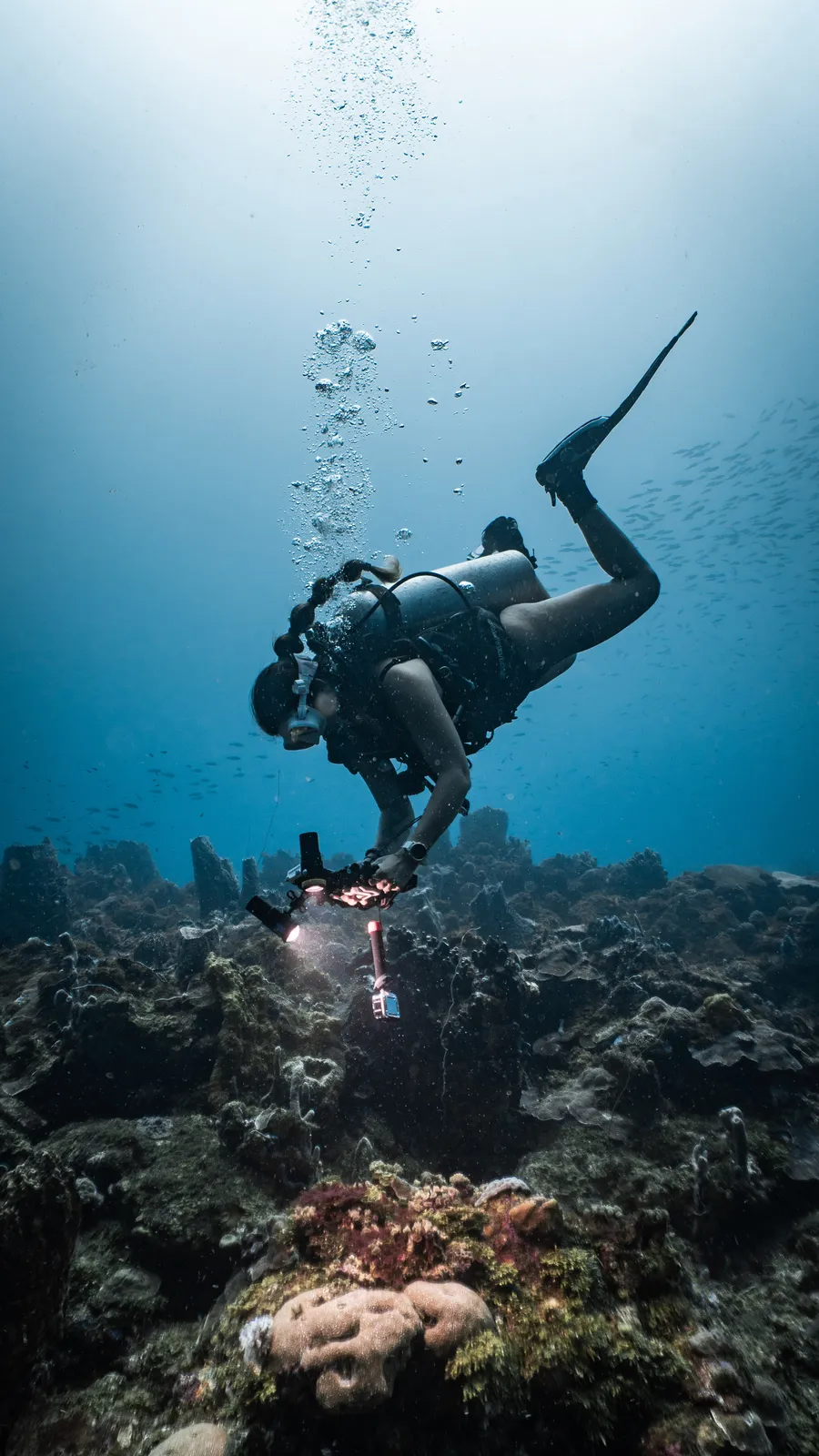
Nearly every urchin injury traces back to a diver touching the bottom. Good buoyancy control, so you hover comfortably above the reef without needing to hold on, keeps you clear of urchins and every other hidden hazard at once.
When you do need to steady yourself, use a single fingertip on bare rock or sand, look before you place it, and never grab blindly into a crevice.
Gentle sites to build the habit
Beginner-friendly reefs like Rosa Vieja and El Museo are ideal for practicing buoyancy in calm, shallow conditions before moving to more complex sites. Our PADI instructors will help you dial in your weighting and trim so hovering feels effortless.
See where to start on our interactive dive map, or book a buoyancy session through our courses and dives.
Important
This is general educational information, not medical advice. Always complete the medical questionnaire honestly, dive within your training and, if in doubt, consult a diving physician or contact DAN (Divers Alert Network). In an emergency in Colombia, the nearest hyperbaric chamber is in Coveñas.


