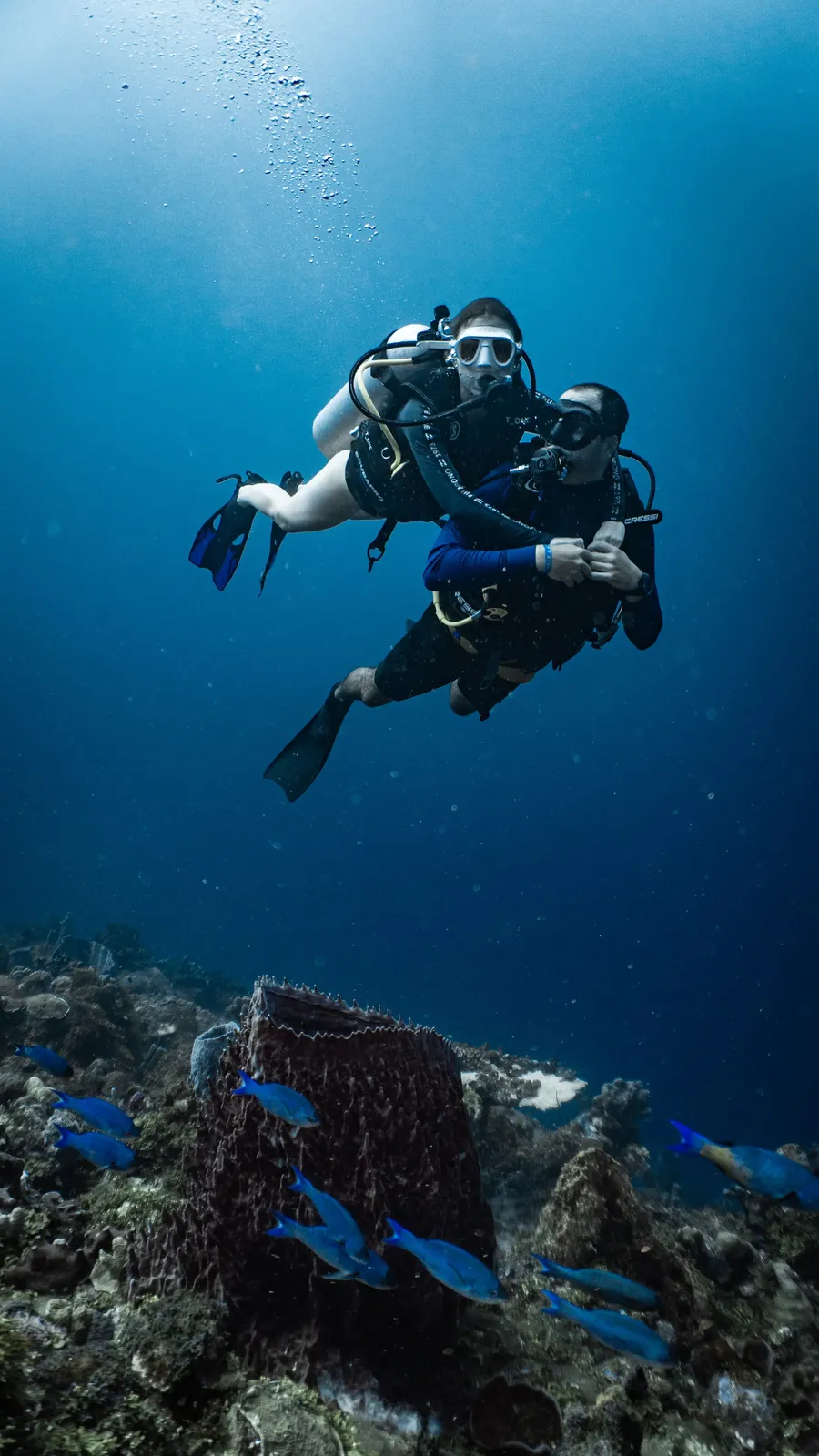
Seasickness on the boat ride out can take the shine off an otherwise perfect dive day, but it is very manageable. Motion sickness happens when your inner ear and your eyes send your brain conflicting signals about movement, and divers face it on boats before and after diving. The good news is that a mix of simple habits, positioning and, if needed, medication solves it for most people. With a little planning you can arrive at the dive site feeling steady and ready to enjoy the water.
Why boats make you queasy
Your sense of balance lives in your inner ear, and it senses the boat rocking even when your eyes, fixed on the deck or a phone, tell your brain you are still. That mismatch is what triggers nausea.
This is why looking at the horizon helps: it gives your eyes the same motion information your inner ear already feels, so the signals finally agree and the queasiness eases.
Habits that help before you sail
Preparation the night before and morning of makes a real difference:
- Sleep well and avoid a heavy night of drinking
- Eat a light, plain meal rather than diving on an empty or overfull stomach
- Stay hydrated, but skip greasy or very acidic foods
- Take any medication early, since most work best before symptoms start
Going out tired, hungover or hungry is a recipe for feeling worse, so a calm morning routine is your first defense.
Positioning and tricks on board
Where you sit and what you do on the boat matters. Stay on deck in fresh air, sit near the center where the rocking is gentlest, and keep your gaze on the horizon rather than on gear or a screen.
Ginger, in tea, candy or capsules, settles many stomachs, and acupressure wristbands help some divers. Slow, steady breathing and keeping busy also work better than lying below deck focusing on how you feel.
Medication, chosen with care
Several over-the-counter tablets prevent seasickness well, but some cause drowsiness, which you do not want underwater. Non-drowsy options exist, and it is worth testing any medication on land first to see how it affects you.
Because some drugs can interact with the effects of depth, ask a pharmacist or dive doctor which is suitable for diving days. The goal is a clear head, not just a calm stomach.
Short, easy crossings to our reefs
One advantage of diving Isla Fuerte is that the boat rides are short. We leave from Paso Nuevo and reach our dive sites quickly, so there is far less time on the water for seasickness to build compared with long open-ocean crossings.
Tell us if you are prone to it and we will help you prepare and choose a good spot on the boat. See our courses and dives and plan your day on the interactive dive map so you spend your energy on the reef, not the ride.
Important
This is general educational information, not medical advice. Always complete the medical questionnaire honestly, dive within your training and, if in doubt, consult a diving physician or contact DAN (Divers Alert Network). In an emergency in Colombia, the nearest hyperbaric chamber is in Coveñas.


