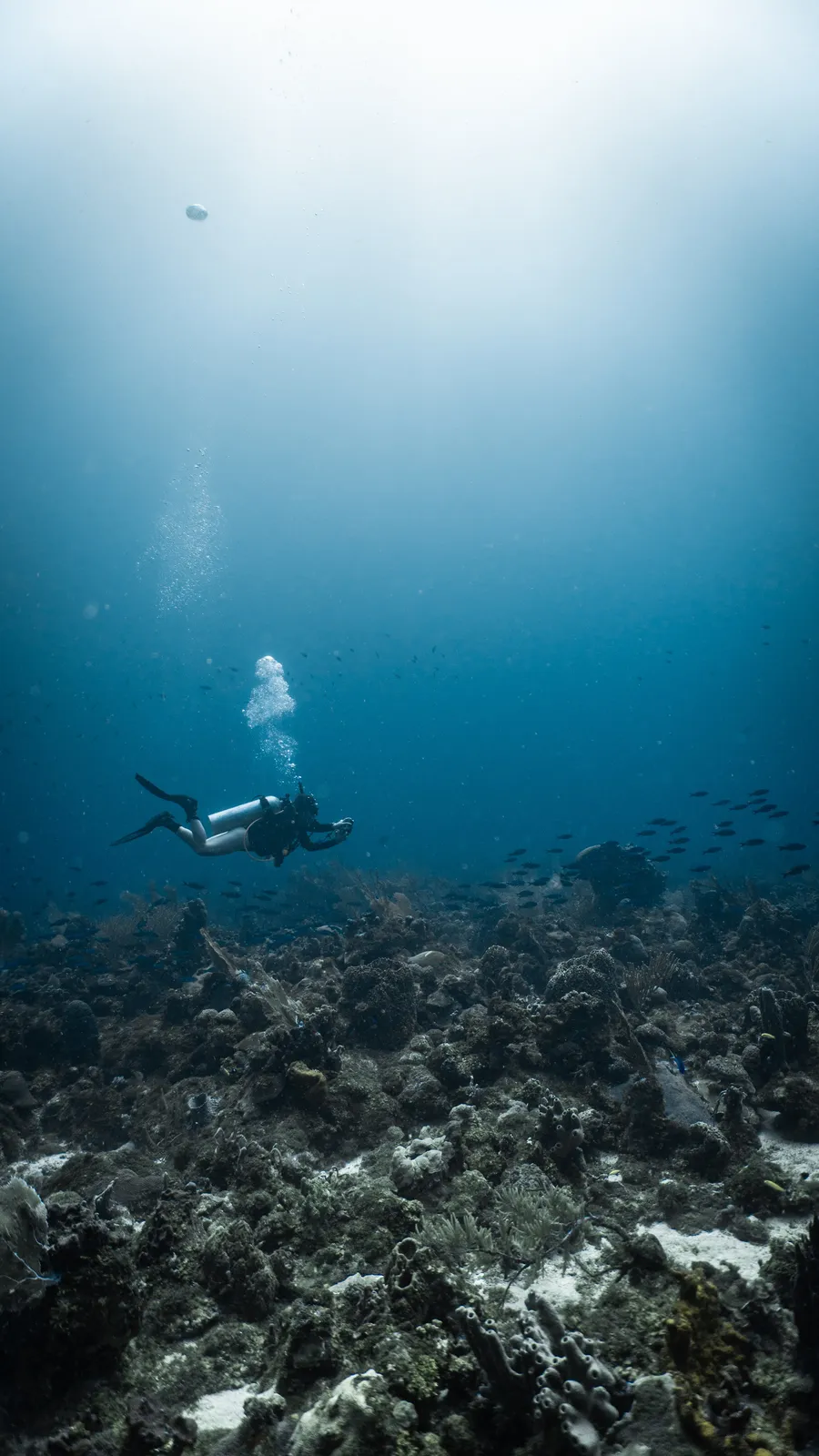
The number one rule of scuba diving is short and absolute: breathe continuously and never hold your breath. As you ascend, the surrounding pressure drops and the air in your lungs expands. If your airway is open, that extra air simply flows out as you breathe. If you hold your breath, the expanding air has nowhere to go and can overstretch and injure the lung. This is why the rule is taught from your very first breath underwater, and why we repeat it so often.
The physics behind it
Gas expands as pressure falls, and the biggest pressure changes happen in the shallowest few meters. In fact the air in your lungs can nearly double in volume in just the last 10 meters of an ascent, which is exactly where an inexperienced diver might be tempted to hold a breath in excitement.
That is why the rule applies at every depth, even when you are almost at the surface. There is no depth at which holding your breath during an ascent is safe.
What overexpansion can cause
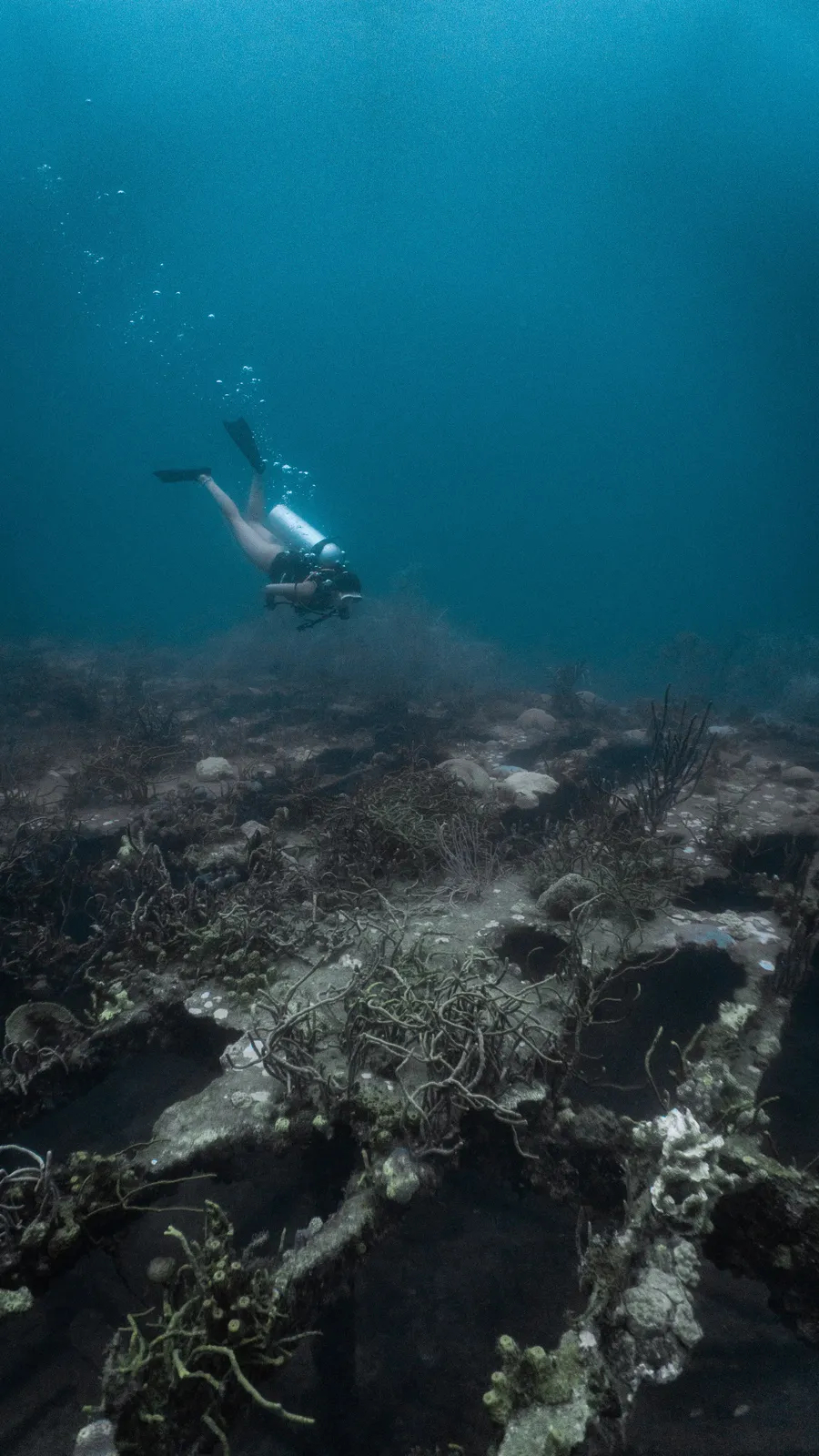
An overexpansion injury is rare but serious. Signs may appear right after surfacing and can include:
- Chest pain or difficulty breathing
- Coughing, sometimes with a little blood
- A crackling feeling in the skin around the neck
- Changes in voice, or in severe cases dizziness and confusion
Any of these after a dive is an emergency needing oxygen and immediate medical help. The reassuring part is that following the one rule prevents it almost entirely.
How we teach it
From the confined-water session onward, our PADI instructors coach you to breathe slowly and steadily, in and out, without pausing. We practice calm, controlled ascents so the habit is automatic long before you dive deeper sites like Bushnell.
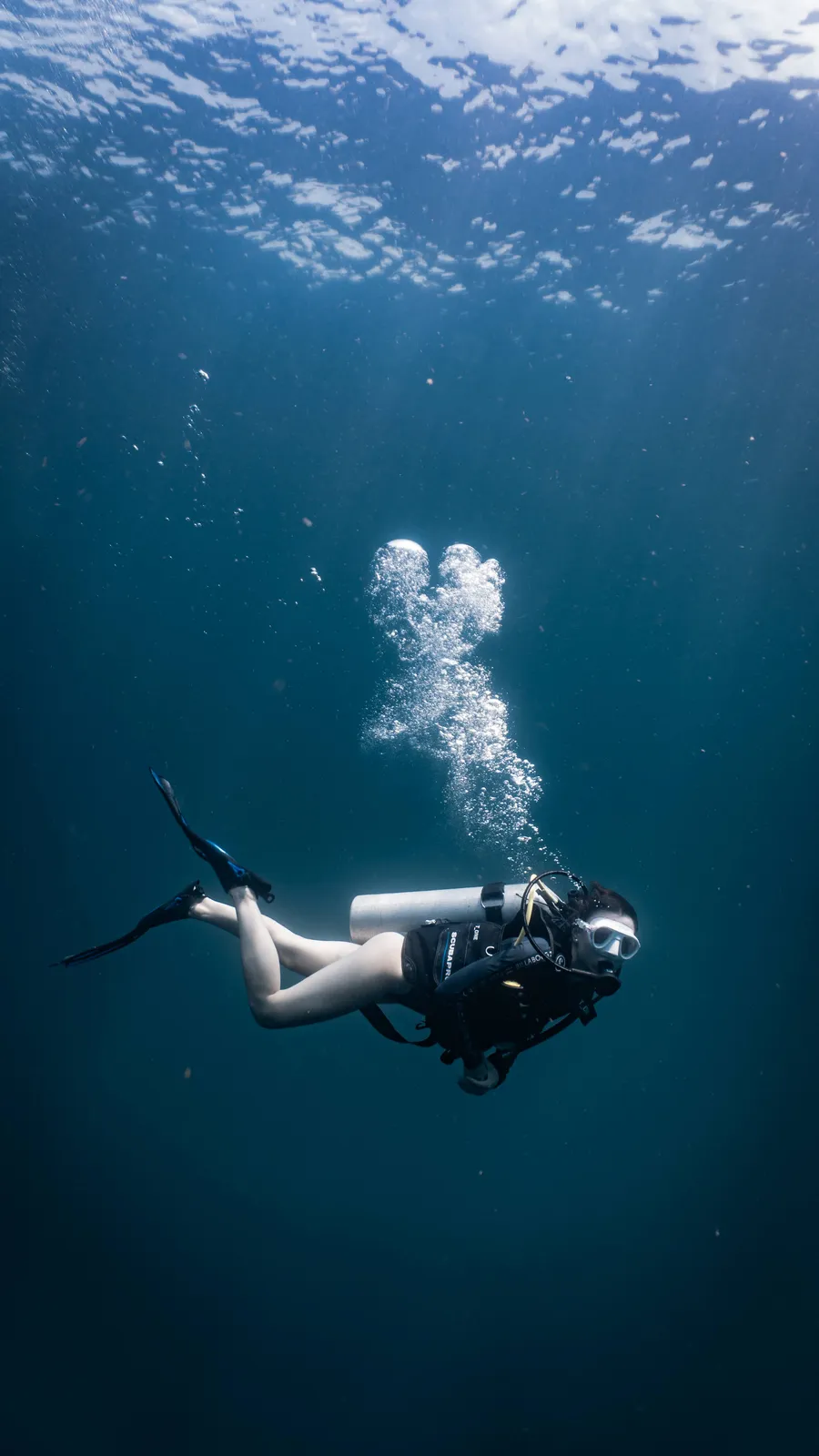
A useful tip: if you ever need to ascend without a regulator in your mouth, keep exhaling a slow, continuous stream of bubbles. As long as air is leaving your lungs, they cannot overexpand.
One rule, total safety
Of all the things you learn in diving, this is the one to hold onto. It is easy, it is free, and it keeps you safe on every ascent for the rest of your diving life. Beginners often worry about it, but within a dive or two continuous breathing feels completely natural.
Ready to learn the fundamentals properly? Our courses and dives build these habits step by step, and you can read more guides to prepare.
Important
This is general educational information, not medical advice. Always complete the medical questionnaire honestly, dive within your training and, if in doubt, consult a diving physician or contact DAN (Divers Alert Network). In an emergency in Colombia, the nearest hyperbaric chamber is in Coveñas.


