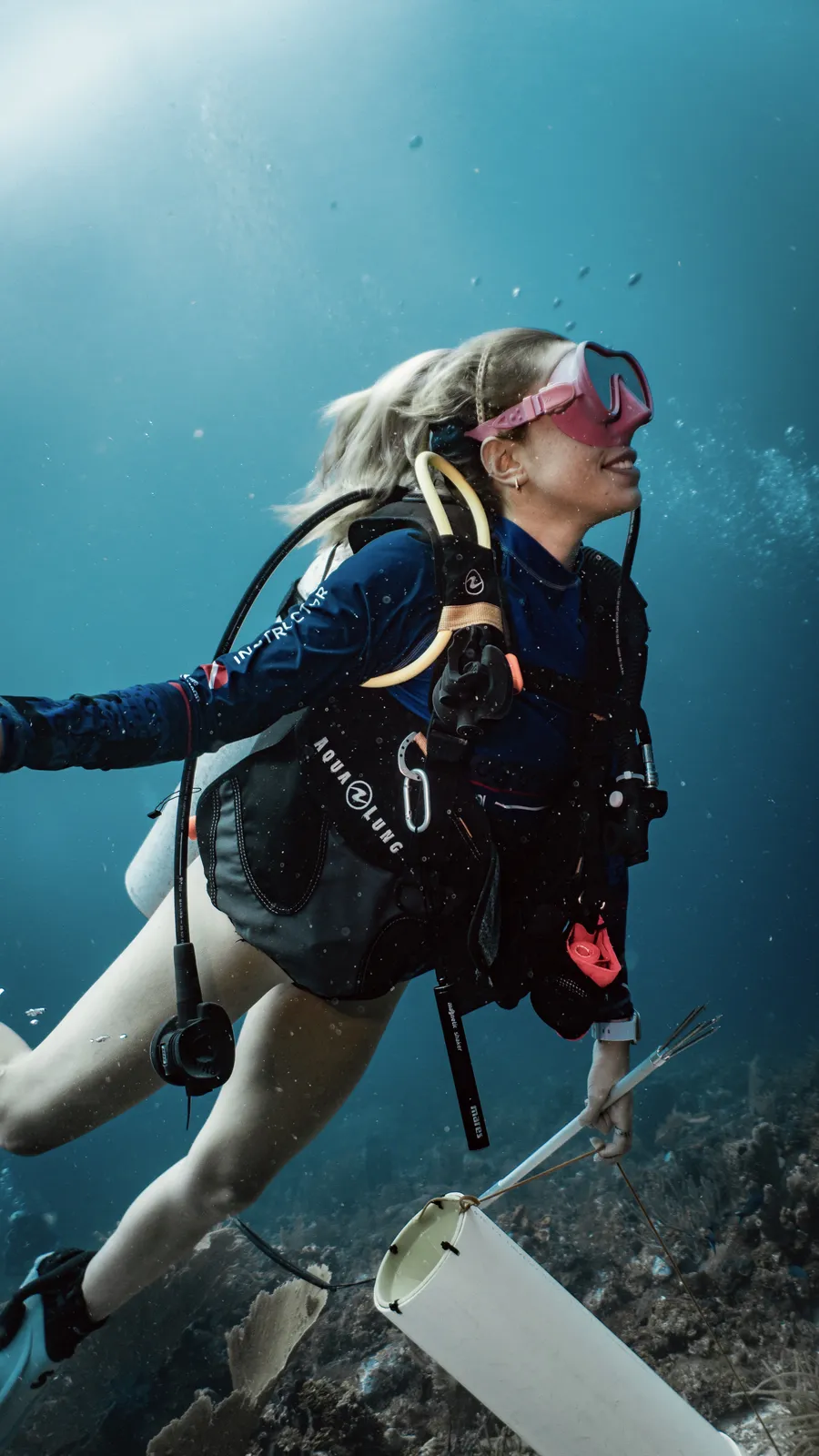
Despite its name, fire coral is not a true coral at all but a colonial organism related to jellyfish, armed with tiny stinging cells. Brushing bare skin against it, or against feathery hydroids that grow on the reef, triggers a burning sting and raised red welts that can itch for days. It is more a nuisance than a danger, and the very best prevention costs nothing: good buoyancy and awareness so you never touch the reef in the first place.
How to recognize it
Fire coral often appears as mustard-yellow to brown blades or branches with pale tips, growing on reefs and wrecks. Hydroids look like delicate ferns or fine white feathers swaying in the current. Both are easy to admire and easy to accidentally brush with a hand, knee or dangling gauge.
The sting is usually immediate: a sharp burning sensation, followed within minutes by redness and welts that can itch on and off for several days.
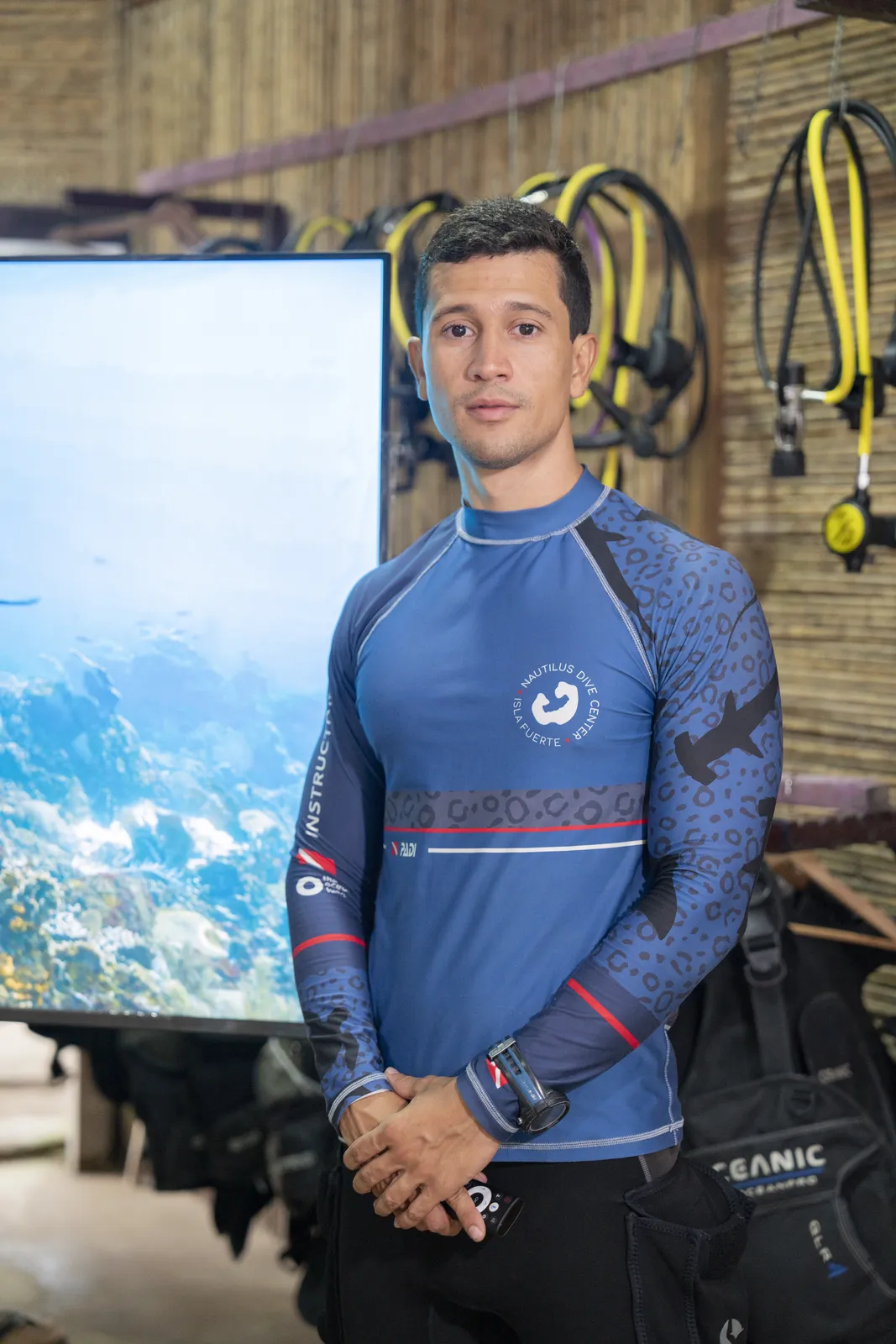
How to treat it
Treatment is simple and can be done on the boat:
- Rinse the area with seawater, never fresh water, which can trigger more stinging cells to fire
- Remove any visible bits gently, without rubbing the skin
- Apply vinegar if it is available to neutralize the stingers
- Do not scratch, as this spreads irritation and risks infection
A mild hydrocortisone cream or an antihistamine can ease the itch over the following days.
Prevention through buoyancy
Almost every fire coral sting comes from contact the diver did not intend. Good buoyancy control keeps your whole body and gear well clear of the reef, which protects both your skin and the fragile corals below you.
A rash guard, wetsuit skin or dive gloves add an easy extra layer of protection. Tucking away hoses and gauges so nothing dangles also helps you glide past the reef without touching it.
Protect yourself and the reef
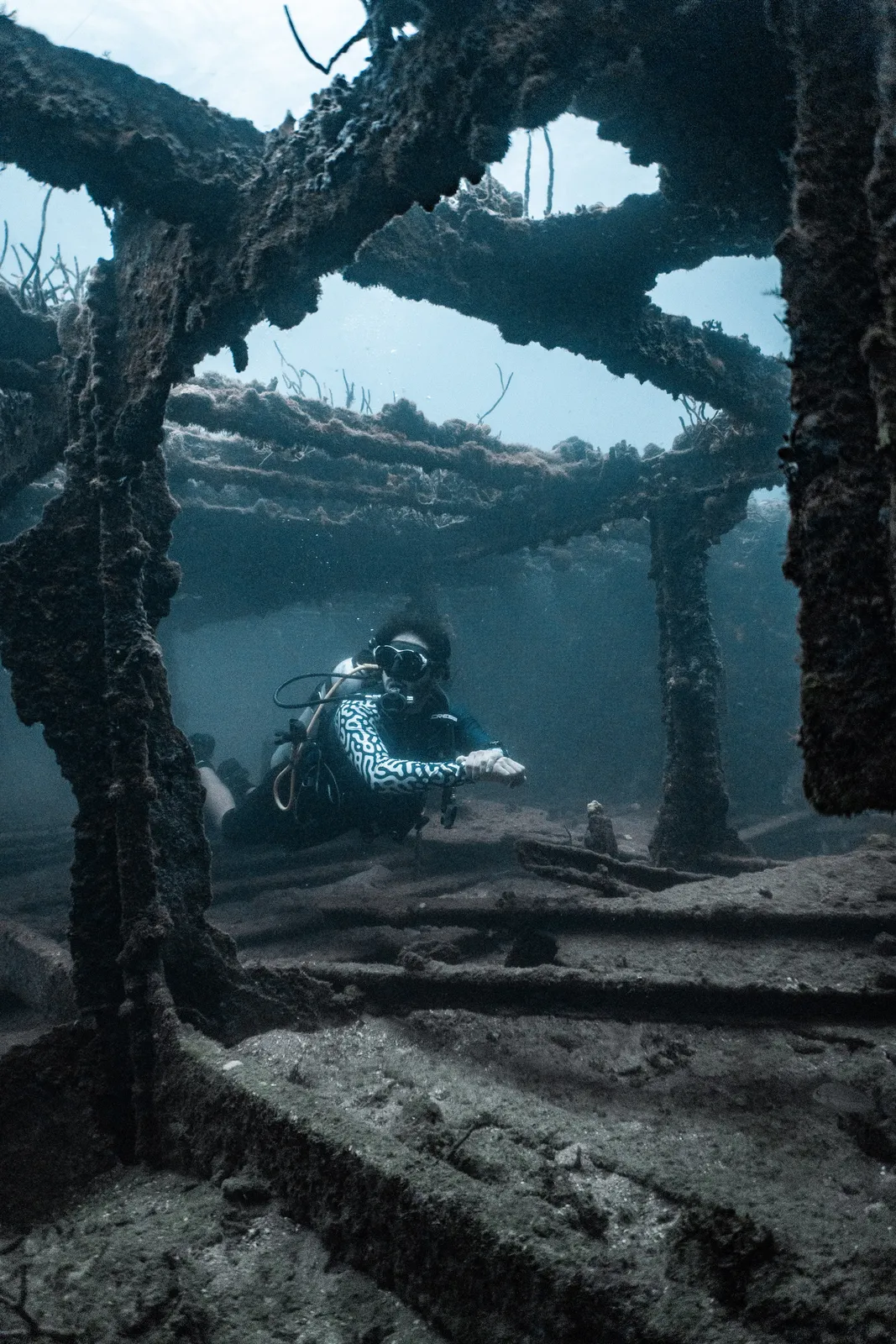
The reefs around Isla Fuerte, from the gentle gardens of Rosa Vieja to the submerged Zenú museum at Bajo Bonito, are living and delicate. Staying off them keeps you sting-free and keeps the corals healthy for the next diver.
Want to master your buoyancy? The Peak Performance Buoyancy specialty in our courses and dives is one of the most useful skills you can learn, and you can plan your sites on our interactive dive map.
Important
This is general educational information, not medical advice. Always complete the medical questionnaire honestly, dive within your training and, if in doubt, consult a diving physician or contact DAN (Divers Alert Network). In an emergency in Colombia, the nearest hyperbaric chamber is in Coveñas.


