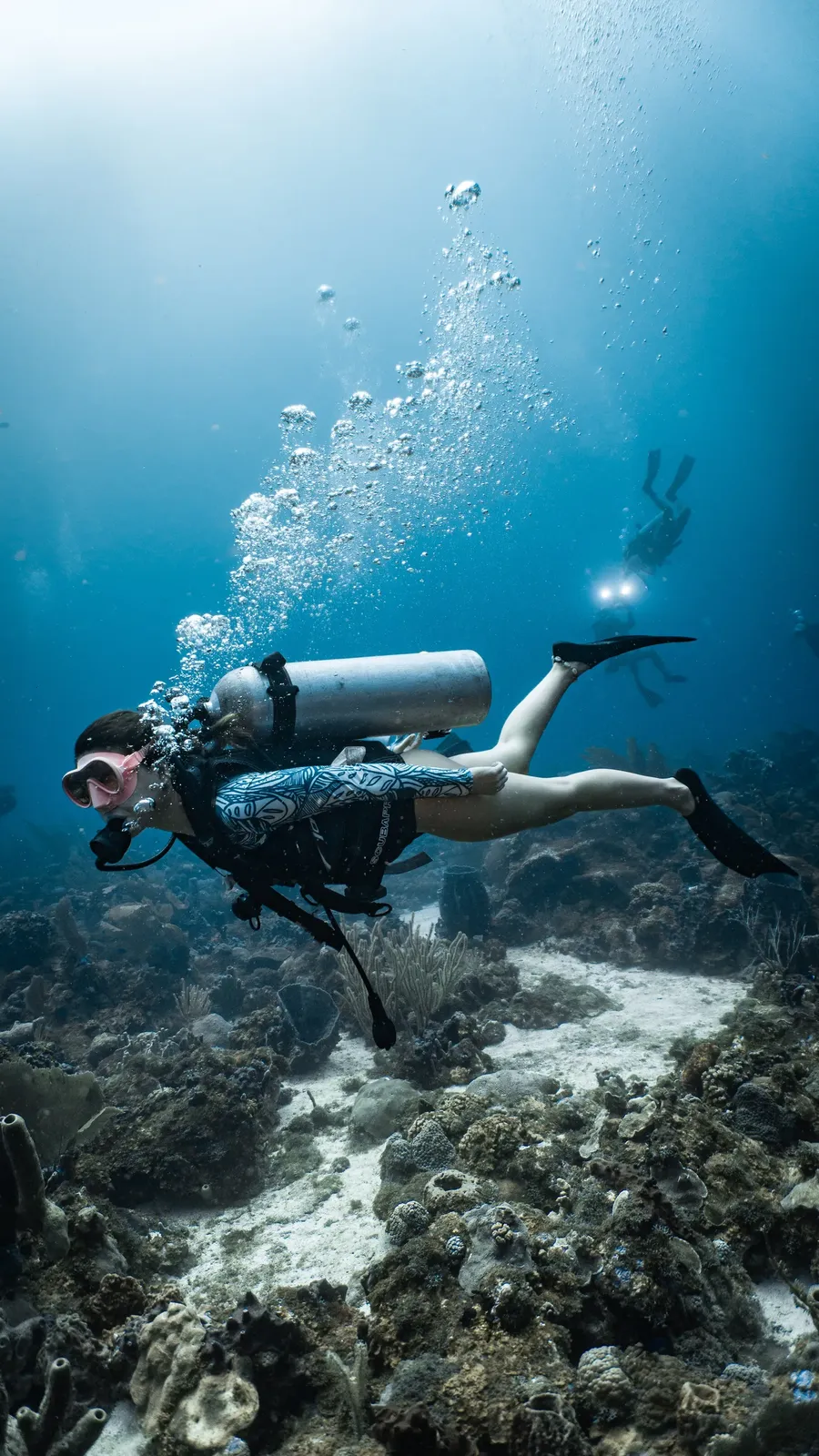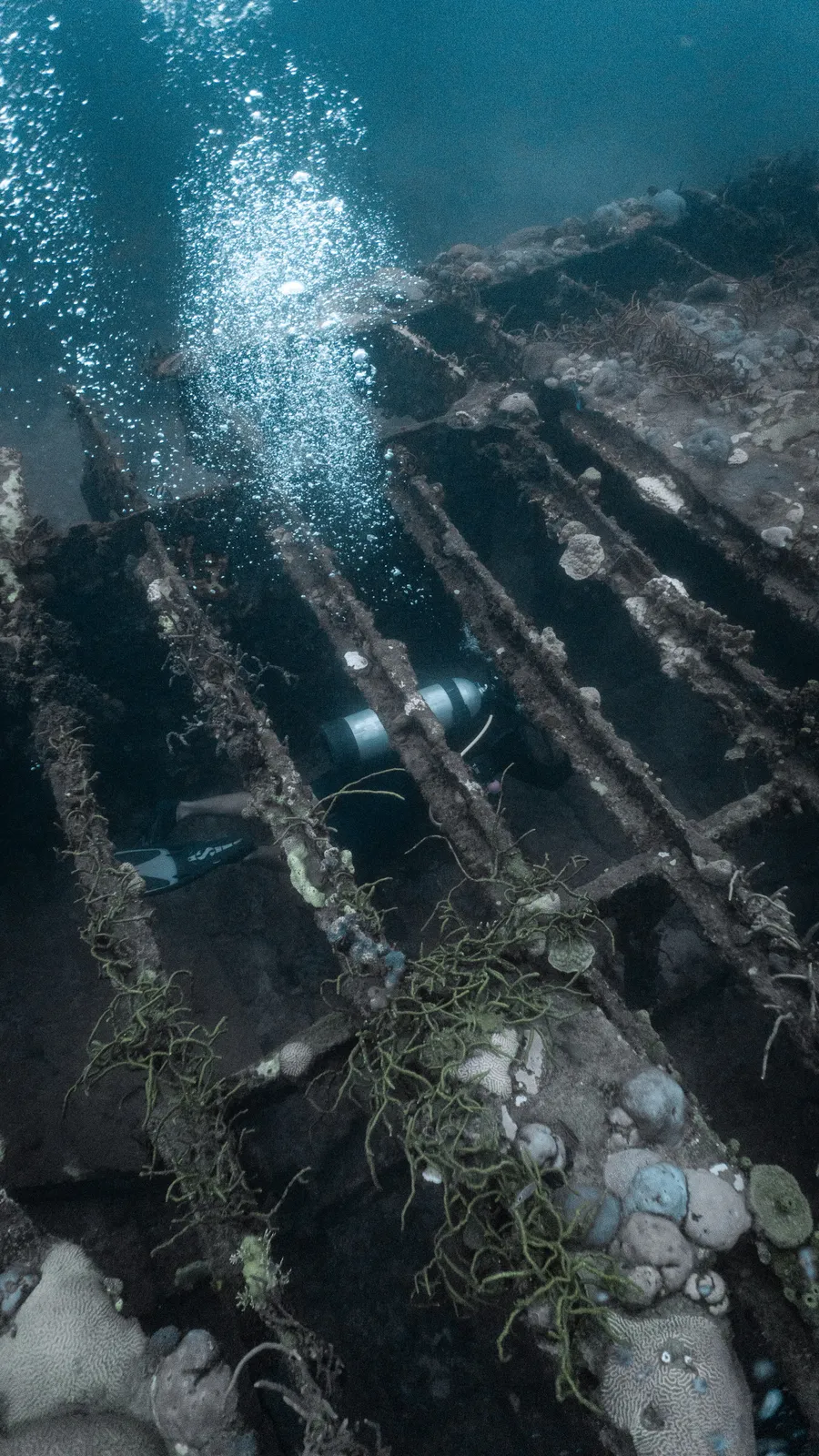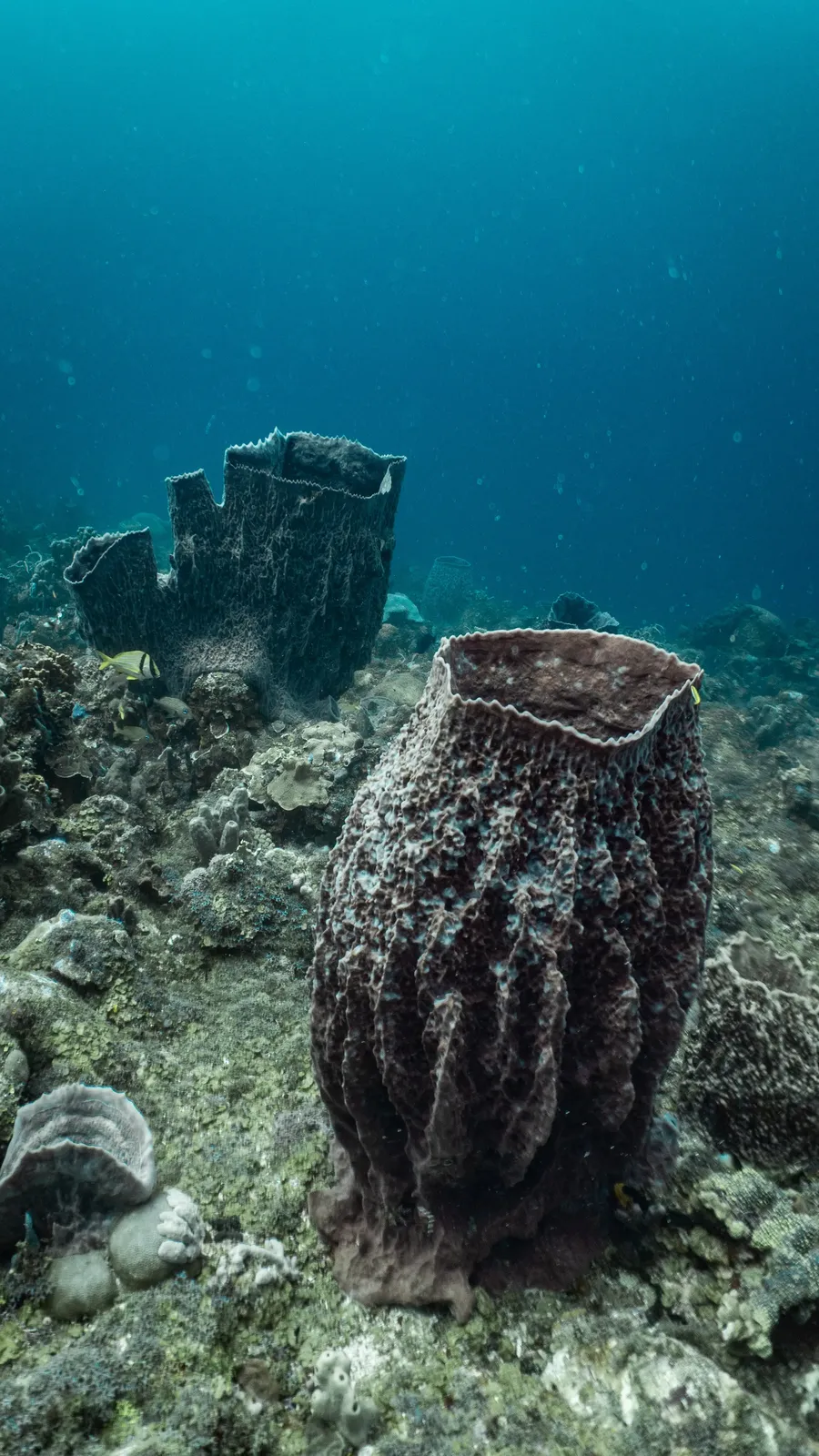
The SS Yongala, off the coast of Queensland, Australia, is regularly ranked among the best wreck dives in the world. This passenger steamship sank in a cyclone in 1911 with the loss of all aboard, and it lay undiscovered for nearly 50 years. Today, resting in open water with no other reef nearby, it acts as a magnet for marine life on a staggering scale. The intact 110-meter hull is coated in soft coral and surrounded by giant fish, sea snakes, turtles and rays. It is as much a thriving ecosystem as a shipwreck.
What makes it special
Because the Yongala sits alone on a sandy seabed, it concentrates marine life like an isolated reef, and the density of large animals is almost unbelievable. The wreck is protected and cannot be entered, which has preserved both the site and its wildlife.
Divers describe a constant swirl of big fish in every direction, making it one of the most action-packed single dives anywhere.
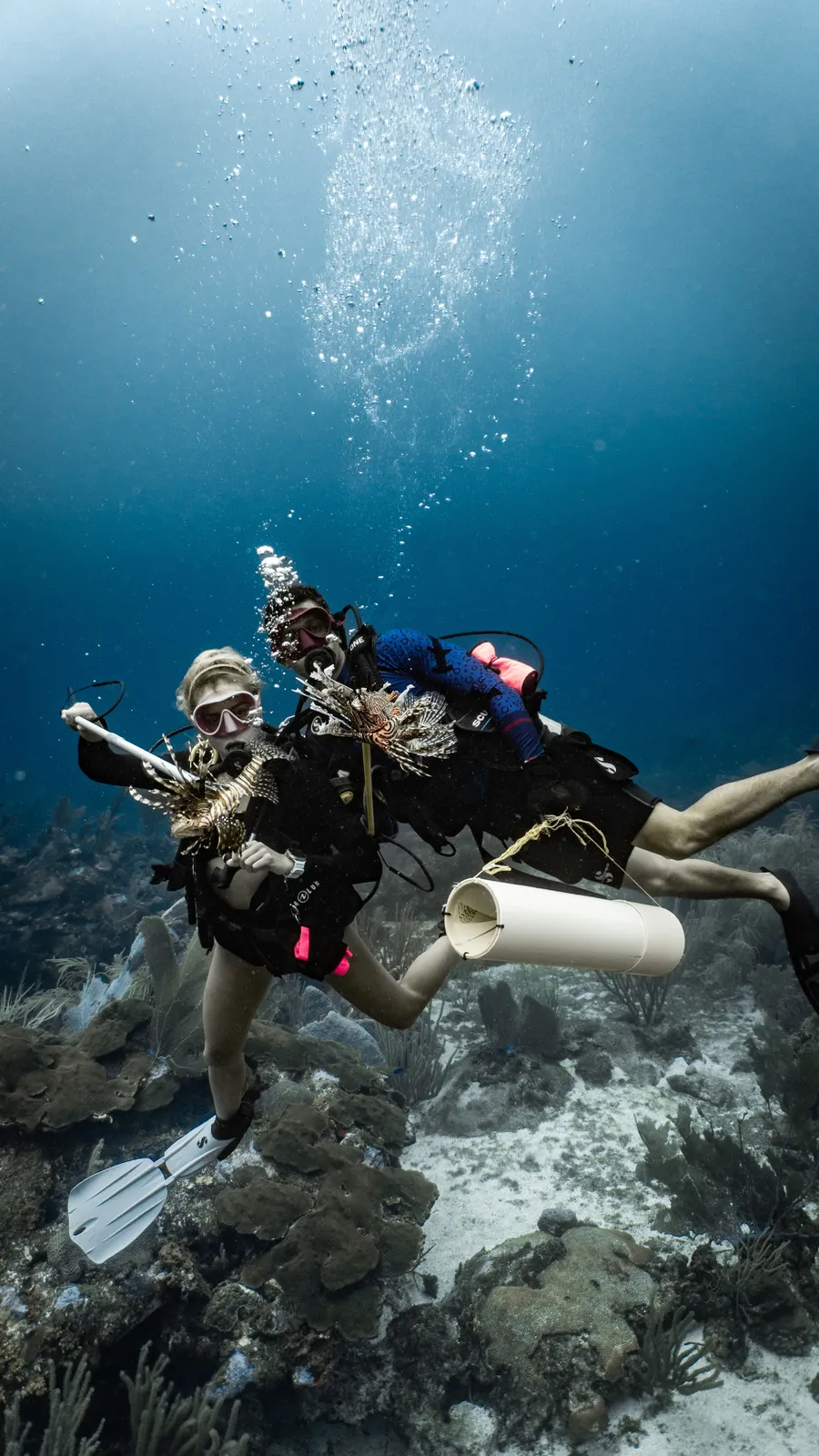
Marine life you may see
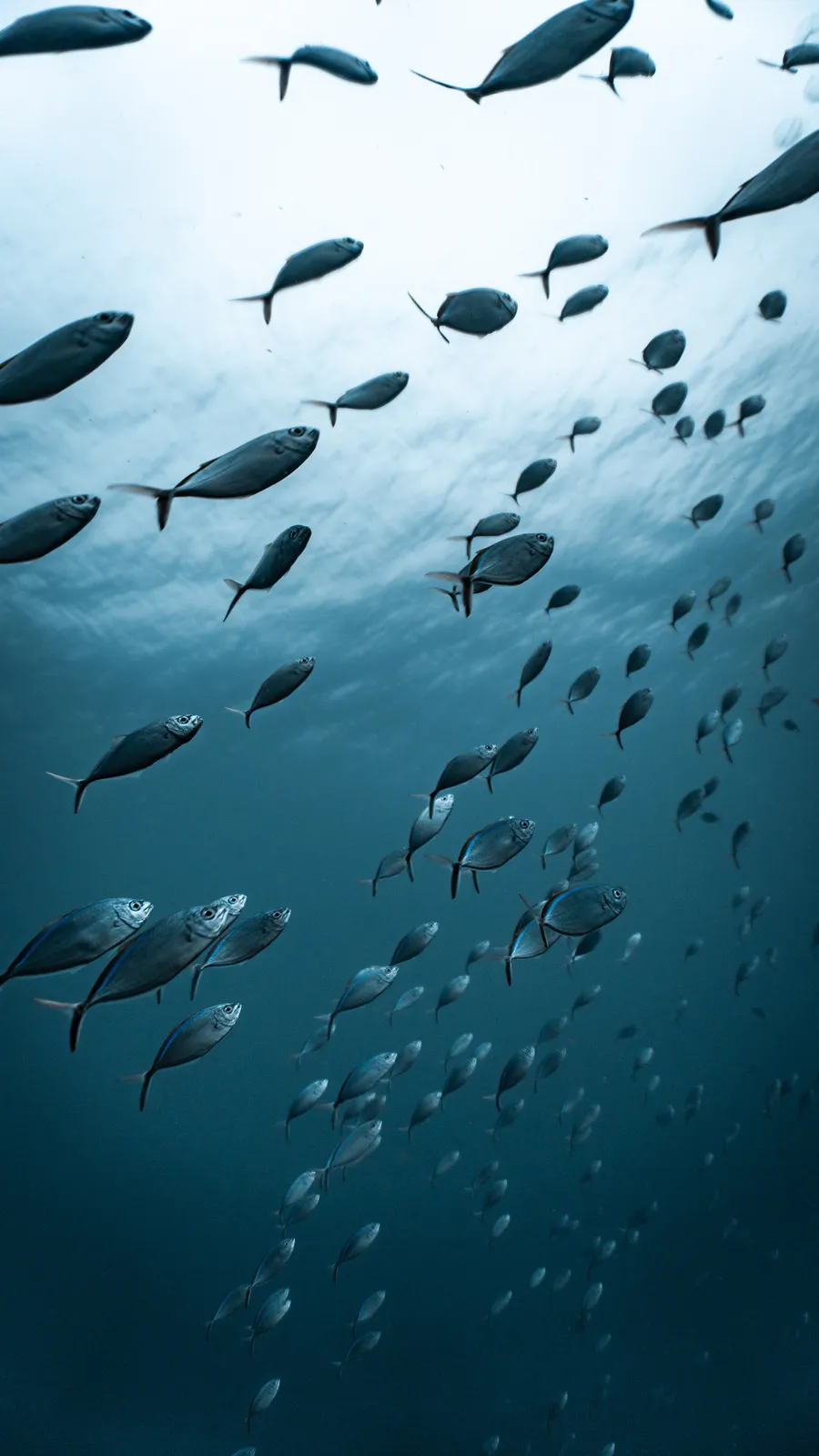
The Yongala is famous for its giants: enormous Queensland groupers, huge marble rays and bull rays, sea turtles, and schools of trevally and barracuda. Olive sea snakes, guitarfish and eagle rays are commonly seen.
Seasonal visitors include manta rays, whale sharks and even migrating humpback whales. The soft coral coating the hull adds vivid color to the spectacle.
Level and conditions
The wreck lies in 14 to 28 meters of water, but strong currents and its exposed open-water location make it an advanced dive. Most operators require an Advanced Open Water certification and recent experience.
Conditions can change quickly and visibility varies, so good buoyancy and comfort in current are important. Remember that penetration of the wreck is prohibited to protect it.
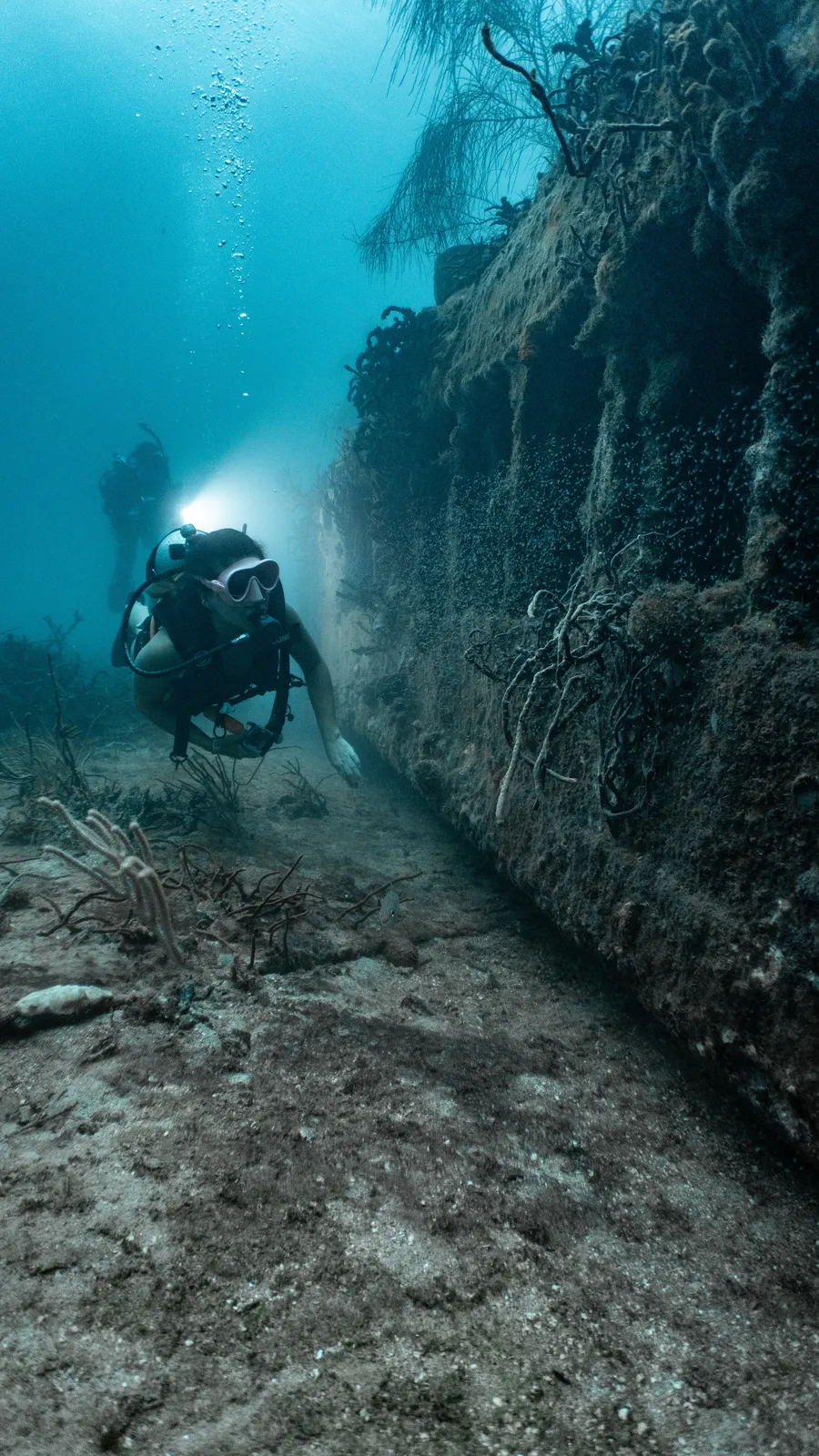
Best time and how to reach it
The Yongala can be dived year-round, with the best visibility often from around August to January. Whale season adds humpbacks between roughly June and September.
You reach it by boat from Ayr, south of Townsville in Queensland, on a day trip or overnight charter. It pairs naturally with a wider Great Barrier Reef trip.
Structure and life in Colombia
The Yongala shows how structure on the seabed becomes an oasis of life, a story echoed on Isla Fuerte. There, the submerged Zenú museum of Bajo Bonito sits amid coral gardens actively restored by the Nautilus team.
Diving it in warm, calm water is a gentler way to experience the same magic of life gathering around a special site. See it on our interactive dive map or read more guides.