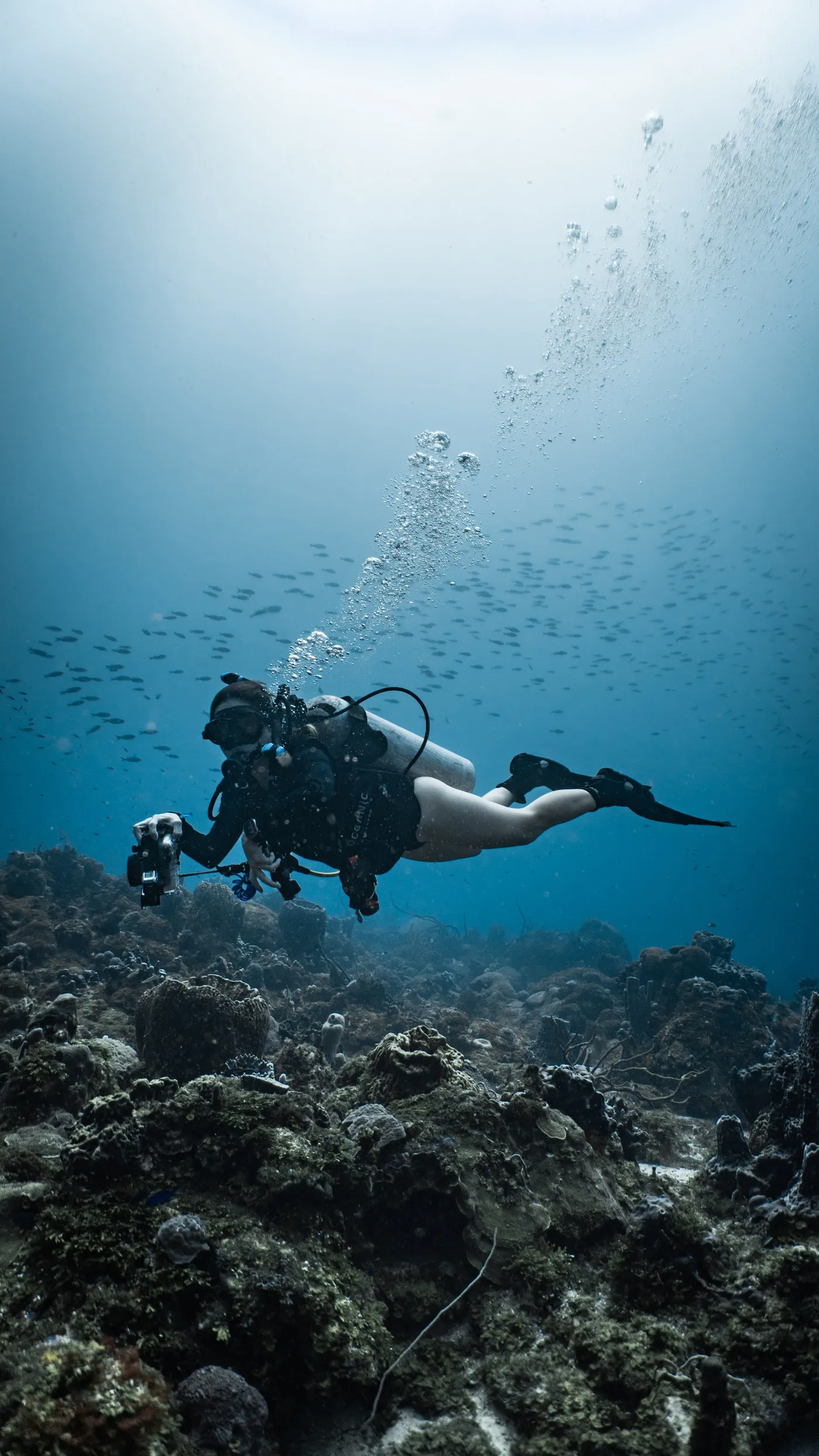
The single most important rule in scuba diving is to never hold your breath, and instead breathe continuously and calmly the whole time. The reason is simple physics: the air in your lungs expands as you ascend and water pressure decreases. If you hold a full breath while going up, that expanding air has nowhere to go and can overexpand and injure your lungs. Keep breathing slowly and steadily and the air escapes naturally with each exhale, so there is no risk at all. It is the easiest rule to follow, because breathing normally is exactly what your body wants to do anyway.
The physics
Air expands as pressure drops, and pressure drops as you rise toward the surface. A lungful of air at depth grows larger as you ascend, so it needs a way out.
Continuous breathing gives that expanding air a constant exit through your regulator. The problem only exists if you seal it in by holding your breath.
How to breathe on scuba
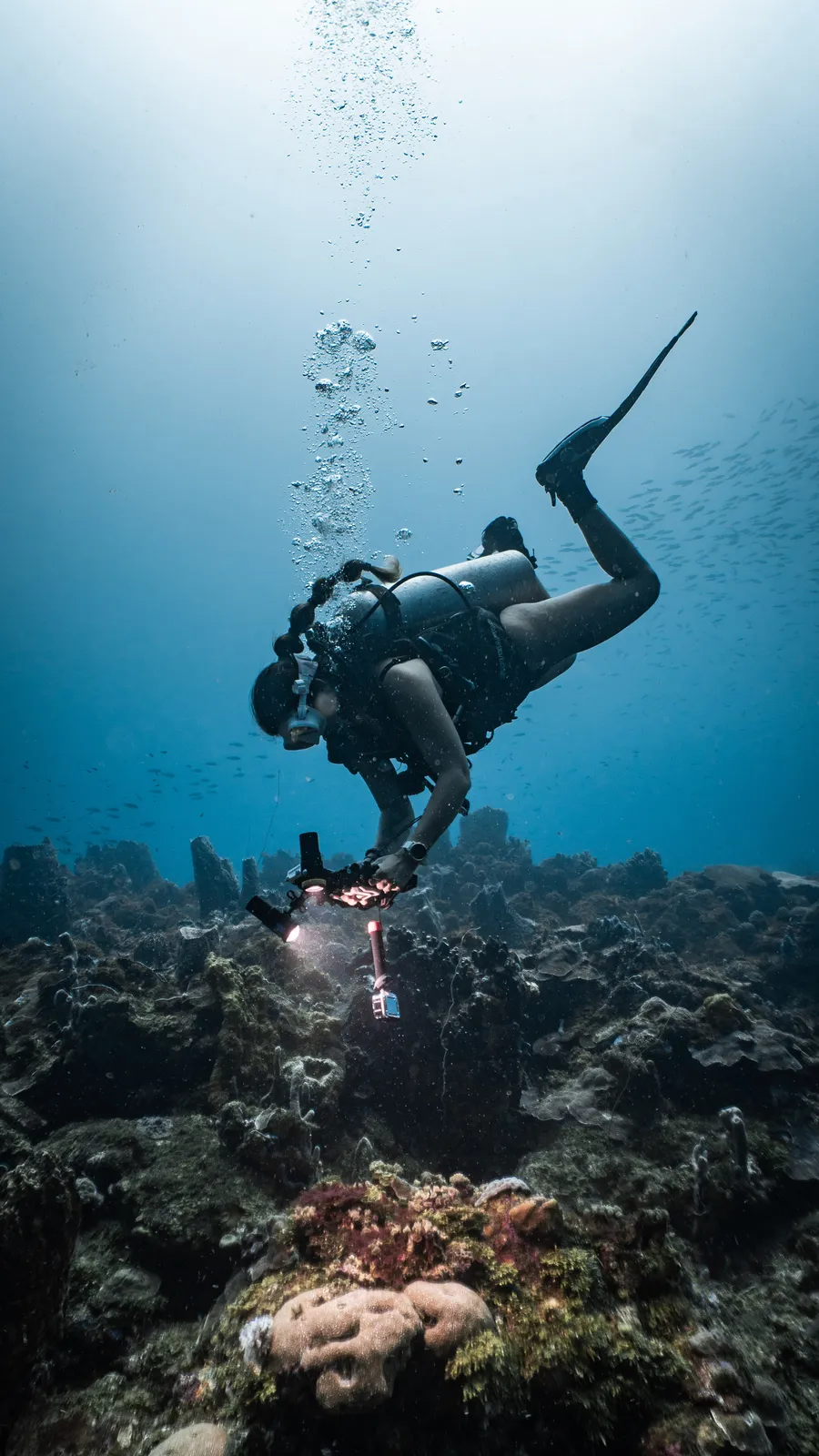
The ideal scuba breathing pattern is slow, deep and relaxed, a little slower than you might breathe on land. There are no held breaths and no rushing, just a calm in and out.
This rhythm also conserves your air and keeps you calm, so it does double duty. Your instructor teaches it in the first minutes of any course.
It becomes automatic
New divers sometimes worry they will forget to keep breathing, but in practice it feels completely natural almost immediately. Your body has been breathing continuously your whole life.
Within a few minutes underwater, the regulator feels normal and steady breathing becomes second nature. There is nothing to memorize beyond do not hold your breath.
Learn it properly
Because this rule matters so much, it is the very first thing every diver learns, and it is reinforced on every dive we run. Proper training turns it from a warning into a habit.
Start with a Discover Scuba minicourse from our courses and dives, or read more guides first. Breathe steadily and the ocean is a safe, gentle place.
The other golden rules
Continuous breathing is the first rule, and it sits alongside a few other simple habits: ascend slowly, stay with your buddy, and never dive beyond your training. Together they make diving remarkably safe.
None of them are hard, and all of them become second nature with a little practice. Good habits are what turn diving into a lifelong pleasure.