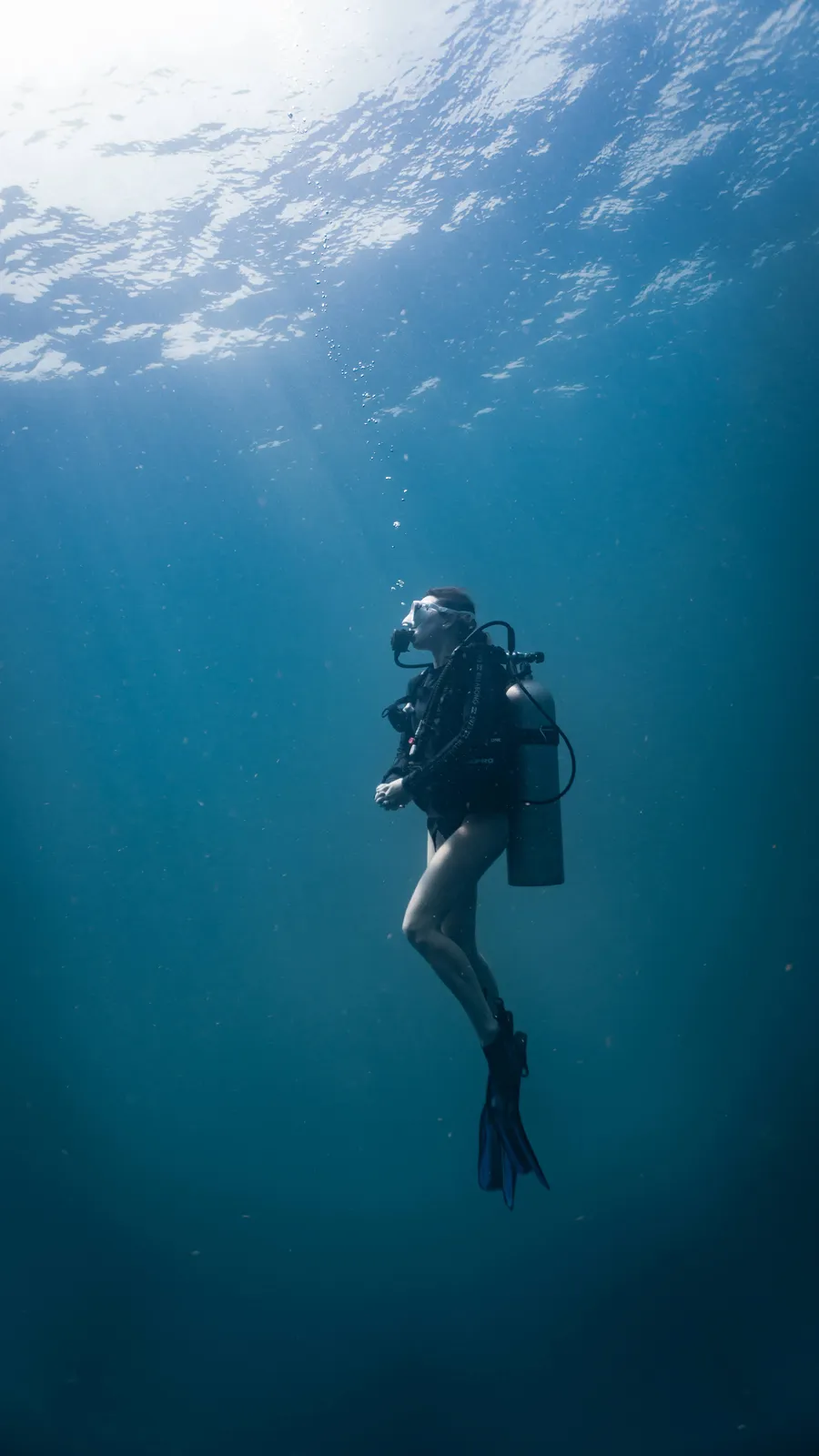
A mask filling with water is one of the first things new divers worry about, and one of the first things we teach them to fix. Clearing a flooded mask is a simple, quick skill that you practice until it feels effortless. Once you have it, a leak becomes a minor nuisance rather than a scare.
Keep breathing through your mouth
The single most important thing is that a flooded mask does not affect your air supply at all. You breathe through your regulator in your mouth, so water in your mask is only on your eyes and nose, never your lungs.
Stay calm and keep breathing steadily. Panic is the only real risk, and a slow breath restores control immediately.
How to clear it
The technique is quick and reliable:
- Look slightly upward and press the top of the mask frame against your forehead
- Breathe in through your mouth from the regulator
- Exhale steadily through your nose into the mask
- The air pushes the water down and out of the bottom seal
Two or three breaths usually empty it completely. If a little remains, simply repeat.
Why masks flood
Common causes are easy to manage: hair or a hood caught under the seal, a big smile breaking the silicone contact, or a strap that is too loose or too tight. A well-fitted mask matched to your face leaks far less.
A quick pre-dive check and keeping stray hair out of the seal prevents most floods before they start.
Stop the fog before it starts
A foggy mask can feel like a leak and tempt you to clear it needlessly. Prevent it by treating a new mask to remove the factory film, then defogging before every dive with a drop of commercial solution, baby shampoo or even a little saliva.
A clear mask that seals well leaves you free to enjoy the reef instead of fiddling. Combined with the clearing skill, fog and floods both stop being distractions.
Master it in warm water
Learning to clear your mask is far nicer in the warm 27 to 29°C water of Isla Fuerte than in a cold quarry. Our PADI instructors have you practice in the shallows first, in small groups, until it feels automatic and even a full mask removal is no big deal.
Ready to make mask skills second nature? Explore our courses and dives or come try a Discover Scuba session on one of our gentle reefs.
Important
This is general educational information, not medical advice. Always complete the medical questionnaire honestly, dive within your training and, if in doubt, consult a diving physician or contact DAN (Divers Alert Network). In an emergency in Colombia, the nearest hyperbaric chamber is in Coveñas.


