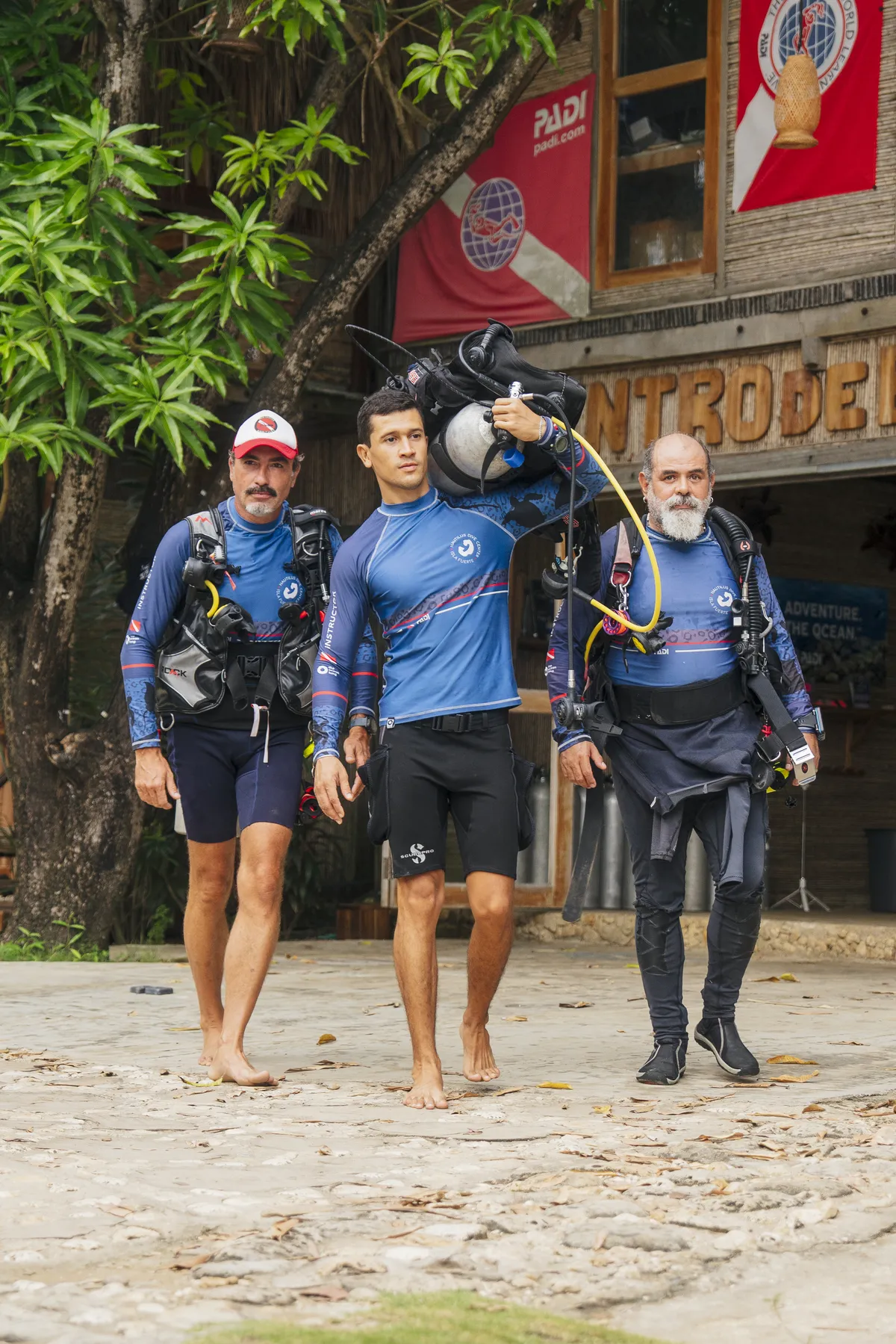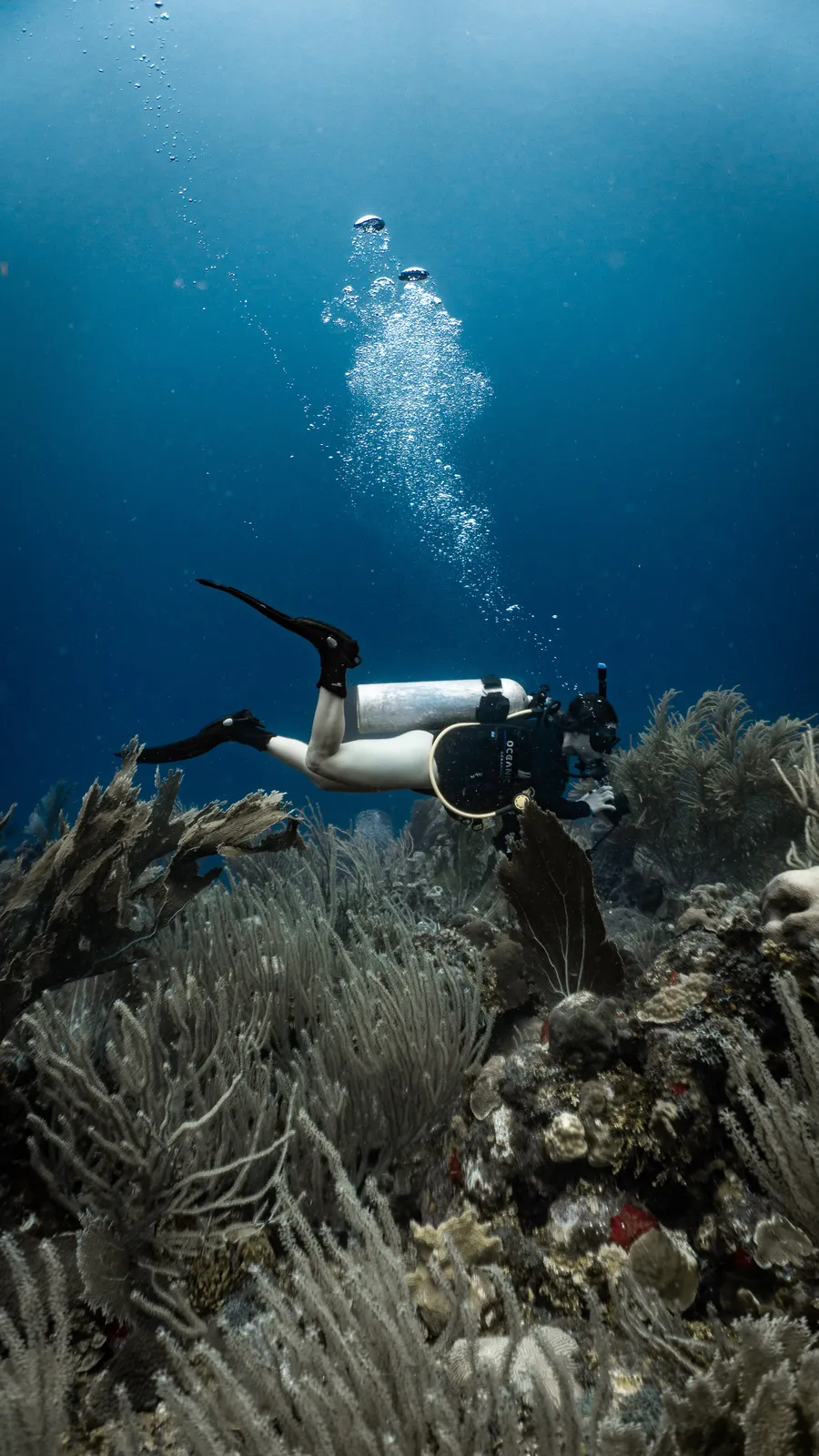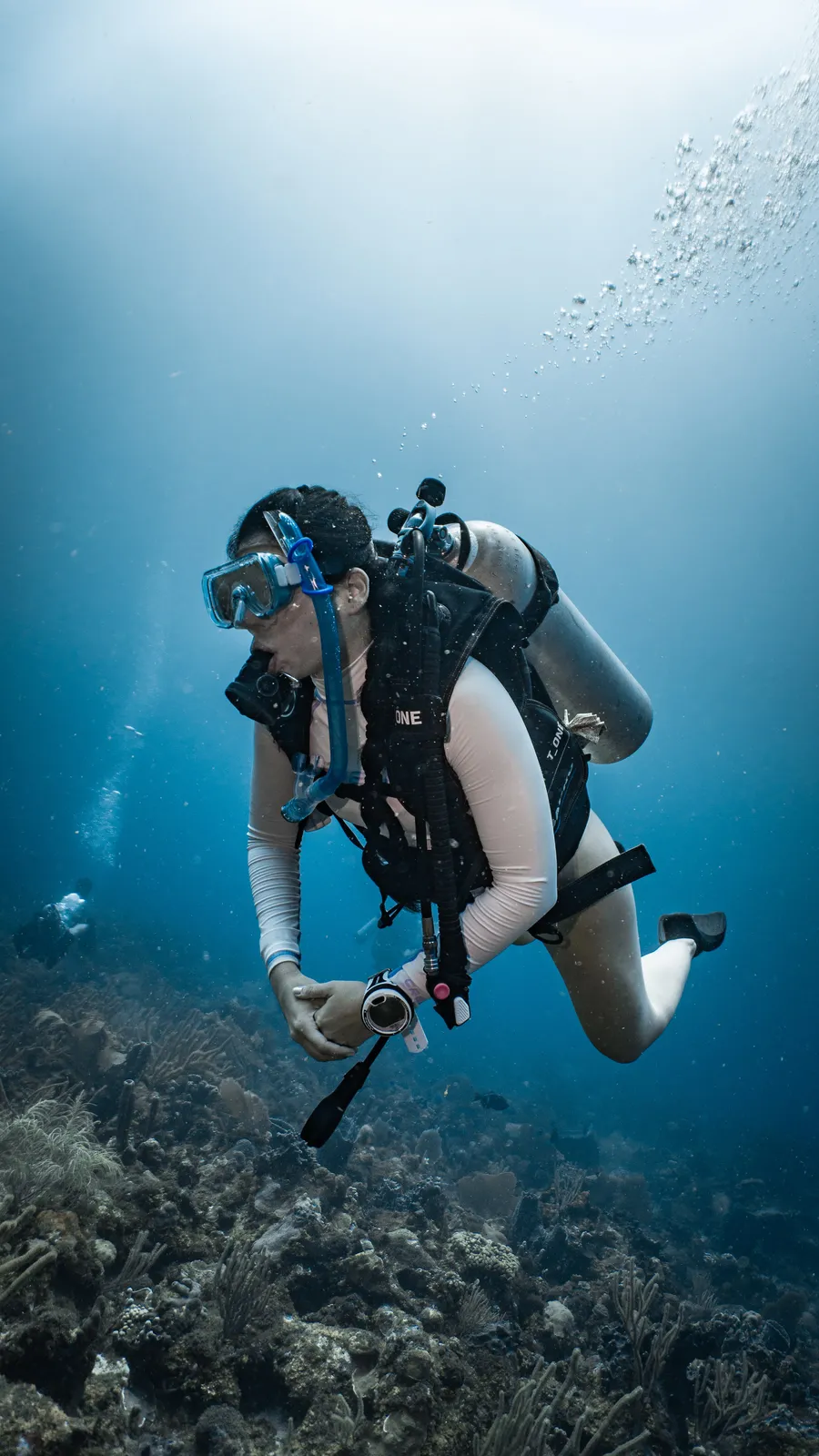
The rule of thirds is one of the oldest and smartest habits in diving, and it is nothing more than a way of splitting your air supply into three equal parts. You spend one third going out, one third coming back, and you keep the final third untouched as a safety margin. It sounds almost too simple, yet this single idea has saved countless divers from the fright of an empty tank far from the boat. On the calm reefs of Isla Fuerte it becomes second nature within a few dives.
How the math works
Imagine you start a dive with a full tank reading around two hundred bar. The rule of thirds tells you to divide that pressure into three chunks of roughly sixty-six bar each. The plan is easy to remember and easy to follow underwater.
- First third: swim away from your entry point, exploring the reef.
- Second third: turn around and head back the way you came.
- Final third: your untouched reserve for the ascent, safety stop and any surprise.
When your gauge drops to two thirds of your starting pressure, you turn the dive. It really is that clean.

Why the reserve matters
That final third is not wasted air, it is peace of mind. If a current picks up on the way back, or a buddy needs to share air, or you simply misjudge the distance, you still have a comfortable cushion to reach the surface calmly.
Panic uses air fast, and running low is exactly the kind of stress that makes you breathe harder. Keeping a real reserve means you never trade a beautiful dive for a scary ending.
When to use stricter margins
The classic thirds rule is generous for open, shallow reef dives, but some situations call for even more caution. Overhead environments like caves and wrecks, deep dives, and dives against a current all reduce your options if something goes wrong.
In those cases many divers keep more than a third in reserve, or plan turn pressures higher. On easy recreational reefs you may relax slightly, but the core discipline of turning the dive before you feel low never changes.
Practice it on Isla Fuerte
Good air management is a skill you build, not a talent you are born with, and gentle reefs are the perfect classroom. At Nautilus our instructors help you read your gauge, plan a turn pressure and breathe slowly so your air lasts longer on every dive.
With warm water at twenty-seven to twenty-nine degrees and twenty-nine dive sites to choose from, you can practice smart habits on relaxed reefs like Rosa Vieja before working toward deeper walls. Explore your options on our courses and dives page or plan a route with the interactive dive map.