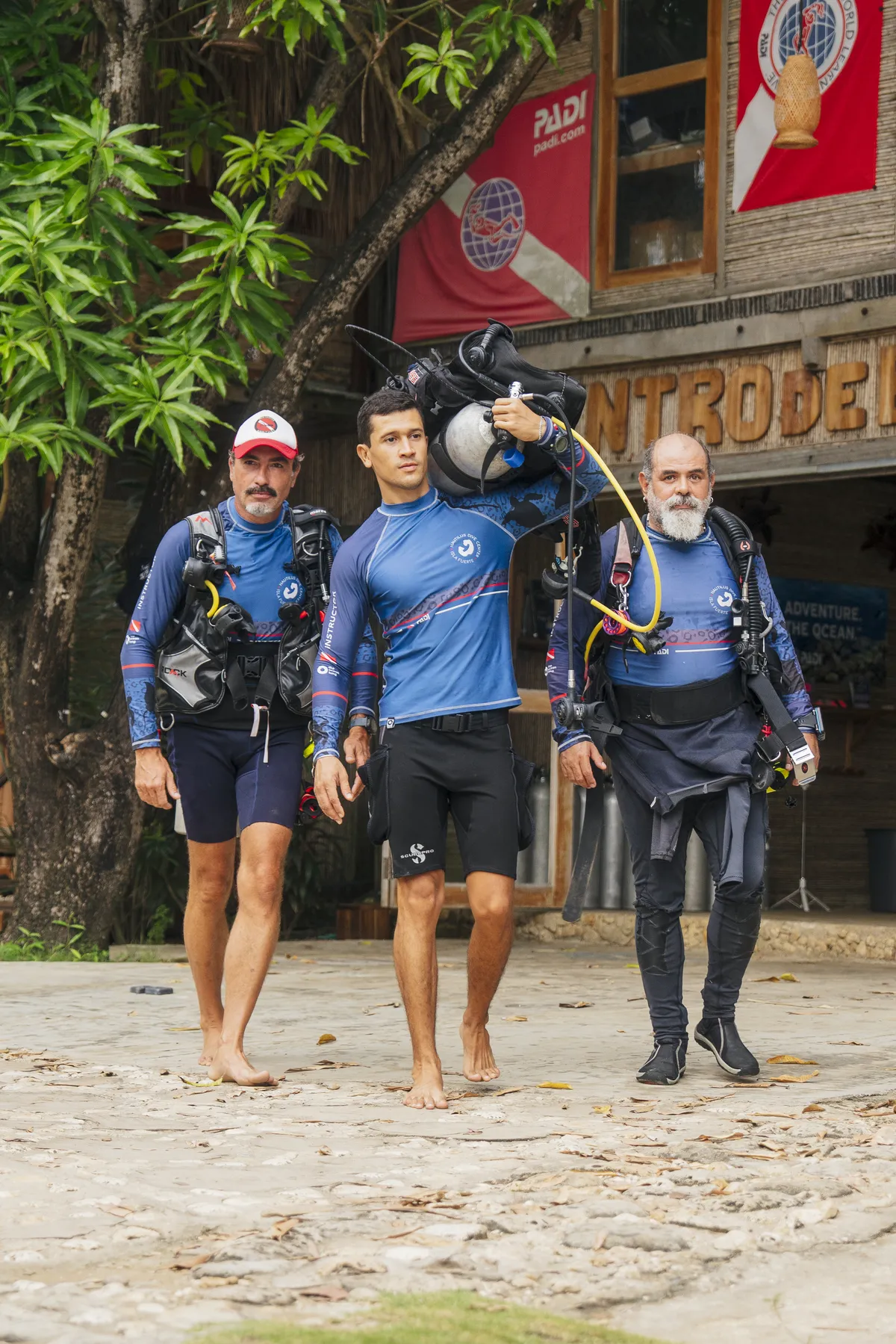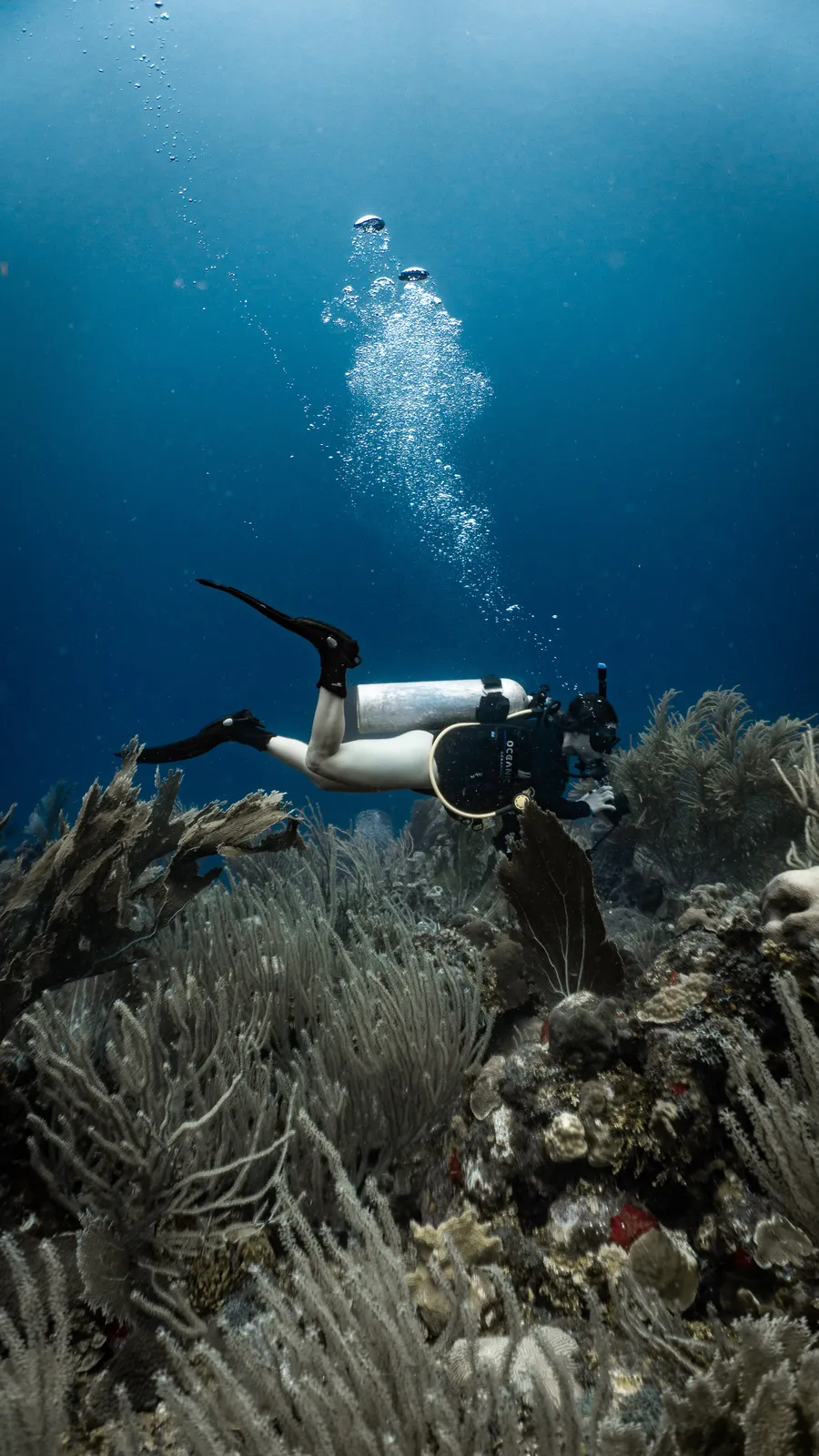
SCUBA is one of those words so common that most people forget it began as an acronym. It stands for Self-Contained Underwater Breathing Apparatus, and each of those five words describes exactly why the invention changed diving forever. Before scuba, exploring the sea meant holding your breath or being tethered to a pump on the surface by a hose. Understanding what the letters mean is the fastest way to grasp how the whole system works. On the reefs of Isla Fuerte, that self-contained freedom is what lets you drift weightless over coral for the better part of an hour.
Breaking down the letters
The acronym packs the whole concept into five words, and reading them one by one tells you what makes scuba special compared with any earlier way of going underwater.
- Self-Contained: you carry everything you need with you, no hose to the surface.
- Underwater: the system is built to work below the surface, at pressure.
- Breathing: it delivers air to your lungs on demand.
- Apparatus: it is a set of equipment, mainly a tank and a regulator.
Put those ideas together and you have a diver who can swim freely in any direction, untethered, breathing normally.
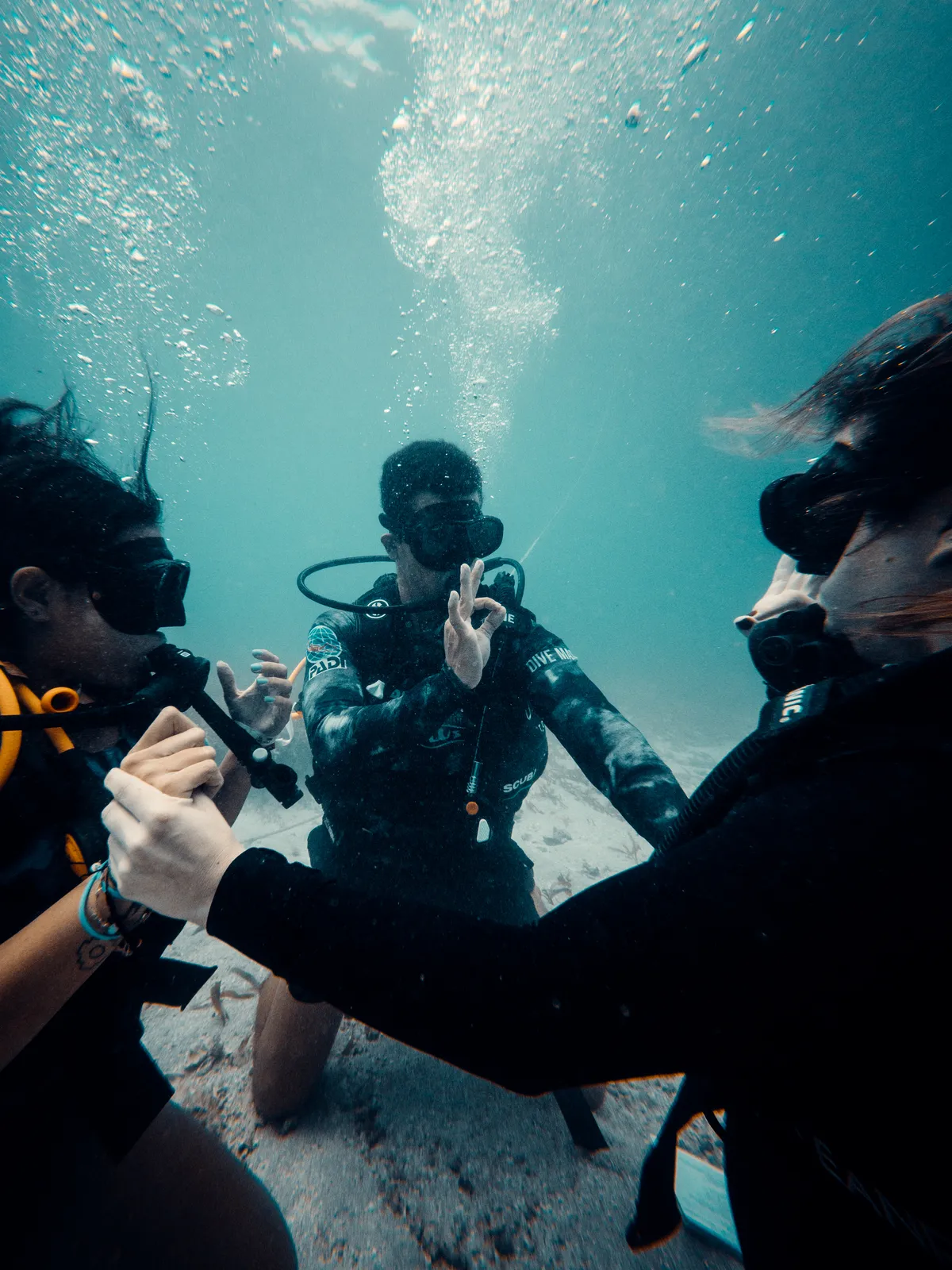
Where the word came from
The term was coined in the mid twentieth century by an American engineer working on rebreathers for military divers. It was originally a technical label, but the design that made it famous was the open-circuit aqualung developed by Jacques Cousteau and Emile Gagnan in 1943.
Their demand-valve regulator was the piece that made a truly self-contained rig practical for ordinary people. Within a generation the word scuba had jumped from engineering reports into everyday speech, and it now works as a noun, an adjective and even a verb.
Why self-contained matters
The self-contained part is the whole revolution. Older hard-hat diving chained a person to a surface crew, an air pump and a heavy suit, so range and freedom were very limited. Scuba cut the cord.
Carrying your own air means you decide where to swim, how to turn, and when to hover motionless beside a wall. That independence is exactly what makes recreational diving feel like flight, and it is why a certified diver can explore a reef almost as casually as a hiker explores a trail.
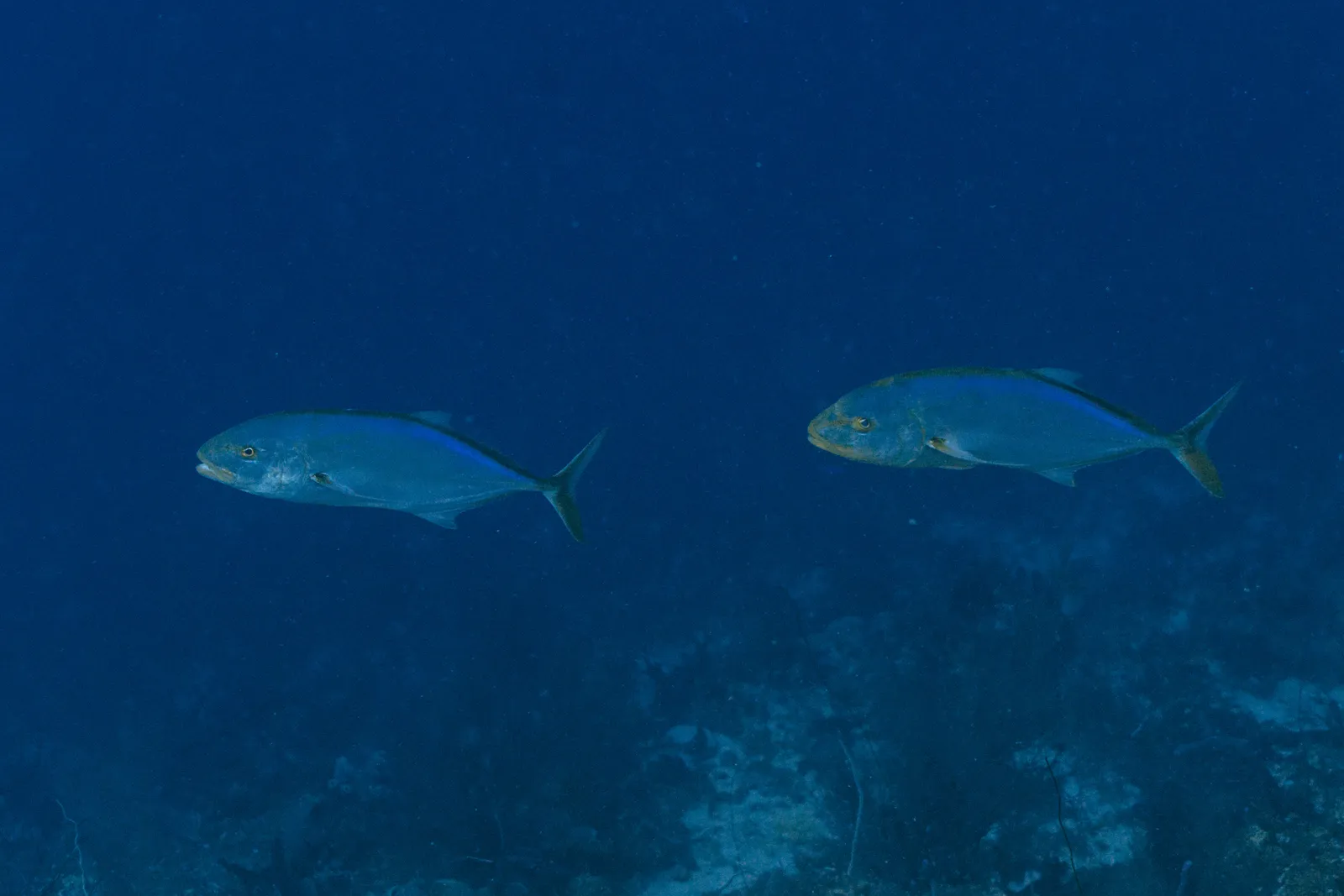
Living the acronym in Isla Fuerte
The best way to understand what those five words really mean is to feel them. The moment you sink below the surface with a tank on your back and take a slow, easy breath, the whole acronym stops being a definition and becomes an experience.
Nautilus is a PADI center on Isla Fuerte where you can do exactly that, with all gear provided, certified instructors and calm water between 27 and 29 degrees. Beginners often take their first self-contained breaths on our gentle house reefs. Browse the options on our courses and dives page or picture the terrain first on the interactive dive map.