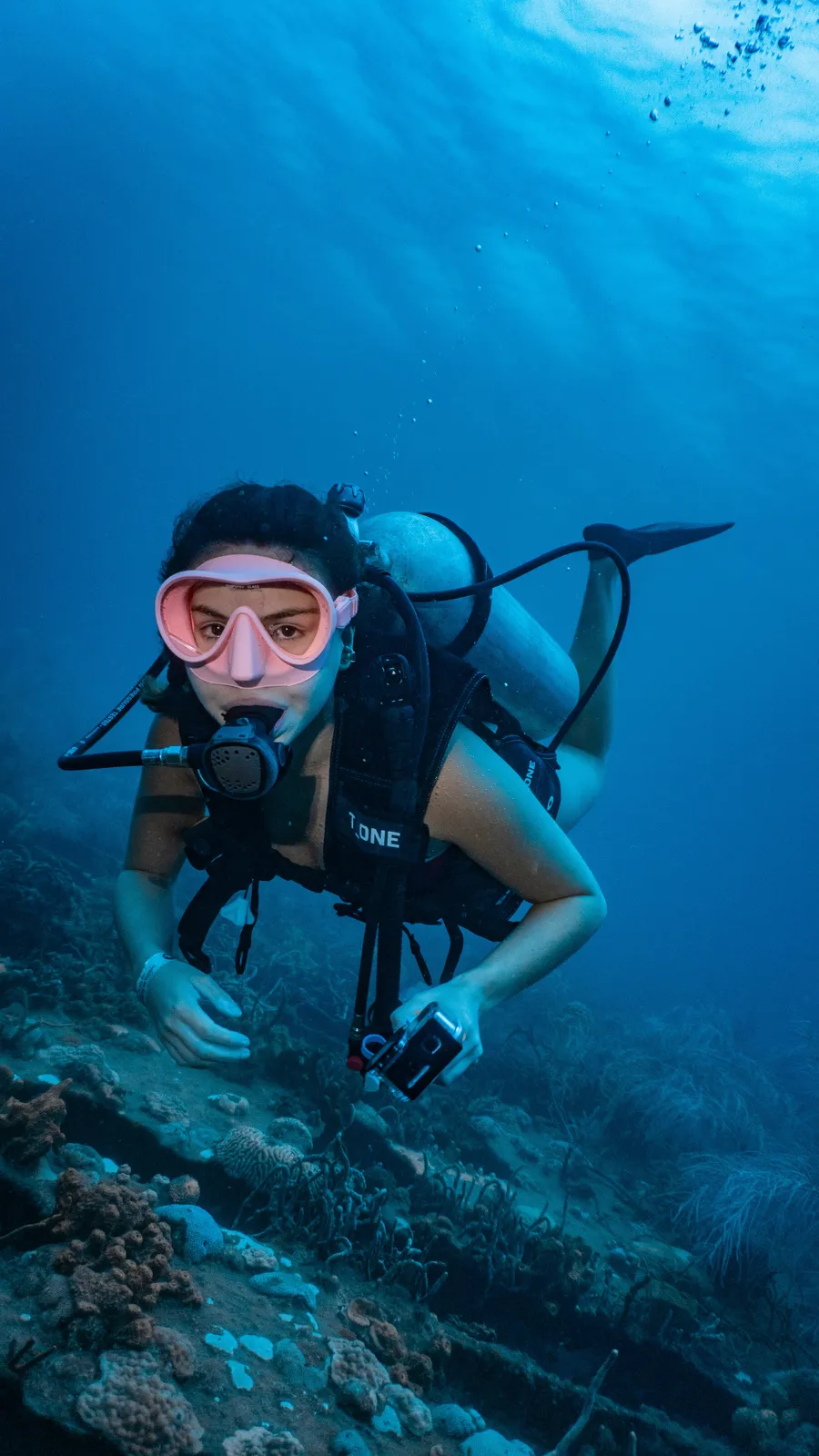
A dive computer is a small wrist device that quietly does the math that keeps you safe, second by second, throughout your dive. It constantly tracks how deep you are and how long you have been down, then calculates how much longer you can stay and how fast you may safely rise. Before these devices existed, divers planned everything with printed tables and a watch, but the computer does it live and adapts to the real profile you swim. Think of it as a personal safety brain strapped to your arm, and learning to read it is one of the most useful skills you will pick up.
The nitrogen problem
Most of the air you breathe is nitrogen, and under the pressure of depth your body slowly absorbs more of it into your tissues. This is harmless as long as you let it out gradually, but rising too fast can turn that dissolved gas into bubbles, which causes decompression sickness.
A dive computer models exactly how much nitrogen you are taking on and giving off in real time. It uses that to keep you within safe limits, so the invisible chemistry of diving becomes a simple number you can read at a glance.
What the screen tells you
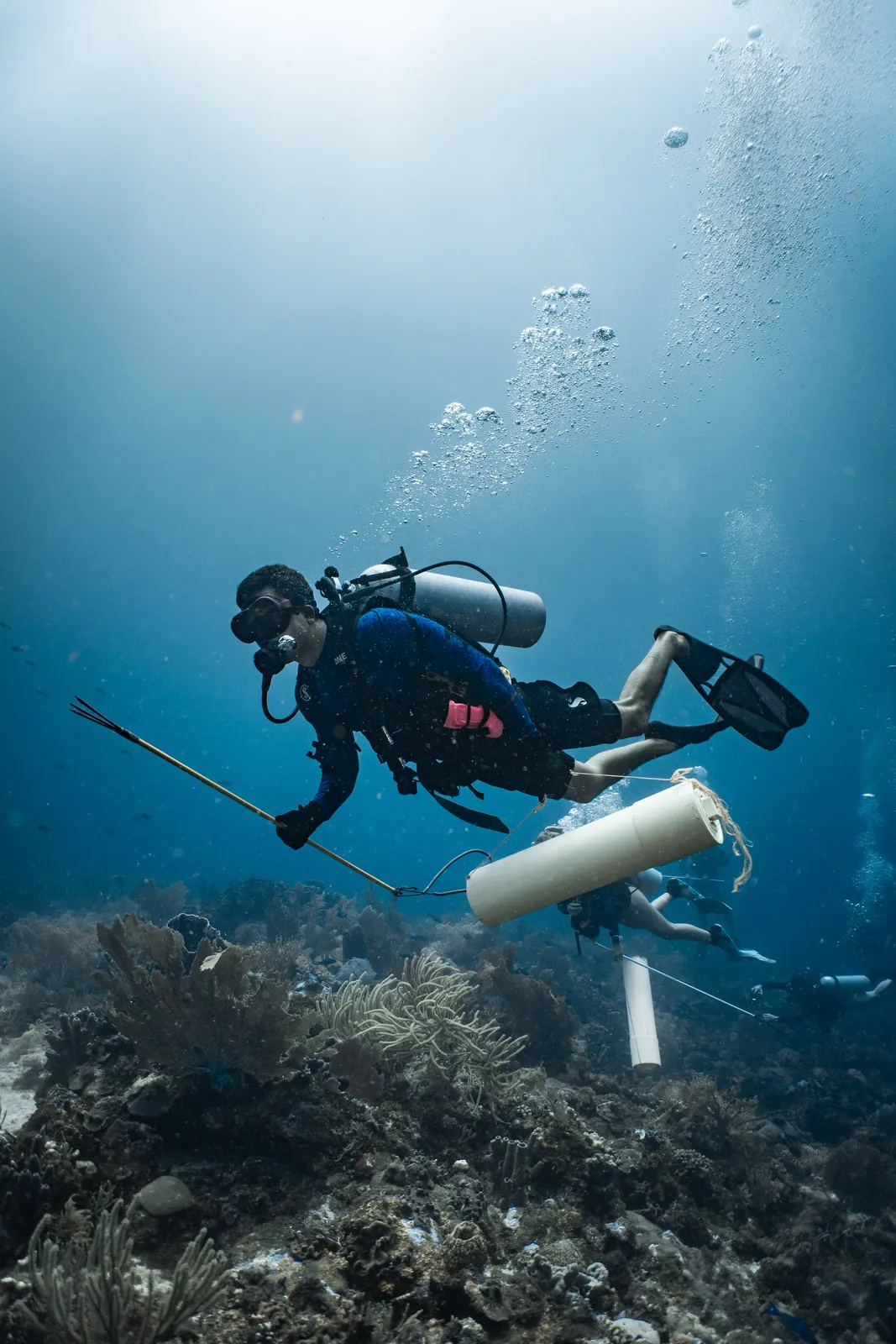
At any moment the display shows you the handful of numbers that matter most for a safe, enjoyable dive. Learning where each one sits on your screen takes only a dive or two.
- Current depth, so you always know exactly how far down you are.
- Elapsed dive time, counting the minutes since you left the surface.
- No-decompression limit, the remaining minutes you can stay at your depth before a decompression stop would be required.
- Ascent rate, often a warning if you are rising too quickly.
Ascend slowly, always
One of the computer's most valuable features is its ascent-rate alarm. Rise too fast and it will beep or flash to slow you down, because a controlled ascent is what gives absorbed nitrogen time to leave your body safely.
As a rule, divers aim to rise no faster than their own smallest bubbles, roughly eighteen meters per minute or slower. The computer takes the guesswork out of that, turning a critical safety rule into a simple prompt you can follow.
We teach you to read it
You do not need to buy a computer to dive with us, and you certainly do not need to memorize the physics behind it. Our instructors show you how to read yours and how to plan each dive conservatively, staying well inside every limit.
Combined with our warm, clear water and relaxed profiles, this makes for very comfortable diving across all our sites, from beginner reefs to the deeper structure at Bushnell. Explore the full range on our interactive dive map.