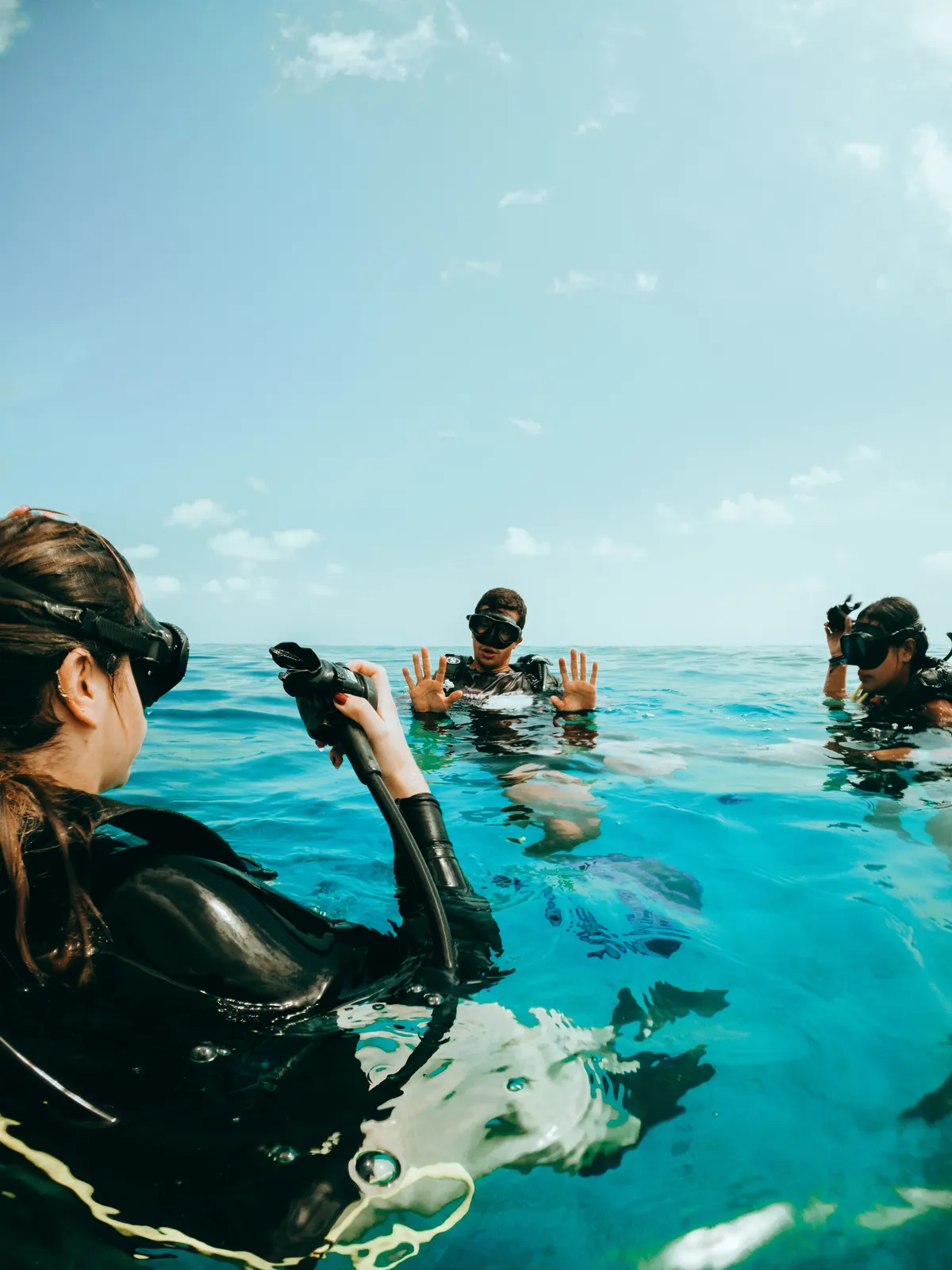
You do not run out of air while scuba diving because you constantly monitor your supply and always keep a safe reserve. This is one of the first things every diver learns, and it makes running out extraordinarily rare when the rules are followed. You check your pressure gauge regularly, communicate your remaining air to your buddy or instructor, and turn back or ascend well before the tank gets low. Slow, calm breathing stretches your air much further than most beginners expect. On a guided recreational dive, your instructor also watches everyone's air, adding a second layer of awareness so you can simply relax and enjoy the reef.
Check your gauge often
Every diver carries a submersible pressure gauge, or SPG, that shows exactly how much air remains in the tank. You glance at it regularly throughout the dive, not just at the end.
Checking early and often means there are never any surprises. You always know your status long before it becomes a concern.
Plan the turnaround
Dives are planned so you head back with plenty of air still in the tank, never squeezing out the last breath. A common rule is to begin your ascent while a healthy reserve remains.
This built-in margin is what keeps running out a non-event. You end the dive comfortable, not scraping the bottom of the tank.
Breathe slow to last longer
Slow, deep, relaxed breathing uses far less air than the fast, shallow breathing of a nervous beginner. As you gain comfort, your air consumption drops and your dives grow longer.
Good buoyancy helps too, since you waste no energy fighting to stay level. Calm divers simply get more time underwater from the same tank.

Backup if it ever happened
Even in the rare case someone got low on air, every diver carries an alternate second stage, and buddies practice sharing air. You are trained to solve it calmly, not to panic.
A slow, controlled ascent with your buddy is always available as a safe option. Redundancy is built into the whole system.
Guided and worry-free in Isla Fuerte
On Nautilus dives, a certified instructor monitors the group's air and ends the dive with a comfortable margin for everyone. Our warm, shallow reefs also make air last longer than at depth.
You get to relax while we manage the details. See our courses and dives or read more guides to understand how easy it really is.