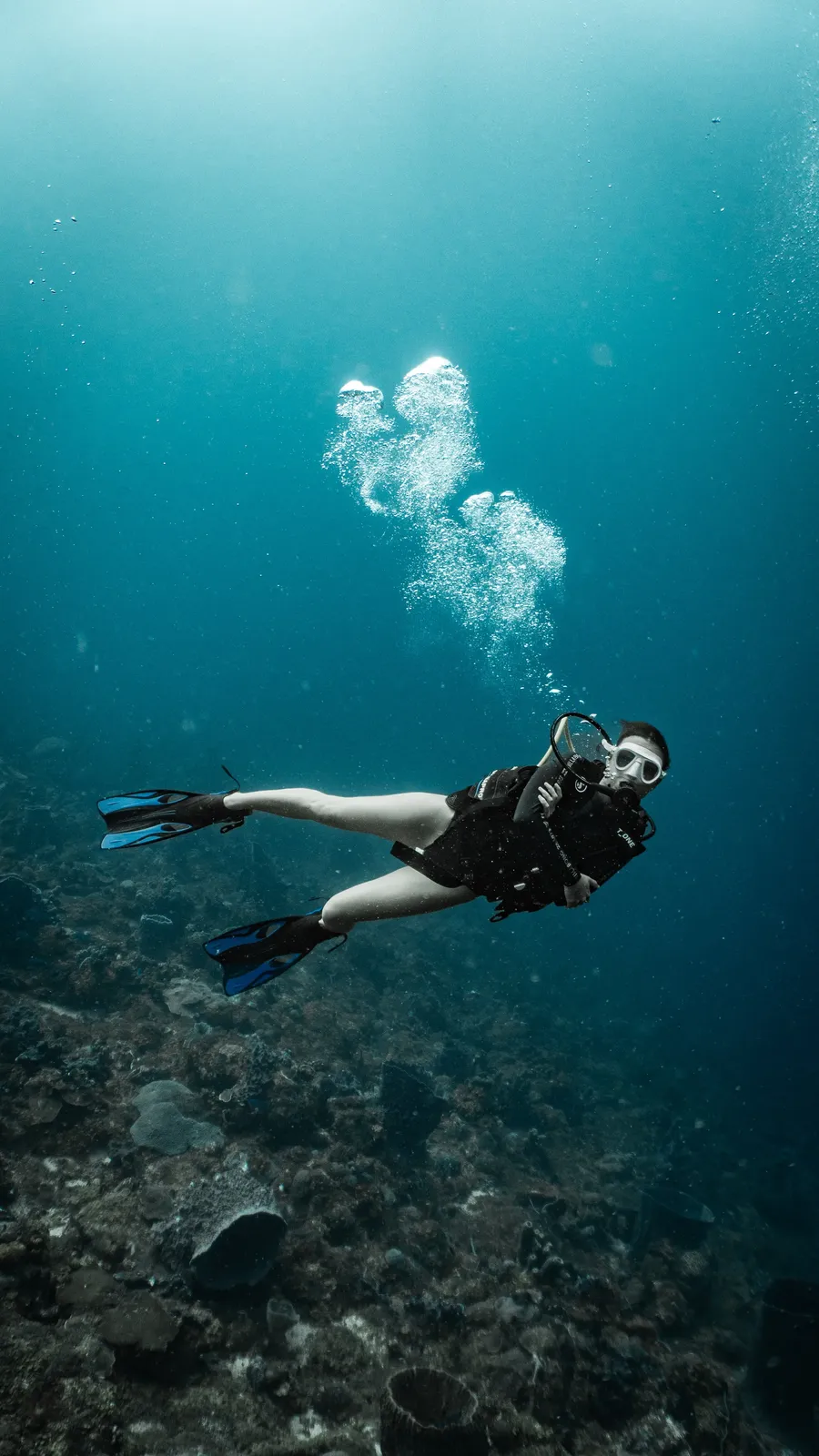
A cold, an allergy flare-up or ordinary sinus congestion blocks the very air spaces you need to equalize during a dive. When those passages are swollen shut, pressure cannot balance, and you risk ear or sinus barotrauma on the way down and a painful, dangerous reverse block on the way up. The safe answer is almost always to wait. Understanding why makes it much easier to accept, and it protects your hearing for every future dive.
How equalizing works
As you descend, water pressure squeezes the air spaces in your ears and sinuses. You equalize by gently sending air up through the Eustachian tubes to balance that pressure so nothing gets squeezed.
This only works if those tubes and sinus openings are clear. Congestion swells the tissue and closes them, so no matter how carefully you try, the air cannot get through and the pressure has nowhere to go.
The danger of a reverse block
Some divers take a decongestant, dive while it works, then find it wears off at depth. As they ascend, trapped air expands with nowhere to escape, causing an extremely painful reverse block that can force an emergency-slow ascent or damage the ear.
This is why masking congestion with medication is risky rather than clever. The problem does not disappear, it just moves to the most dangerous moment of the dive.
The safe call
If you cannot breathe clearly through both sides of your nose, do not dive. Try a gentle equalization test on land: if your ears will not clear easily standing up, they will not clear underwater either.
Wait a day or two until your head is fully clear. Diving congested to avoid missing one session can cost you a middle-ear injury that sidelines you for weeks.
Talk to us and reschedule
Tell your guide honestly if you wake up stuffy. Our sites are not going anywhere, and with 29 dive sites across Isla Fuerte we can almost always shift your dives to a later day when you feel better.
See courses and dives for flexible scheduling, and remember that a beginner reef like Rosa Vieja is just as beautiful tomorrow as it is today.
Prevent congestion before your trip
Stay hydrated, rest well and manage known allergies before you arrive. If you are prone to sinus trouble, talk to a physician ahead of time about a safe plan rather than improvising on a dive day.
Arriving healthy is the best guarantee of clear, comfortable equalizing on every descent.
Important
This is general educational information, not medical advice. Always complete the medical questionnaire honestly, dive within your training and, if in doubt, consult a diving physician or contact DAN (Divers Alert Network). In an emergency in Colombia, the nearest hyperbaric chamber is in Coveñas.


