The Great Blue Hole is one of the most recognizable dive sites on Earth, a near-perfect circle of deep blue water almost 300 meters across and around 125 meters deep. It sits at the center of Lighthouse Reef, roughly 80 kilometers off Belize City, and was made famous by Jacques Cousteau. What draws divers is not colorful coral but the strange geology of the place, where you descend past the rim of a flooded cave into a chamber decorated with massive stalactites. It is a bucket-list dive that feels more like exploring a cathedral than a reef.
What makes it special
The Blue Hole formed during past ice ages as a limestone cave system, when sea levels were far lower and the chamber was dry. As the ocean rose, the roof collapsed and left the vertical shaft you see today, sealing those ancient stalactites underwater.
From the surface it looks like a dark eye in the middle of a pale turquoise lagoon. That contrast, together with the sheer scale, is why it appears on almost every list of the world's greatest dives.
Marine life you may see
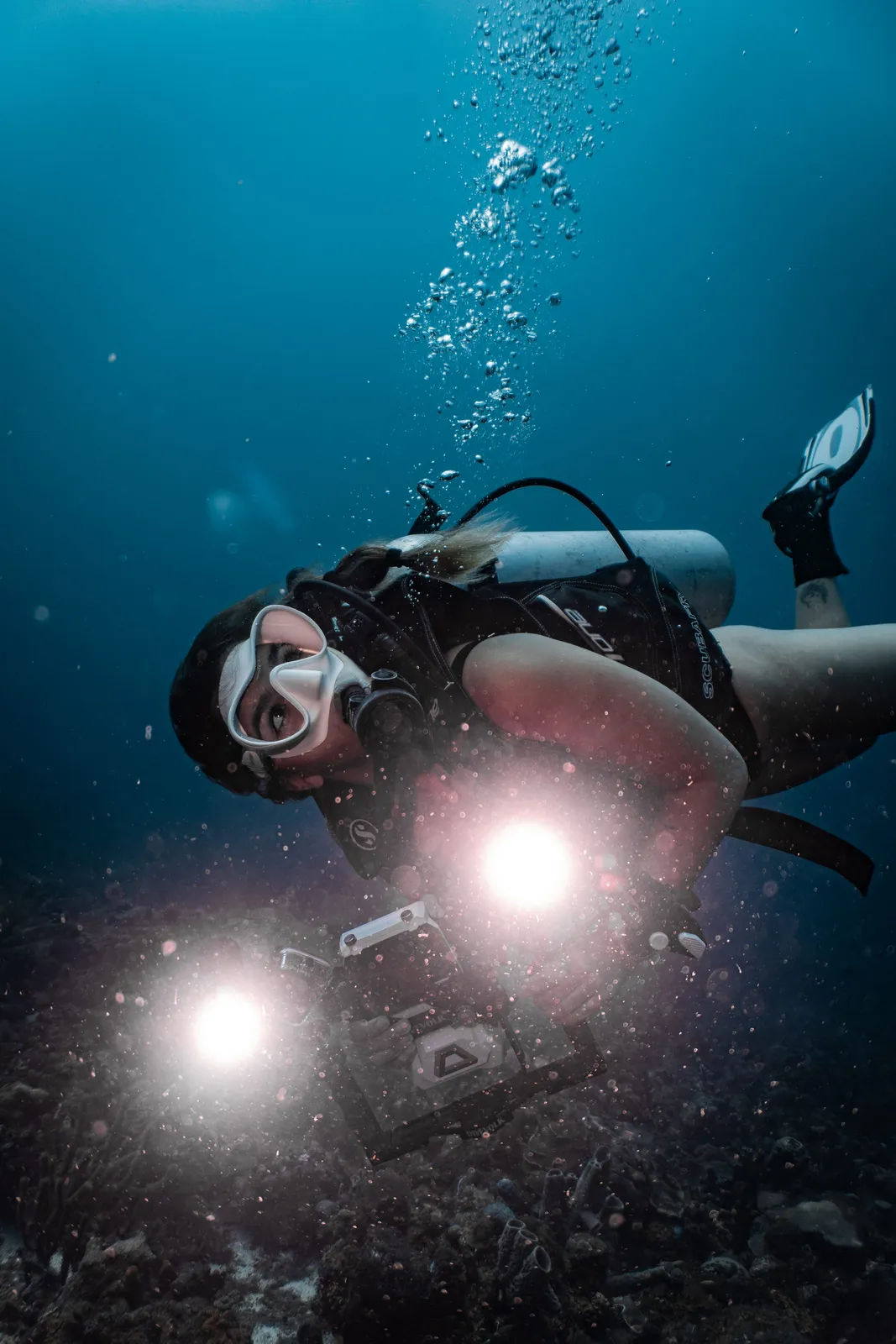
The deep interior is fairly barren, but the walls and the surrounding reef are alive. Caribbean reef sharks and the occasional nurse shark cruise the rim, and midnight parrotfish and groupers patrol the shallower coral.
Divers come here for the geology first and the marine life second, so keep your expectations set on the stalactites and the sharks rather than dense reef color.
Level and conditions
This is an advanced dive. The stalactites begin around 30 to 40 meters, so most operators require an Advanced Open Water certification and good experience managing depth, air and nitrogen narcosis.
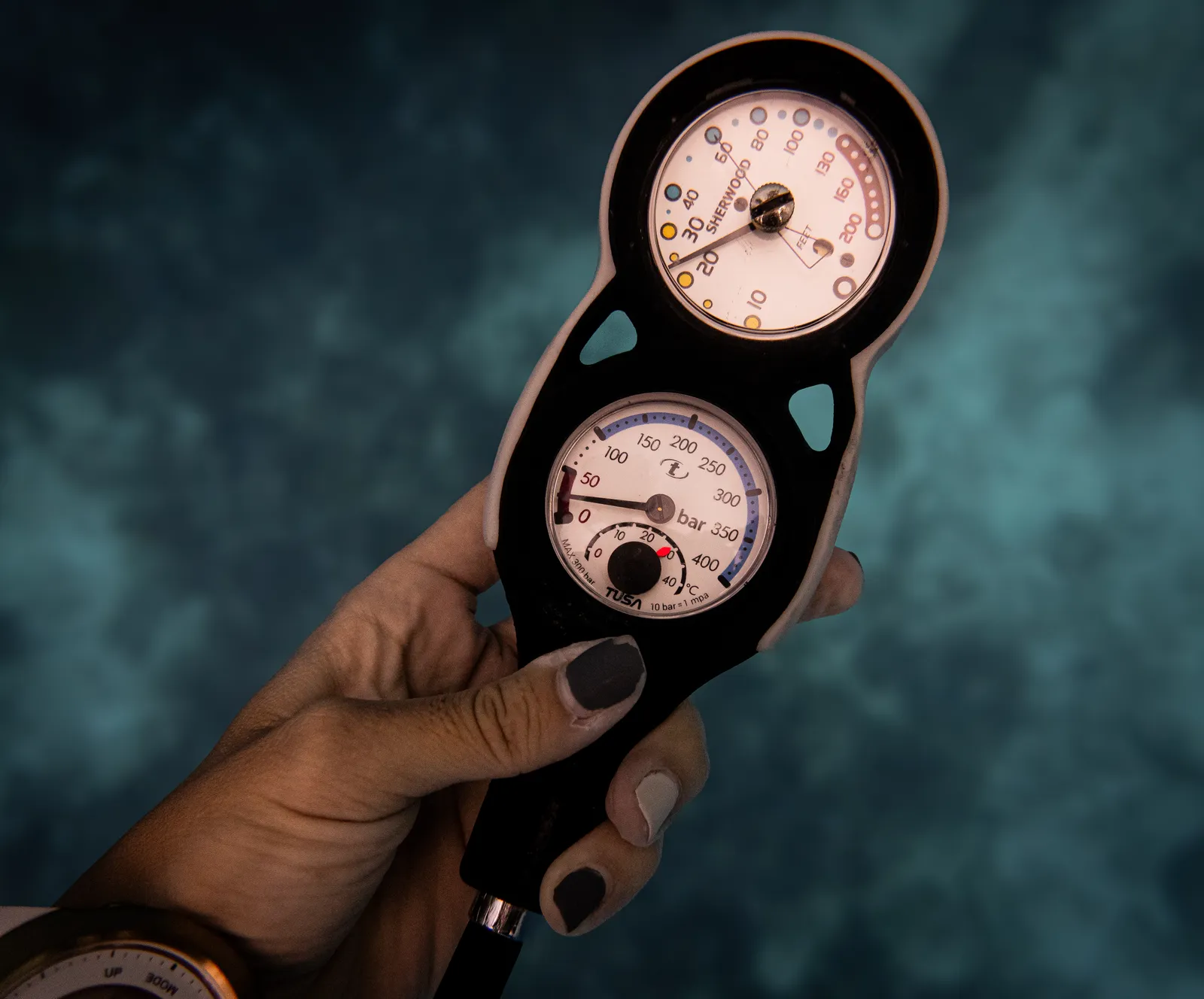
Visibility is usually excellent and there is little current inside the hole, but the deep profile leaves short bottom times and demands strict computer discipline. It is a dive to do calmly, not one for beginners.
Best time and how to reach it
The dry season from November to May offers the calmest seas and best visibility. Most divers reach the Blue Hole on a full-day boat trip from Ambergris Caye or Belize City, or as part of a liveaboard that also visits Half Moon Caye and the outer atolls.
Because it is far offshore, plan for an early start and combine it with the healthier reef dives nearby to make the long boat ride worthwhile.
Closer than you think
A dive like the Blue Hole is a lifetime goal, and you do not need to fly to Central America to start building toward it. The Colombian Caribbean has its own dramatic underwater terrain, and at Nautilus on Isla Fuerte you can train on real walls and reefs just 11 kilometers off the coast of Córdoba.
Our advanced site Bushnell drops into deep open-water walls where hammerheads and whitetips pass by, a perfect place to build the depth experience these bucket-list dives require. Explore our interactive dive map or see our courses and dives to begin.