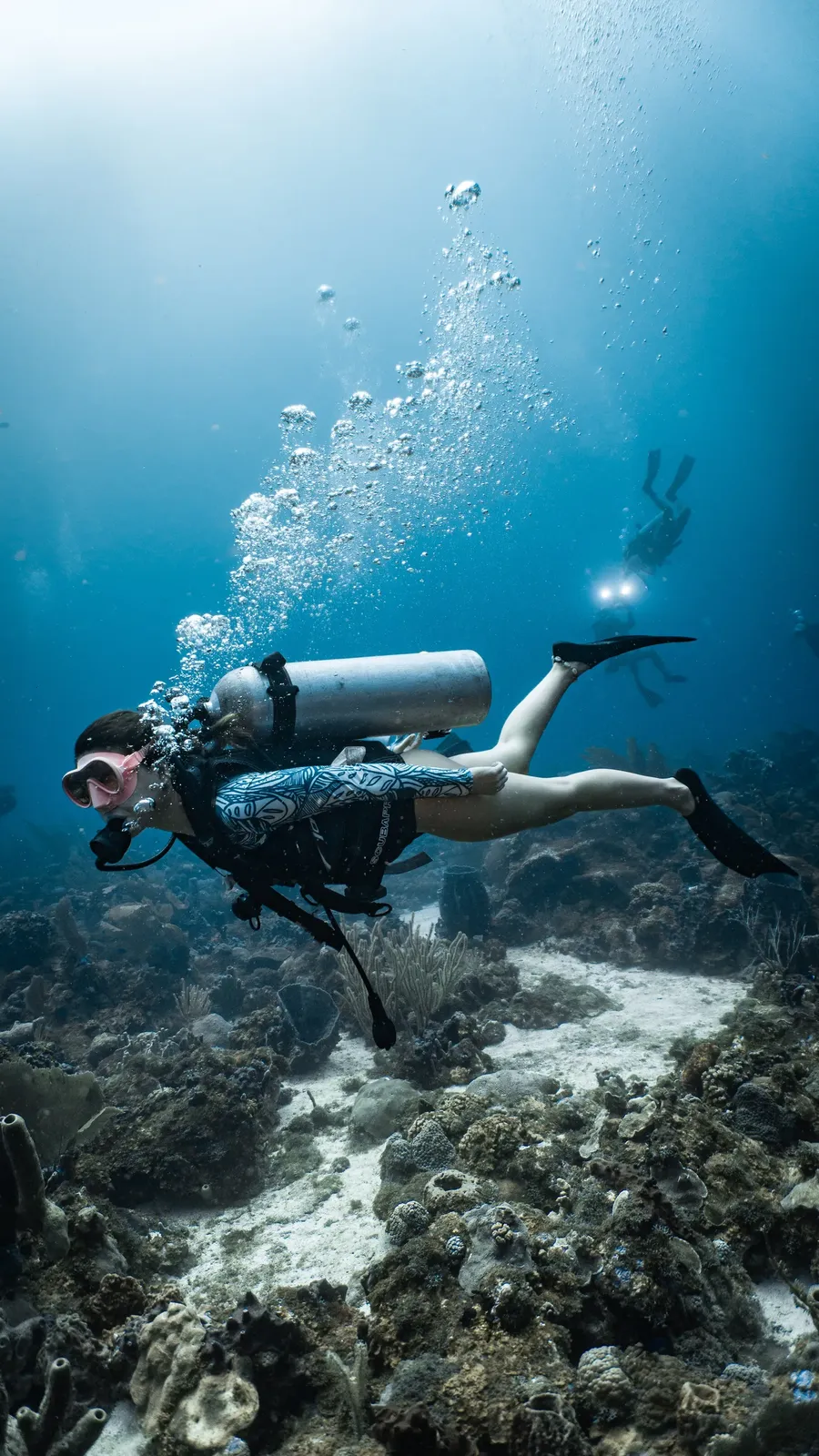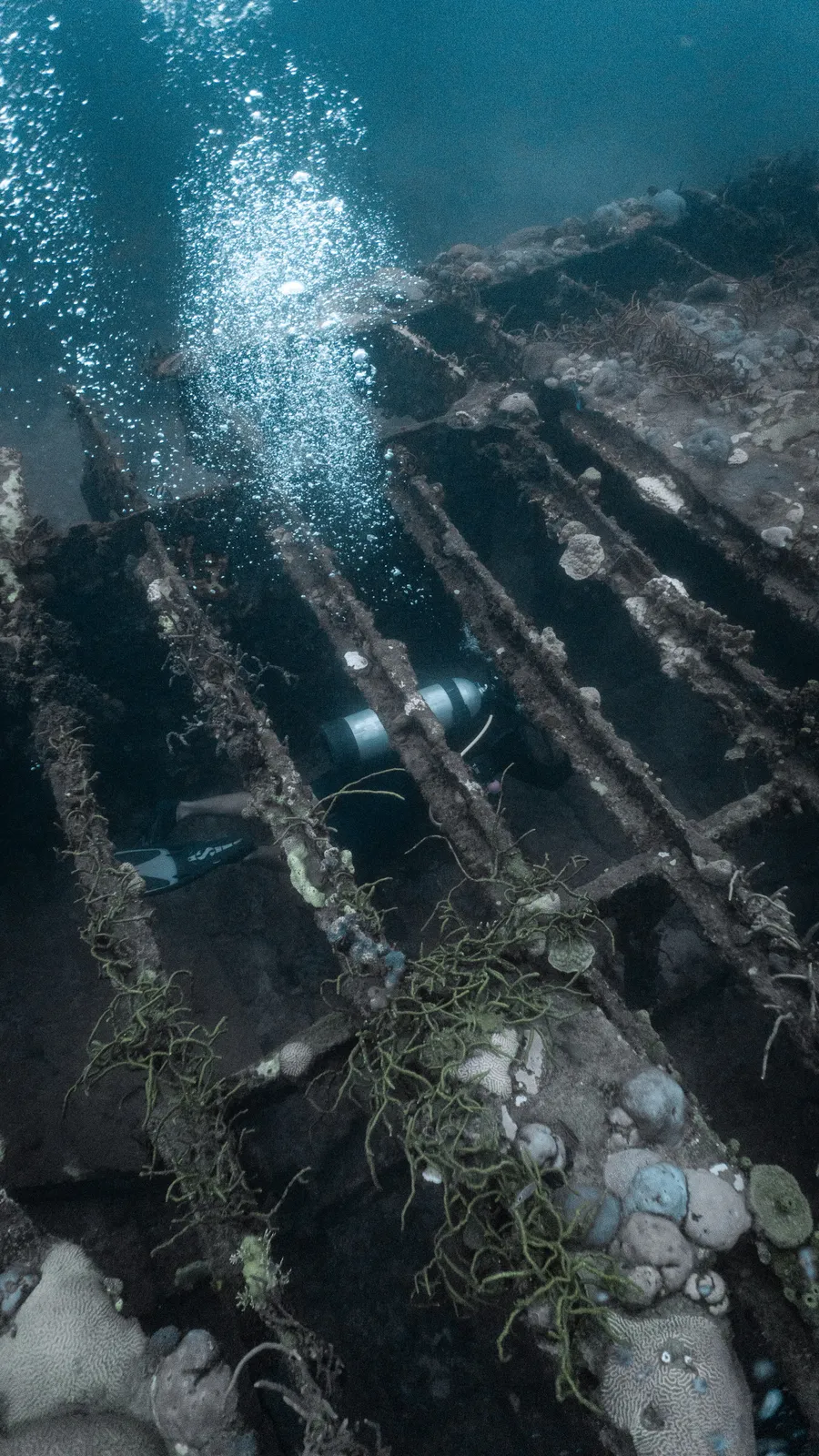
Bloody Bay Wall, off the tiny island of Little Cayman, is one of the most famous wall dives on Earth. The reef top sits in bright shallows, then drops away in a vertical cliff that falls thousands of meters into indigo. With gin-clear water and pristine coral, it is a benchmark for what Caribbean wall diving can be. This guide covers the wall, its life, and why nearly any diver can enjoy it.
What makes it special
The wall's edge starts as shallow as 6 meters, then turns instantly vertical, a rare structure that lets divers hover over an abyss while still in warm, sunlit water.
Little Cayman is remote and lightly dived, and Bloody Bay is a protected marine park. The result is some of the healthiest, most colorful coral and sponge growth left in the region.
Marine life
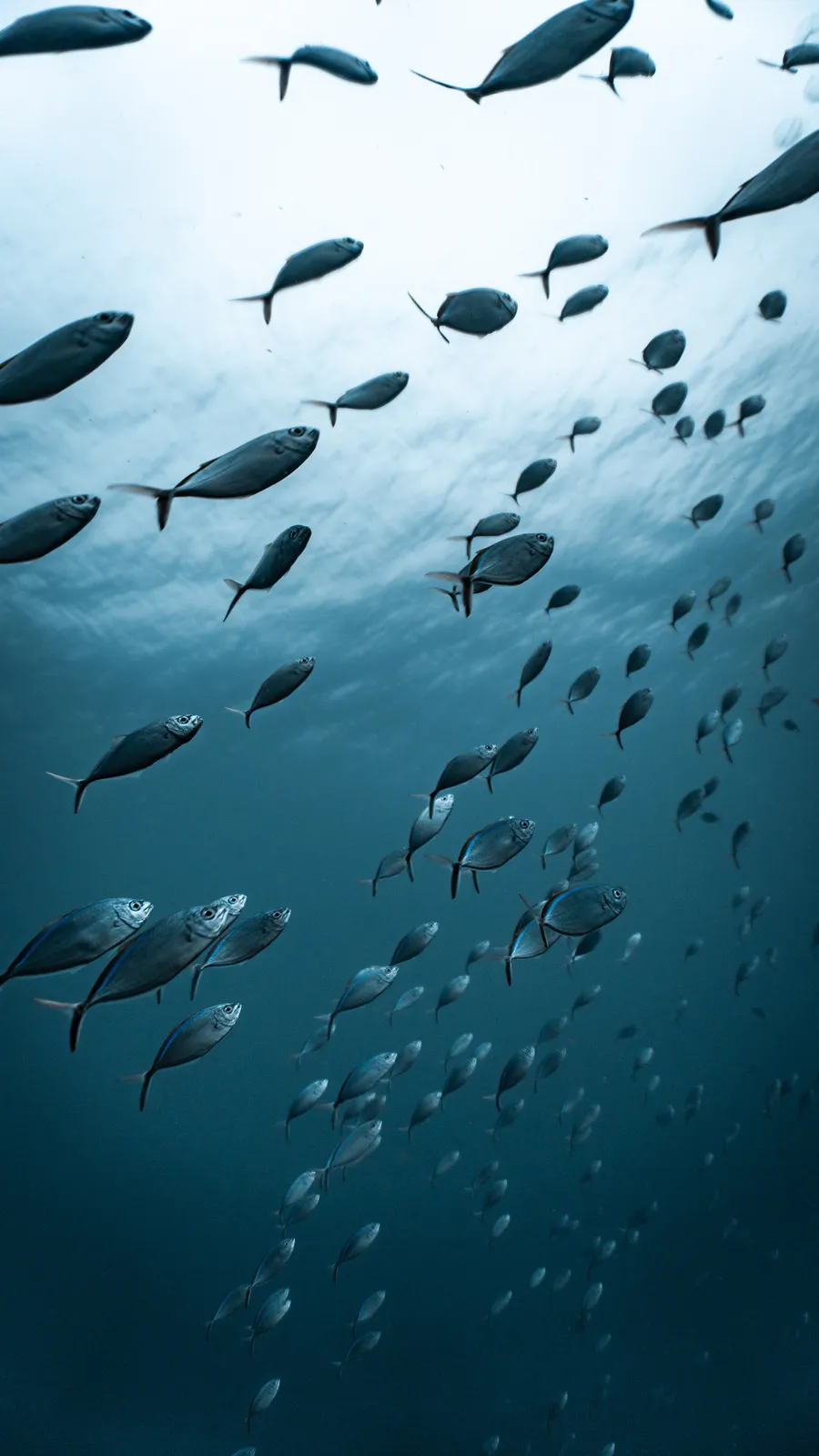
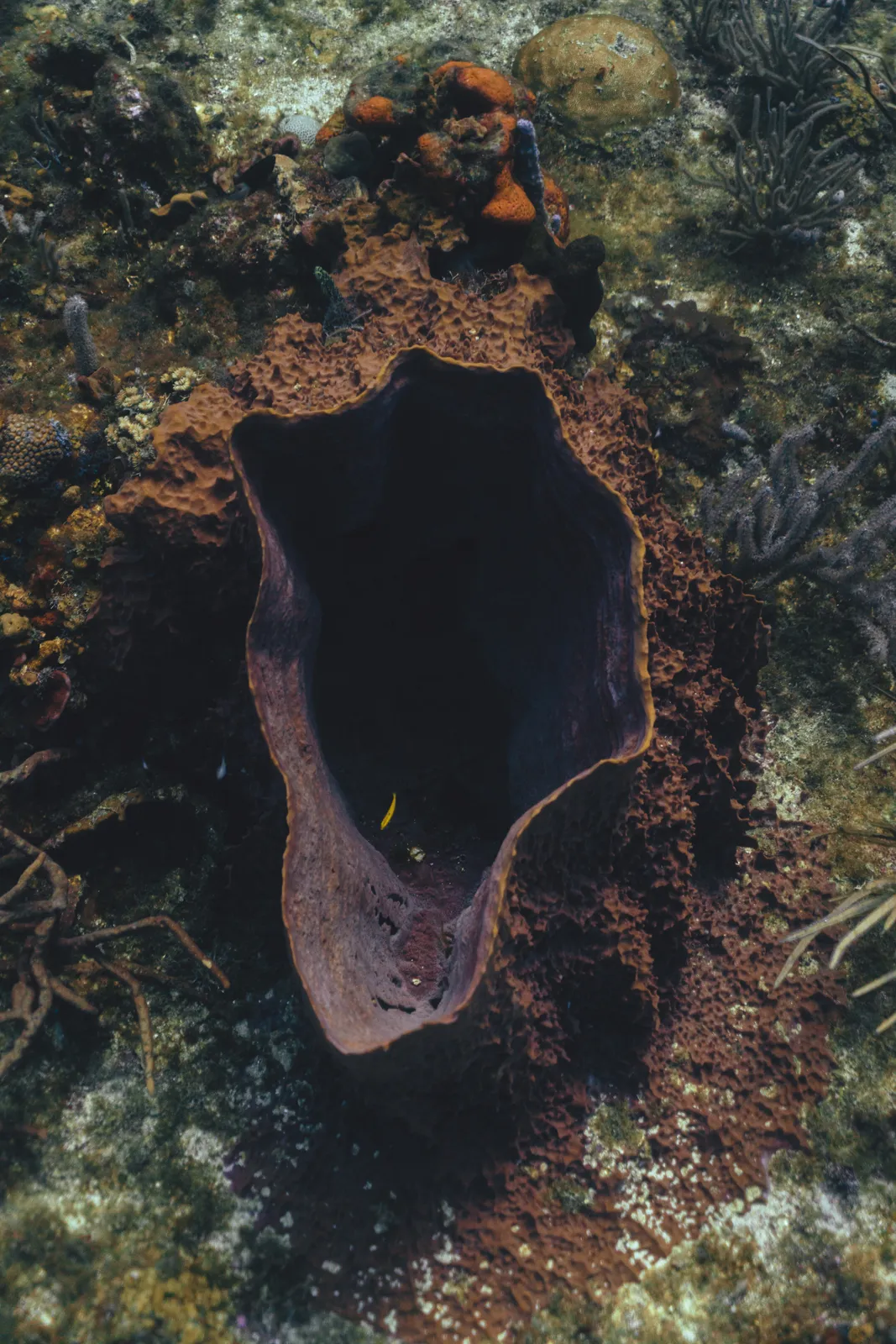
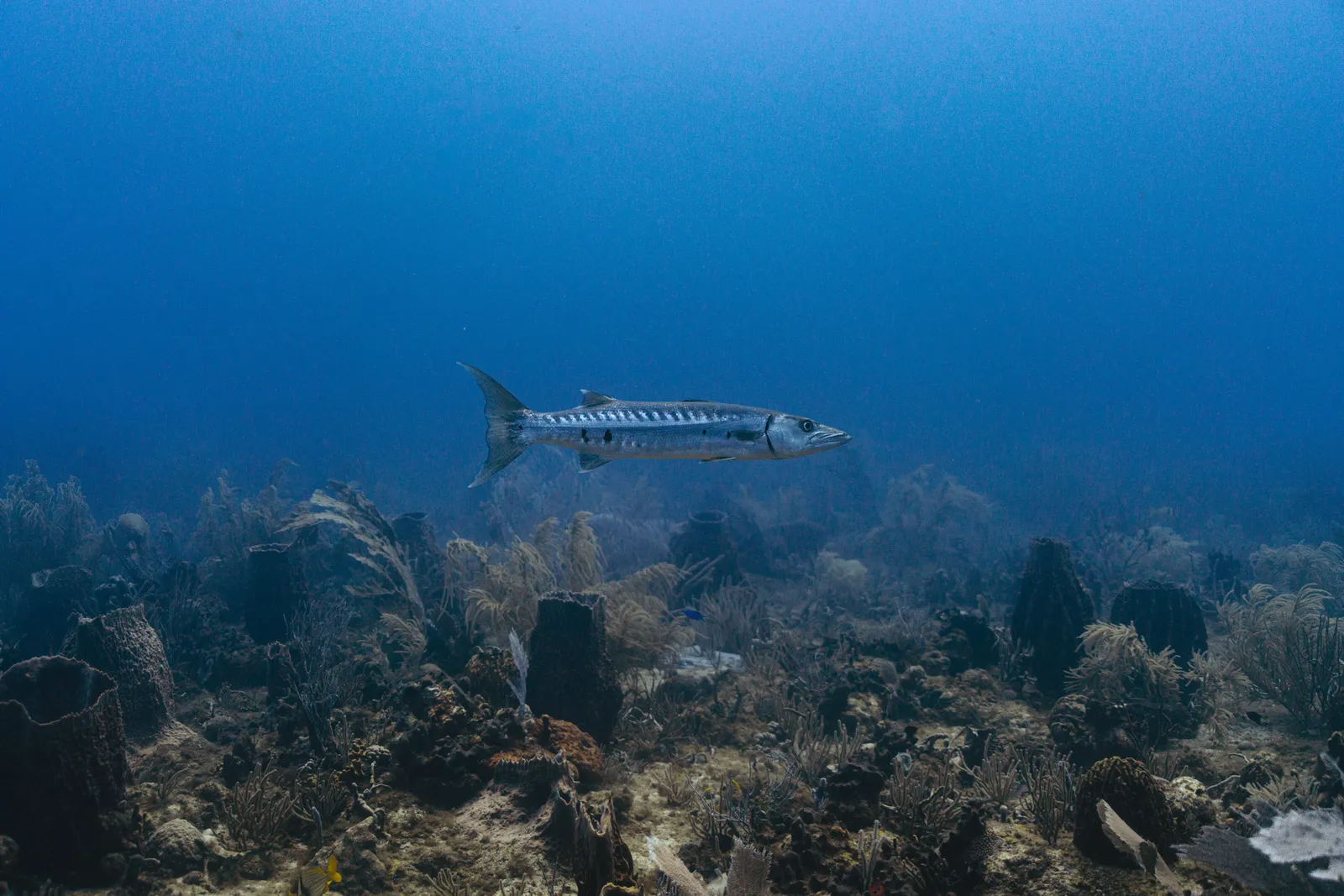
The wall is draped in giant barrel sponges, rope sponges and sea fans in vivid purples, reds and yellows. Turtles, eagle rays, Nassau groupers and reef sharks patrol the drop-off.
Peer into the crevices for lobster, moray eels and tiny reef creatures, while the blue beyond the wall often produces passing pelagics and the occasional larger shark.
Level and conditions
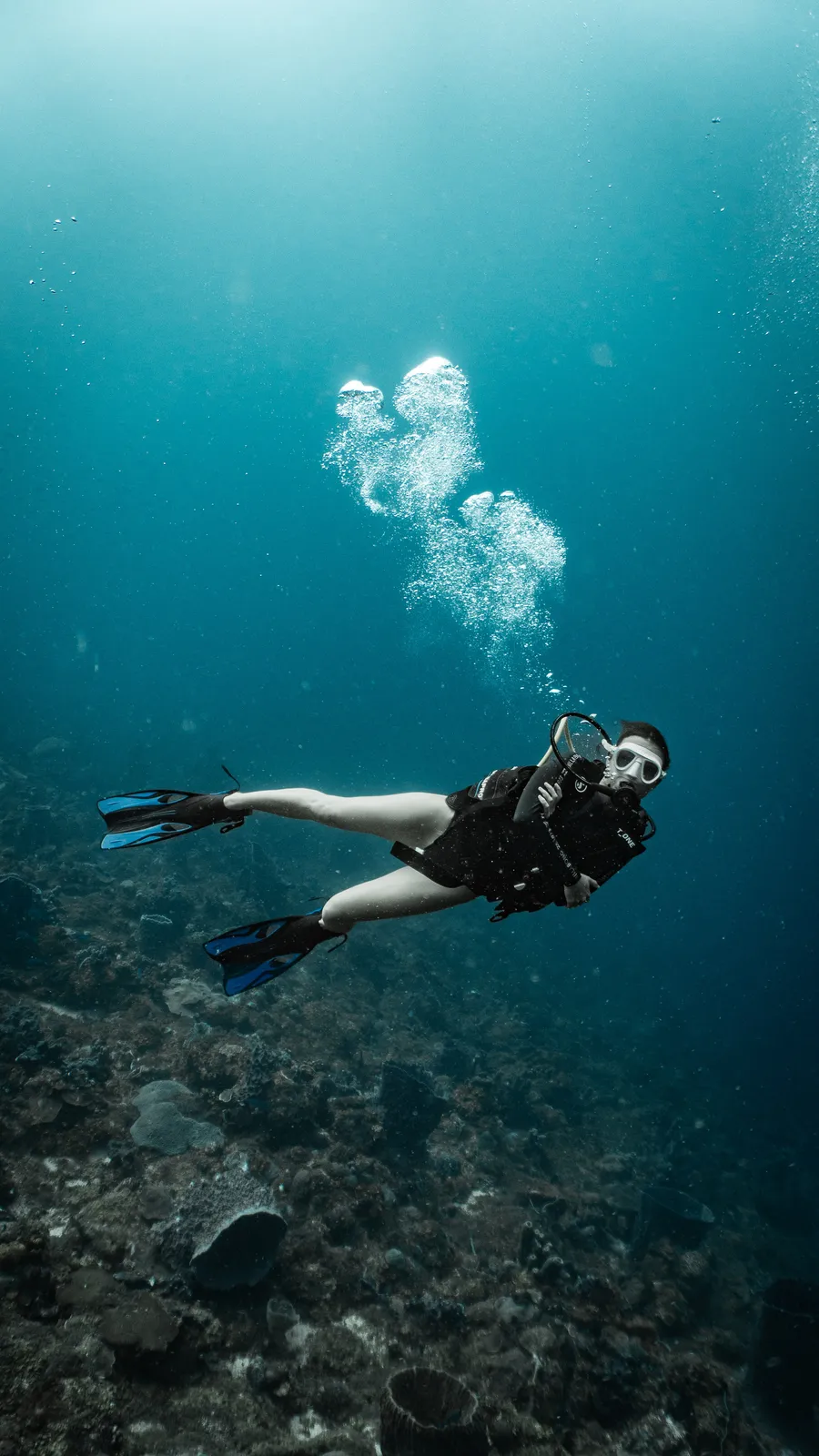
Because the reef top is so shallow, beginners can enjoy the wall's edge while advanced divers explore deeper. The key skill is buoyancy control, since there is no bottom beneath you.
Conditions are famously easy: warm water around 27 to 29 degrees, little current and visibility that frequently exceeds 30 meters.
Best time and how to reach it
Little Cayman dives well year round, with the calmest seas from spring through early summer. Hurricane season peaks in autumn, so many travelers favor the drier months.
You reach Little Cayman by a short hop from Grand Cayman or Cayman Brac. The island is small and quiet, built almost entirely around diving.
A living wall in Colombia
Bloody Bay proves a Caribbean wall can be both easy and jaw-dropping. Isla Fuerte's terrain, sculpted by the ancient clash of tectonic plates, offers its own walls and terraces, including the deep drop-offs at Bushnell, wrapped in the healthy coral of the continental Caribbean and the same warm 27 to 29 degree water.
Best of all, its reefs stay quiet and uncrowded. Float our walls through our courses and dives and preview them on the interactive dive map.