The dugong is one of the ocean's most endearing and most elusive animals, a large, slow marine mammal that grazes seagrass meadows like a gentle underwater cow. Closely related to manatees, dugongs live only in the Indo-Pacific and are increasingly rare, which makes an encounter genuinely special. Seeing one takes patience, the right destination and a healthy dose of luck. This guide covers the best places to look, when to go, and how to behave so these vulnerable animals are protected rather than disturbed.
Where dugongs live
Dugongs are found only in the warm coastal waters of the Indo-Pacific, always near the seagrass beds they depend on.
- Marsa Alam, Egypt (Red Sea): one of the most reliable places to snorkel or dive with dugongs.
- Australia (Shark Bay, Great Barrier Reef): home to the world's largest populations.
- The Philippines and Indonesia: scattered, protected sightings.
- The Arabian Gulf and East Africa: important but harder-to-reach populations.
Wherever there is healthy seagrass and protection, dugongs have a chance.
When to go
Dugongs are present year round in their home ranges, so timing is about comfort and visibility rather than migration. In the Red Sea, calm, clear conditions are common for much of the year, with milder water in spring and autumn.
In Australia, the warmer months make for pleasant snorkeling over the seagrass flats. Since dugongs surface to breathe every few minutes, calm seas make them far easier to spot.
Watching without disturbing
Dugongs are classified as vulnerable, and disturbance drives them off the seagrass beds they need to survive. Responsible behavior is not optional here, it is conservation.
- Keep your distance and never block a dugong's path to the surface.
- Do not chase, touch or crowd a feeding animal.
- Stay in small groups and follow your guide's rules.
- Avoid stirring up the seagrass or the sediment they feed in.
Seagrass, sea cows and Isla Fuerte
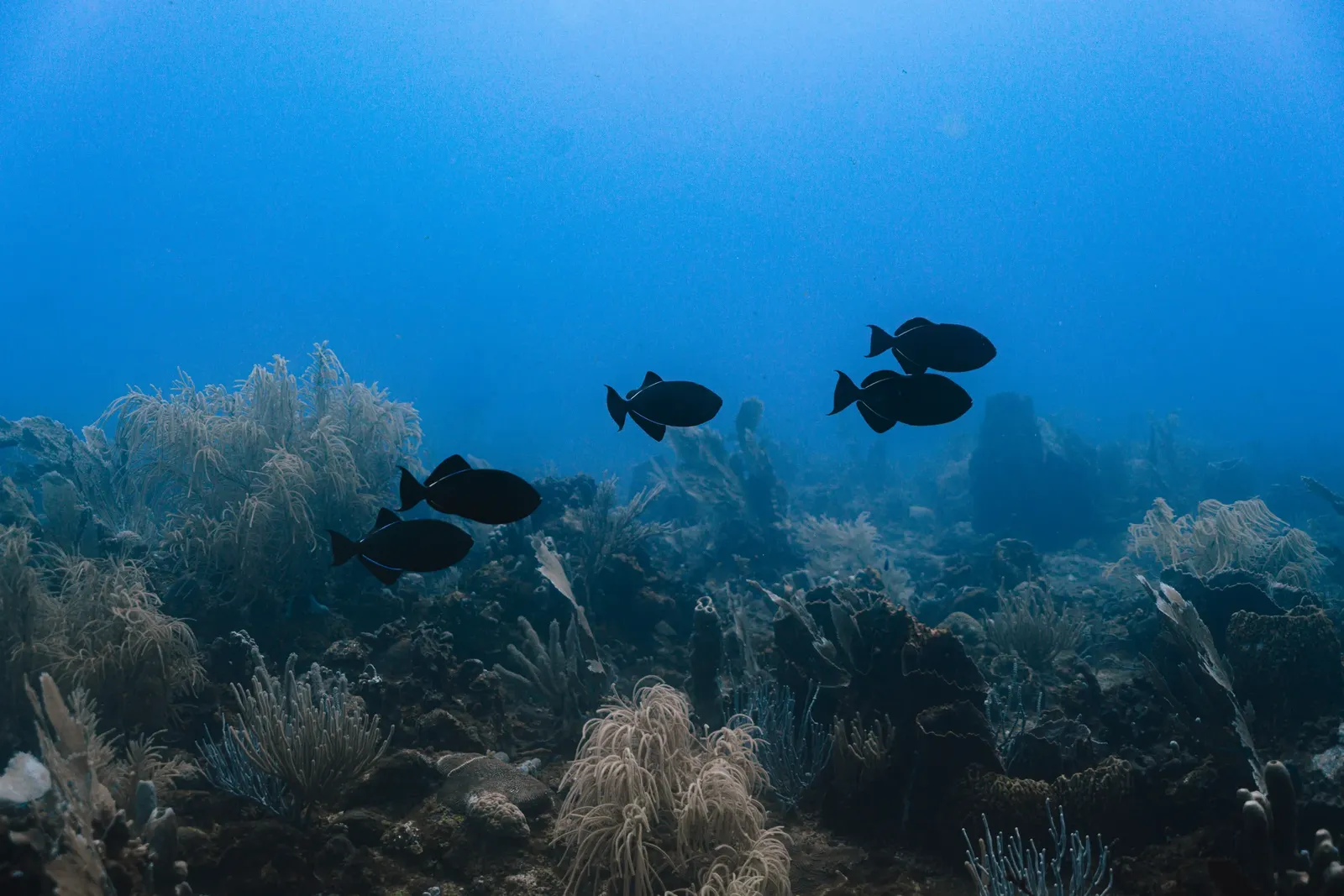
Dugongs belong to the Indo-Pacific, but the Caribbean has its own gentle grazer, the manatee, along with the very seagrass meadows that make coastal ecosystems thrive. Around Isla Fuerte, healthy seagrass and coral support green turtles, another peaceful vegetarian you can meet on the shallow reefs.
At Nautilus, conservation is part of every dive, from Reef Check monitoring to coral restoration at Bajo Bonito. Meeting a green turtle grazing over the seagrass is a real possibility in our warm 27 to 29°C water. Discover the reefs through our courses and dives, or read more guides about the animals that call our reefs home.