Dory, the forgetful sidekick, is a Pacific blue tang, a brilliant royal-blue fish with a black palette pattern and a yellow tail. Like Nemo, she is an Indo-Pacific reef fish, so the classic Dory lives on the far side of the world. But here is the twist most divers do not know: the Caribbean has its own blue tang, and you can absolutely meet a cousin of Dory on the reefs of Isla Fuerte. This guide covers both.
The real Dory
The movie Dory is the Pacific blue tang, or regal tang. It is a flat, oval, electric-blue fish that grazes algae on Indo-Pacific reefs and shelters in coral when threatened. Like all tangs, it carries a sharp, scalpel-like spine near the tail, which is why the family is called surgeonfish.
They are usually seen in loose groups drifting over branching coral, flashing blue as they turn in the light.
Where to see the Pacific blue tang
To meet the exact Dory species, head to the Indo-Pacific:
- Great Barrier Reef, Australia: abundant on coral bommies.
- Indonesia and the Philippines: common on healthy reefs.
- The Maldives: large schools over the reef flats.
- Fiji and the wider tropical Pacific: colorful and reliable.
They live in shallow, warm water, so snorkeling is often enough to see them.
The Caribbean blue tang, Dory's cousin
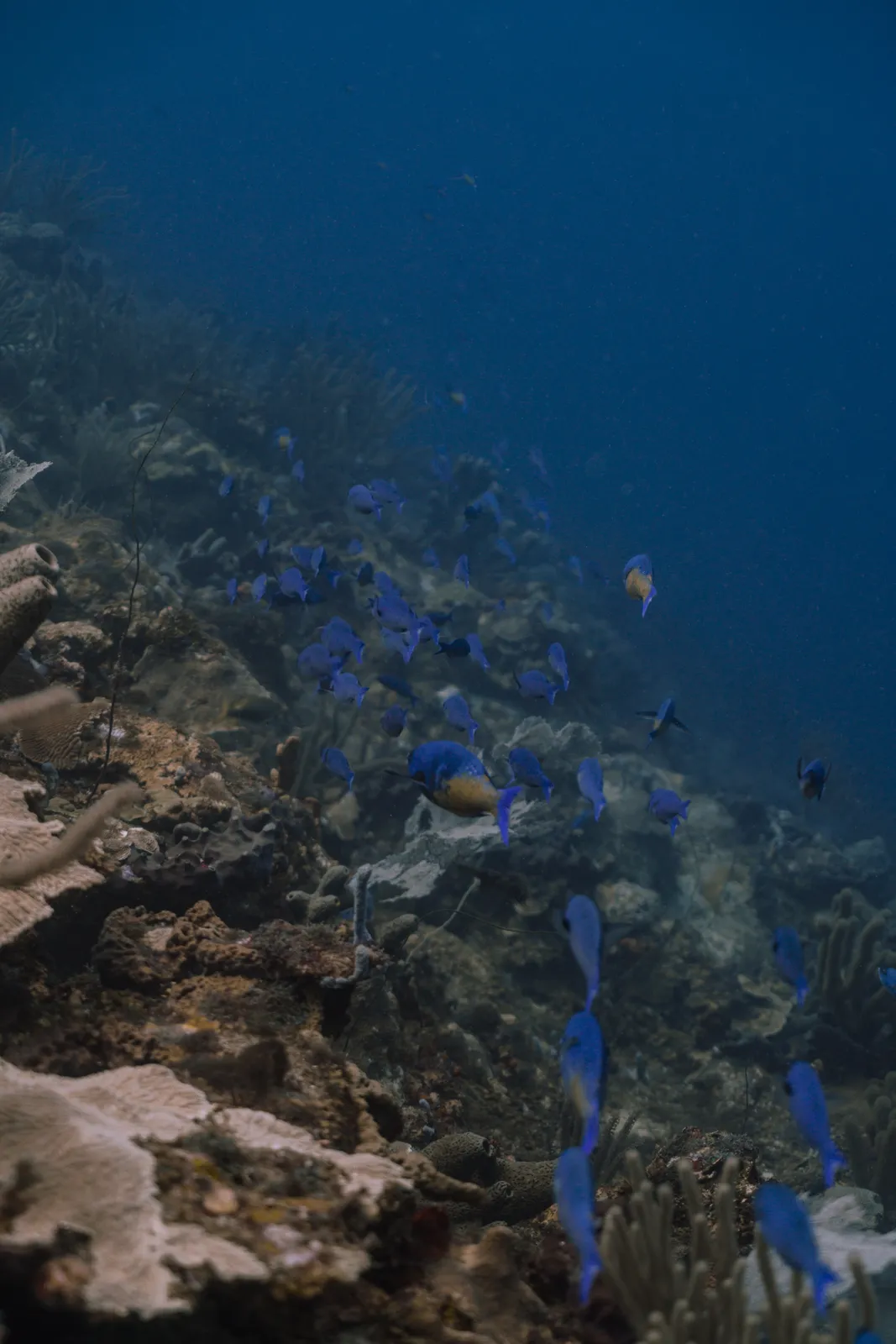
Good news for divers in the Americas: the Caribbean has the Atlantic blue tang. Adults are a deep blue and even glow purple-blue in the right light, while juveniles are bright yellow, so the same species changes color as it grows.
It is a common, friendly reef grazer across the Caribbean, and it is genuinely a close relative of Dory. If you cannot fly to Australia, this is the next best thing.
When and how to find them
Blue tangs are around all year, so pick a season with clear water. In the Caribbean, drier months tend to bring the best visibility. Look for them wherever there is algae to graze, often in small feeding groups moving across coral heads and rubble.
They are relaxed around calm divers, so hold still, breathe slowly and let them approach on their own terms.
Meet Dory's cousin at Isla Fuerte
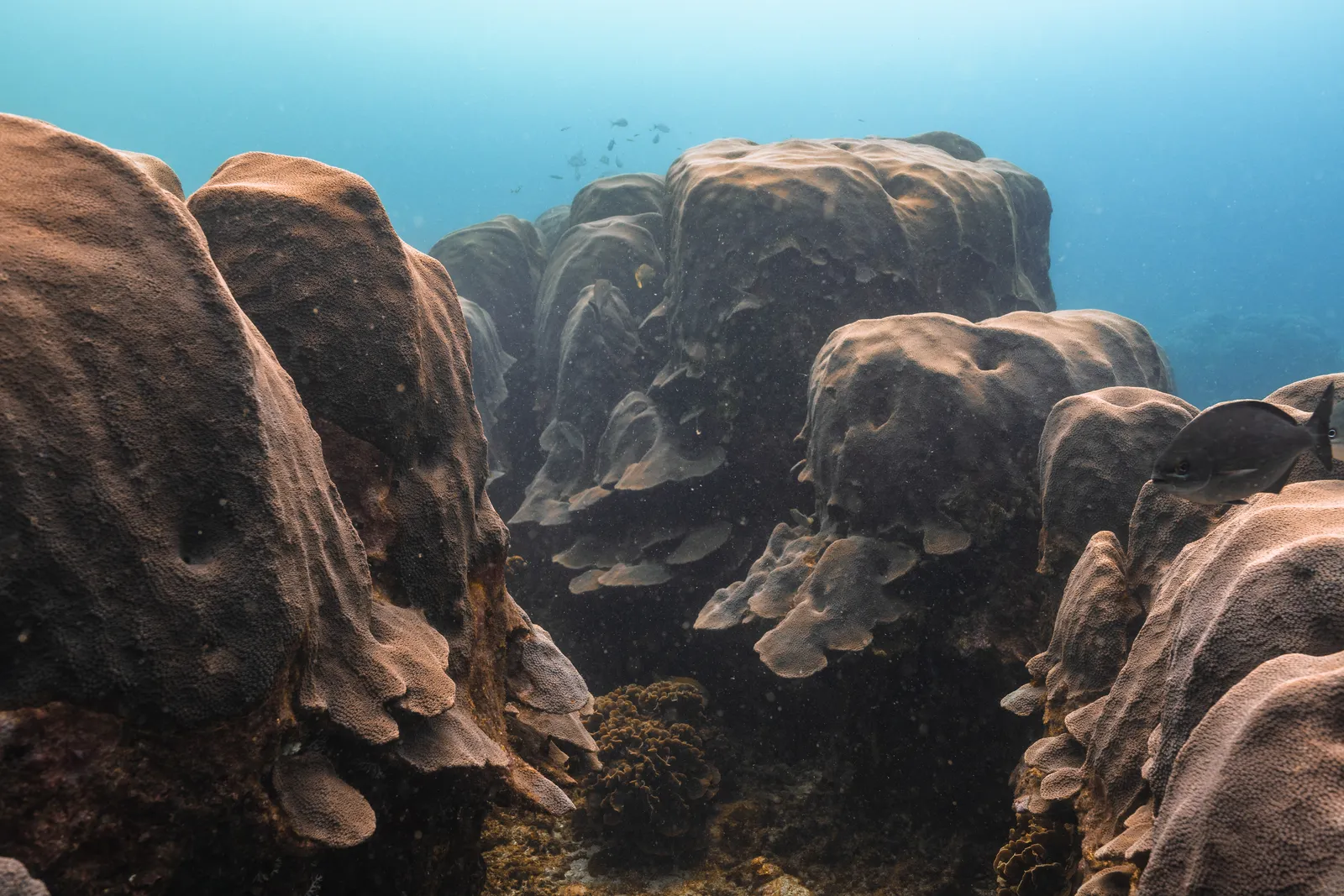
You do not have to cross the planet to swim with a blue tang. The Atlantic blue tang lives right here on the reefs of Isla Fuerte, gliding over the coral gardens of gentle sites like Rosa Vieja. The wonder you saw on screen is closer than you think.
Nautilus is a PADI center with warm 27 to 29 degree water and 29 dive sites to explore. See our experiences or read more guides to plan your visit.