Trim is the word divers use for how your body is angled in the water, and getting it right is what separates a smooth, effortless diver from one who thrashes and tires quickly. Ideal trim means floating flat and horizontal, like a skydiver frozen in mid-air, with nothing dragging you head-up or feet-down. When your trim is good you use less air, kick less, and stir up far less sand. It is one of the quiet secrets behind those divers who seem to glide across the reef without moving.
What good trim looks like
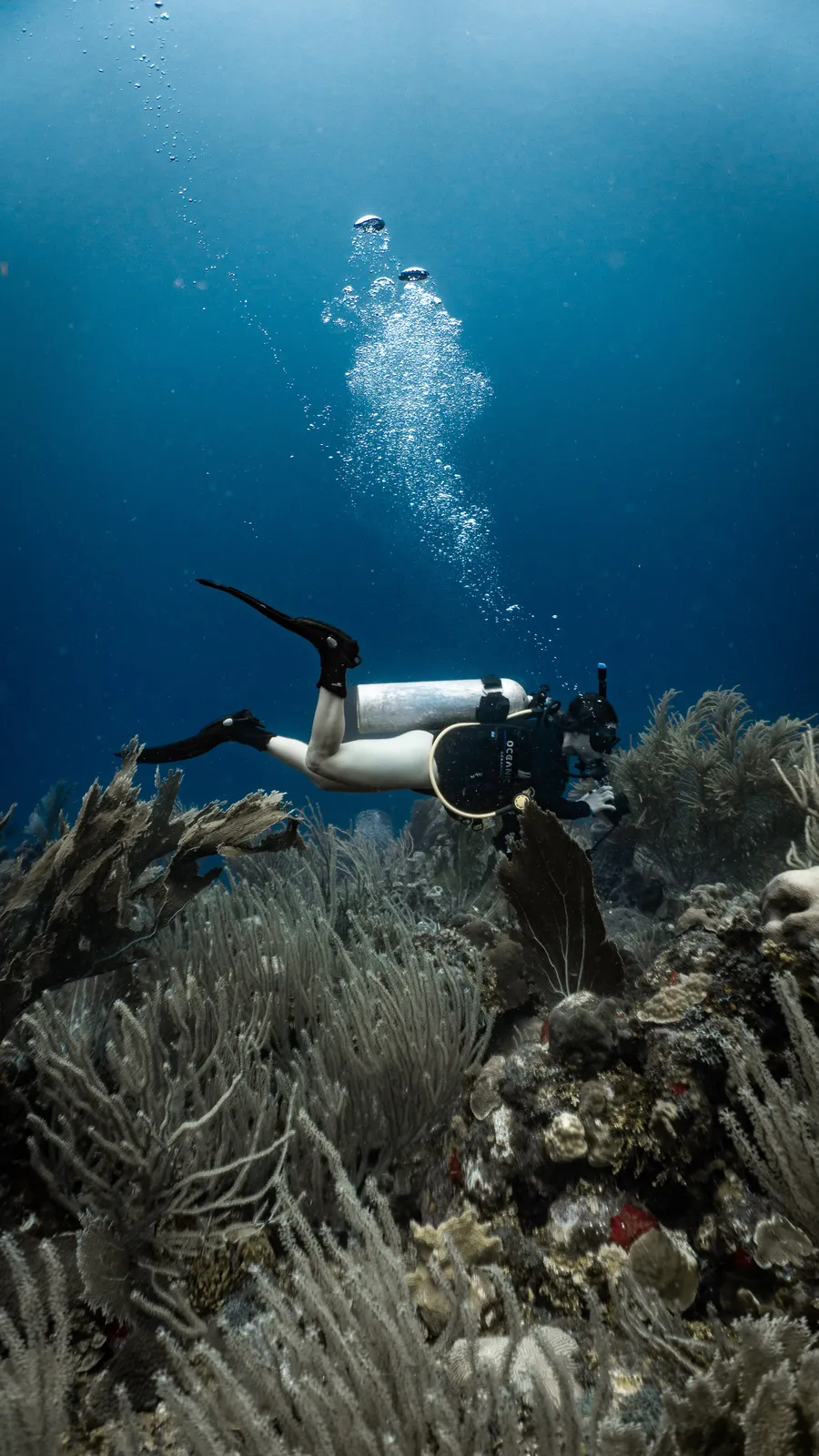
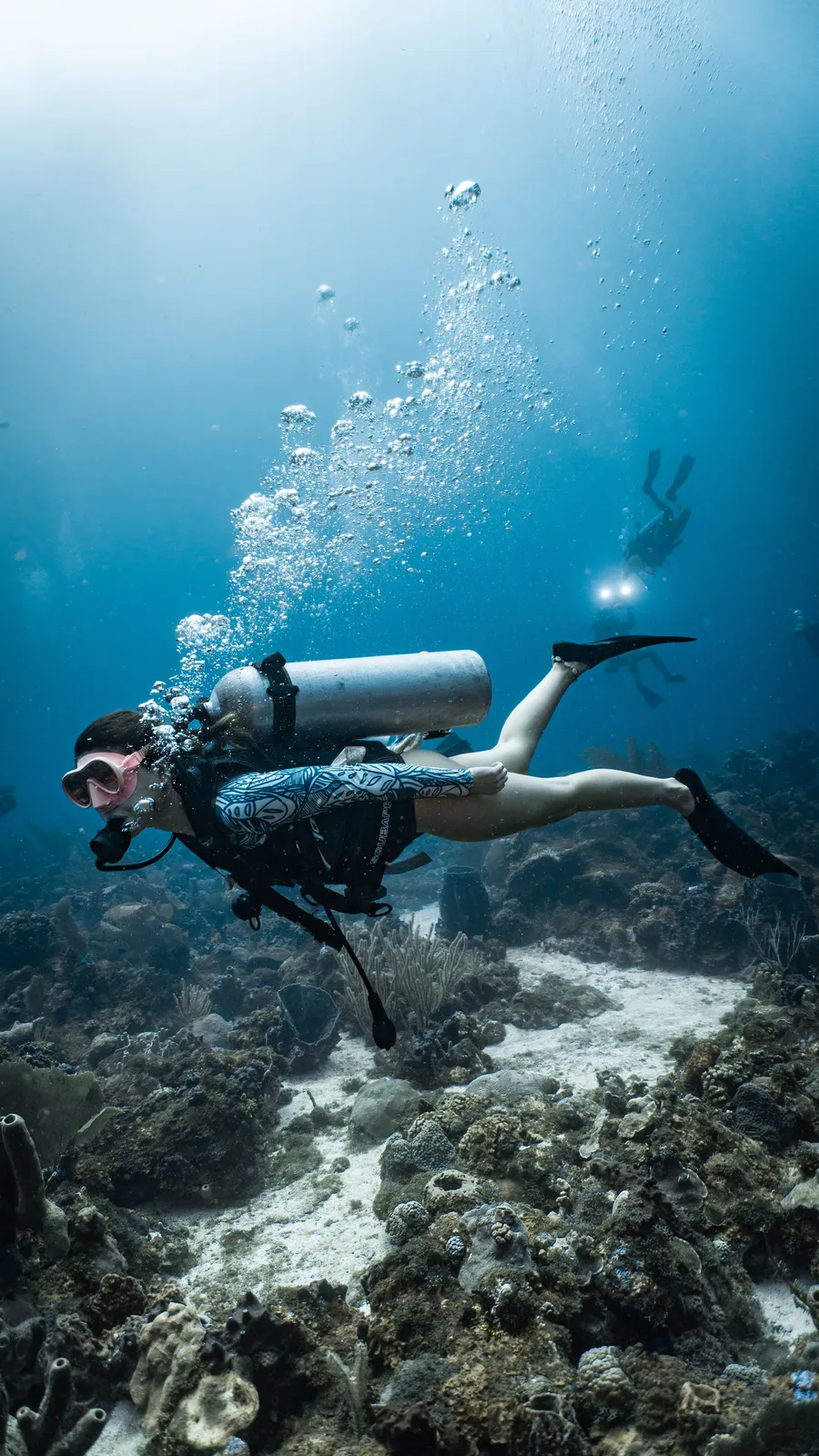
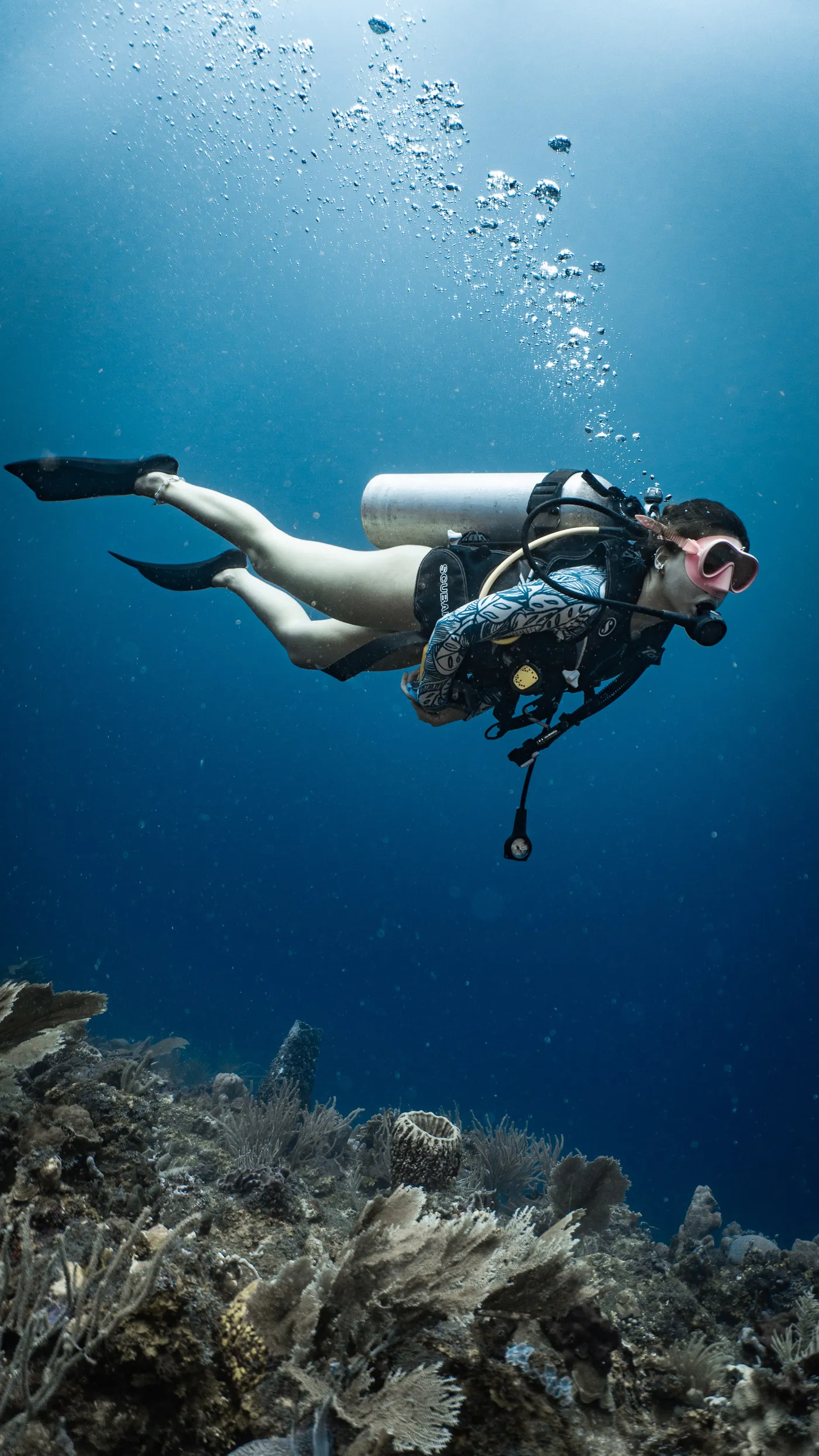
A diver in good trim lies flat and level, roughly parallel to the reef below. The head is up just enough to look forward, the knees are bent so the fins point back and slightly up, and the whole body feels balanced rather than tilted.
In this position your fins push water straight behind you instead of down toward the coral. That means you move forward efficiently and you protect the reef, because your kicks never blast the sandy bottom into a cloud.
Why trim and buoyancy work together
Trim and buoyancy are close cousins. Buoyancy controls whether you sink, float or hover, while trim controls the angle you hover at. You can be perfectly weightless and still be badly angled, hanging feet-down like a seahorse and wasting energy.
When both are dialed in, you hang motionless and flat, adjusting depth with your breath alone. That combination is what makes experienced divers look so calm and use so little air.
How to improve your trim
Most trim problems come down to where your weight sits. Small changes make a big difference, and a good instructor can spot the fix in a single dive.
- Move weights higher or lower on your rig to level your body.
- Try a trim pocket or move a small weight toward your tank.
- Relax your legs and bend your knees instead of kicking flat-legged.
- Keep your lungs and breathing steady rather than gulping big breaths.
- Avoid carrying more lead than you actually need.
Fine-tune it in warm water
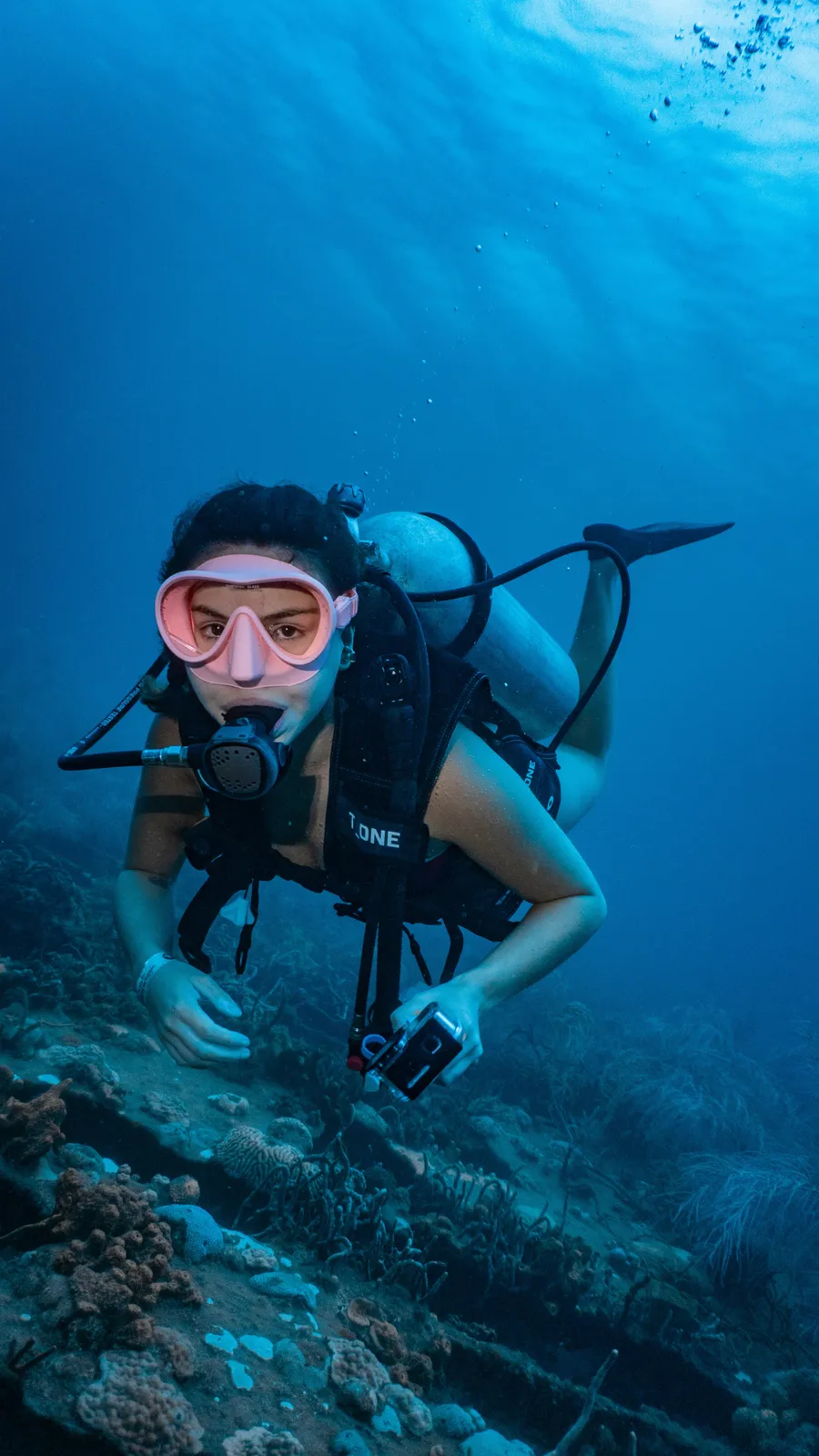
Trim is easiest to learn where the water is warm and calm, so you are not fighting a thick suit or heavy currents. The mild, twenty-seven to twenty-nine degree water around Isla Fuerte means lighter gear and fewer weights, which makes finding your balance far simpler.
At Nautilus our instructors run small groups and give real feedback on your position dive after dive. Whether you are new or refining your skills, you can work on trim across our gentle reefs, described on our courses and dives page.