The great hammerhead is the biggest of the nine hammerhead species, reaching up to six meters, and its bizarre head is one of evolution's masterpieces. That wide, flattened head spreads its senses wide, helping it detect stingrays buried in the sand. Despite its size and looks, it is shy and poses little threat to divers. It is a solitary wanderer, covering vast stretches of coastline in search of its favorite prey. Seeing one glide along a deep wall is a highlight of any advanced diver's logbook, and a reminder of how much life the open blue still holds.
How to recognize it
The head, called a cephalofoil, is nearly straight across the front with an eye at each tip, wider and less curved than in smaller hammerheads. The first dorsal fin is very tall and pointed, like a sail.
Its gray body is powerful and streamlined, and it usually swims alone rather than in the big schools formed by scalloped hammerheads. That solitary habit, combined with its great size, makes every sighting feel rare and hard-earned.
Behavior
Great hammerheads use their wide head to pin stingrays to the seabed before eating them, and the electrical sensors on that head detect prey hidden under the sand. They are strong, constant swimmers that patrol reefs, walls and open water, covering long distances every single day.
They are naturally wary of divers. Calm, quiet behavior and no sudden moves give you the best chance of a close, respectful pass.
Where it lives
They live in warm tropical waters around the world, over reefs and along the drop-offs where the reef meets deep water. They often follow seasonal movements of their prey.
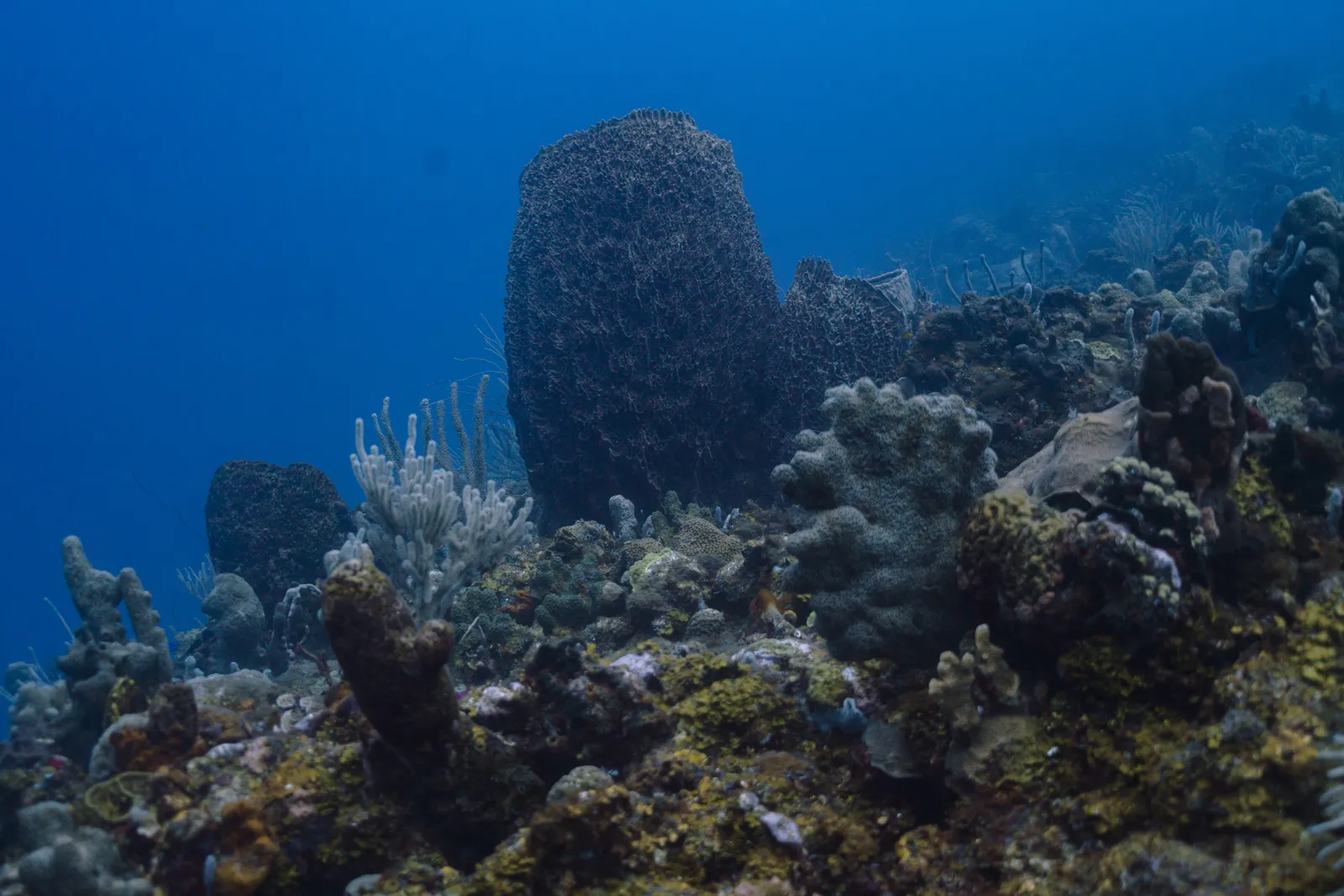
In Colombia, hammerheads are associated with the deeper open-water sites, exactly the kind of terrain found at the advanced walls of Bushnell in Isla Fuerte.
Conservation
The great hammerhead is Critically Endangered, hit hard by the fin trade and by stress from capture. As a slow-reproducing apex predator, it is vital for keeping reef ecosystems in balance.
Every respectful, no-touch encounter helps make living sharks worth more than dead ones, supporting the case for protection.
A diver's note from Isla Fuerte
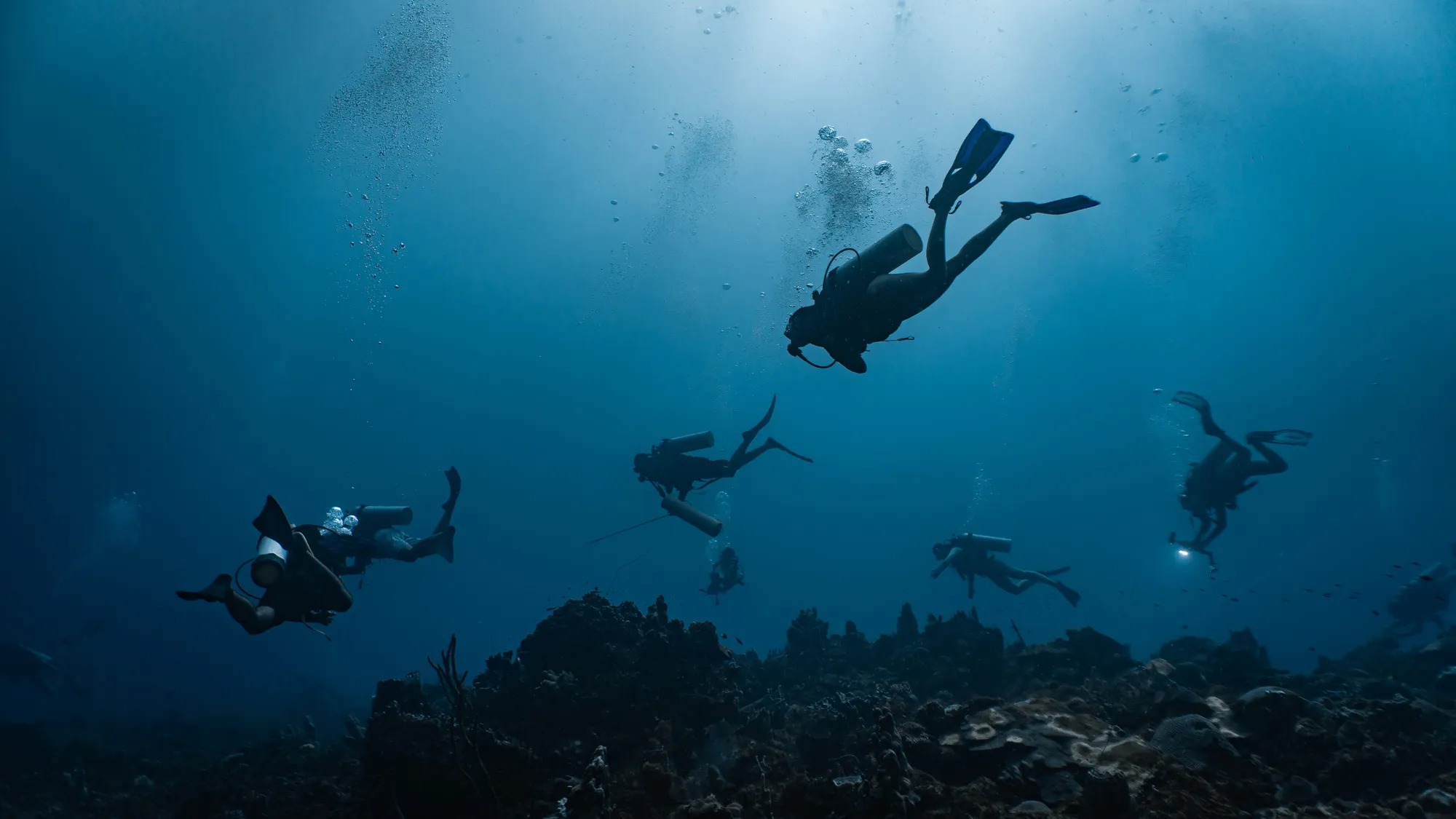
Hammerheads and whitetips patrol the deep walls around Bushnell, one of the reasons Isla Fuerte is a best-kept secret of the continental Caribbean. These are advanced open-water sites, so an encounter here rewards divers who have built solid experience and comfort at depth.
Ready to earn those depths safely? Start with our courses and dives and study the deep spots on the interactive dive map.