The great barracuda is one of the reef's most striking predators, a long, silver, torpedo-shaped fish with a jaw full of visible teeth. Despite its fearsome grin it is calm and curious around divers, often hanging motionless in mid-water to watch you pass. Built for explosive bursts of speed, it is a formidable hunter yet a gentle presence to observe. It can accelerate in a heartbeat to snatch passing fish, then settle back into its patient, mirror-still hover. In Isla Fuerte, a barracuda hovering in the blue is a common and thrilling sight, and a favorite subject for underwater photographers.
How to recognize it
Look for a long, slender, silvery body with a pointed head and a lower jaw that juts forward, showing rows of sharp teeth. Dark blotches often scatter along the rear of the body.
It typically hangs almost motionless in open water, and its size, sometimes over a meter and a half, and mirror-like flanks make it hard to mistake for anything else.
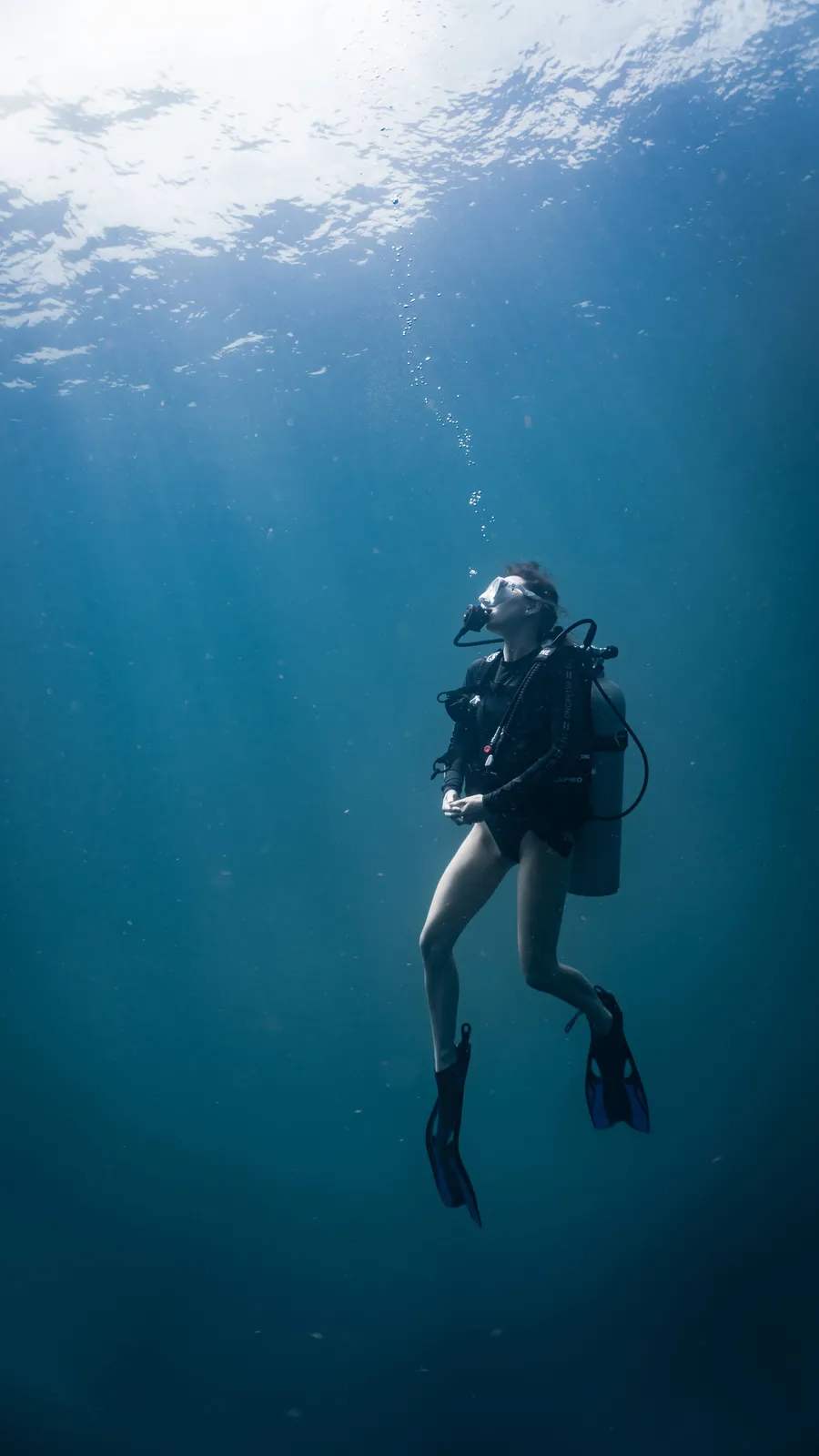
Behavior
The barracuda is an ambush predator, hovering quietly and then striking passing fish with a sudden burst of speed. Younger barracudas often gather in schools while big adults tend to hunt alone.
It frequently follows divers out of pure curiosity, which is harmless. It is not aggressive, though it is wise to avoid wearing shiny objects that can flash like a small fish.
Where it lives
Great barracudas live in warm seas around the world, over reefs, seagrass beds and open water near the surface. They favor the edges of reefs where prey fish gather.
They are common on the reefs of Isla Fuerte, and there is even a dive site here named for them, so meeting one hanging in the blue is very much part of diving these waters.
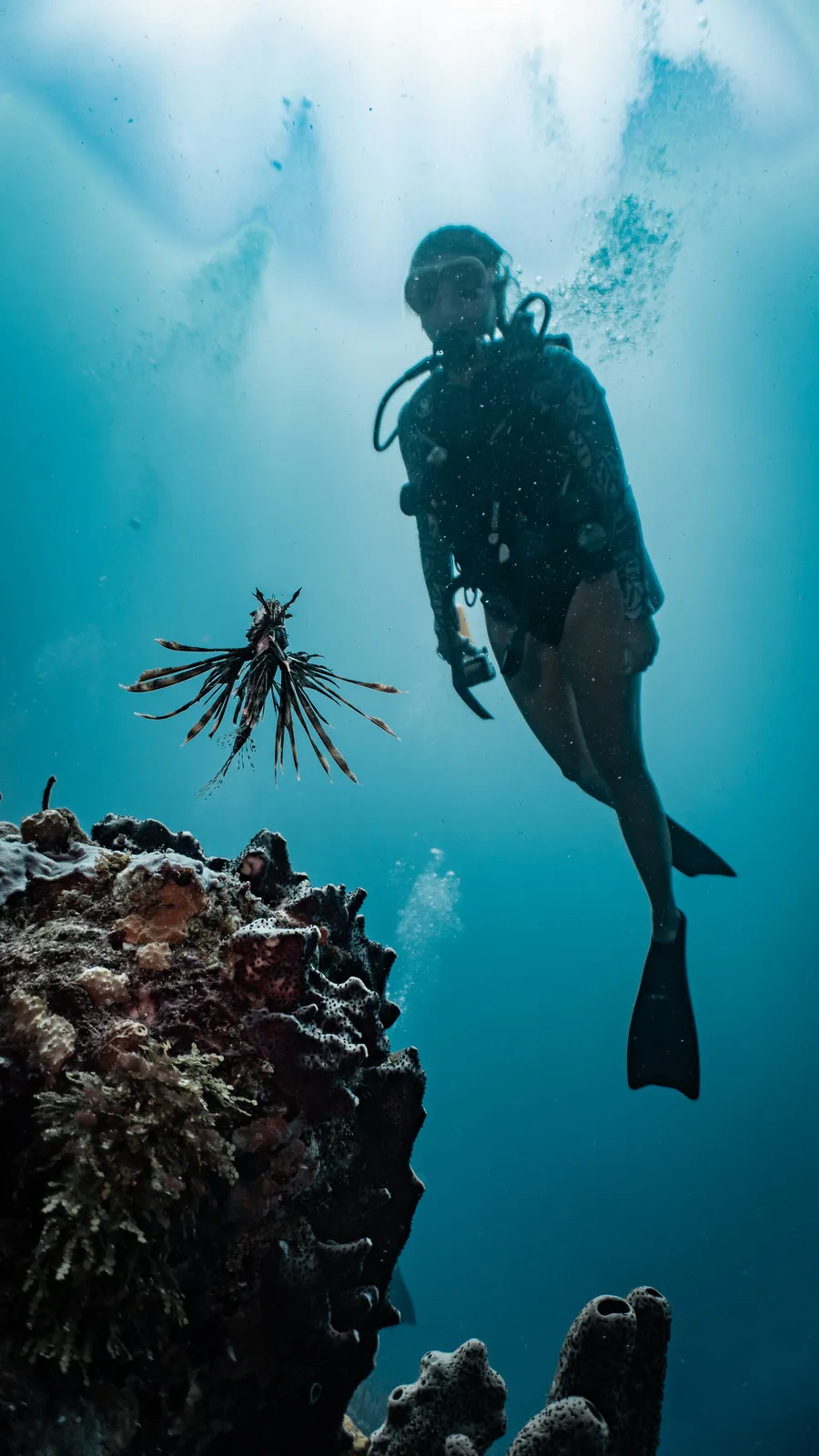
Conservation
The great barracuda is not currently considered threatened, though local populations can be affected by fishing. Larger individuals sometimes carry ciguatera, a natural toxin, which is a reason not to eat big reef predators.
As always, simply observe. There is no need to feed or provoke a barracuda, and a calm approach keeps the encounter pleasant for everyone.
A diver's note from Isla Fuerte
Few sights capture the thrill of the reef like a big barracuda hanging motionless in the blue, watching you with a toothy calm. In Isla Fuerte you can experience this in warm, clear water, guided by instructors who help you read the animal and enjoy it without worry.
See the great barracuda for yourself on our courses and dives, and find its namesake site on the interactive dive map.