Dory, the forgetful blue fish, is a Pacific blue tang, a vivid royal-blue surgeonfish with a bold black pattern. Like all surgeonfish it carries a sharp, scalpel-like spine near its tail, which is where the family name comes from. The real animal is a busy algae grazer, not the scatterbrained character of the film. Its constant grazing is one of the reef's quiet defenses, keeping algae from smothering the coral. And while Dory's exact species is not found in the Caribbean, its close cousin, the Atlantic blue tang, certainly is, which means the truth behind Dory is closer to home than many divers expect.
How to recognize it
Dory's species, the Pacific blue tang, is deep royal blue with a black, palette-shaped marking along the body and a bright yellow tail. It has a flat, disc-shaped body built for quick turns.
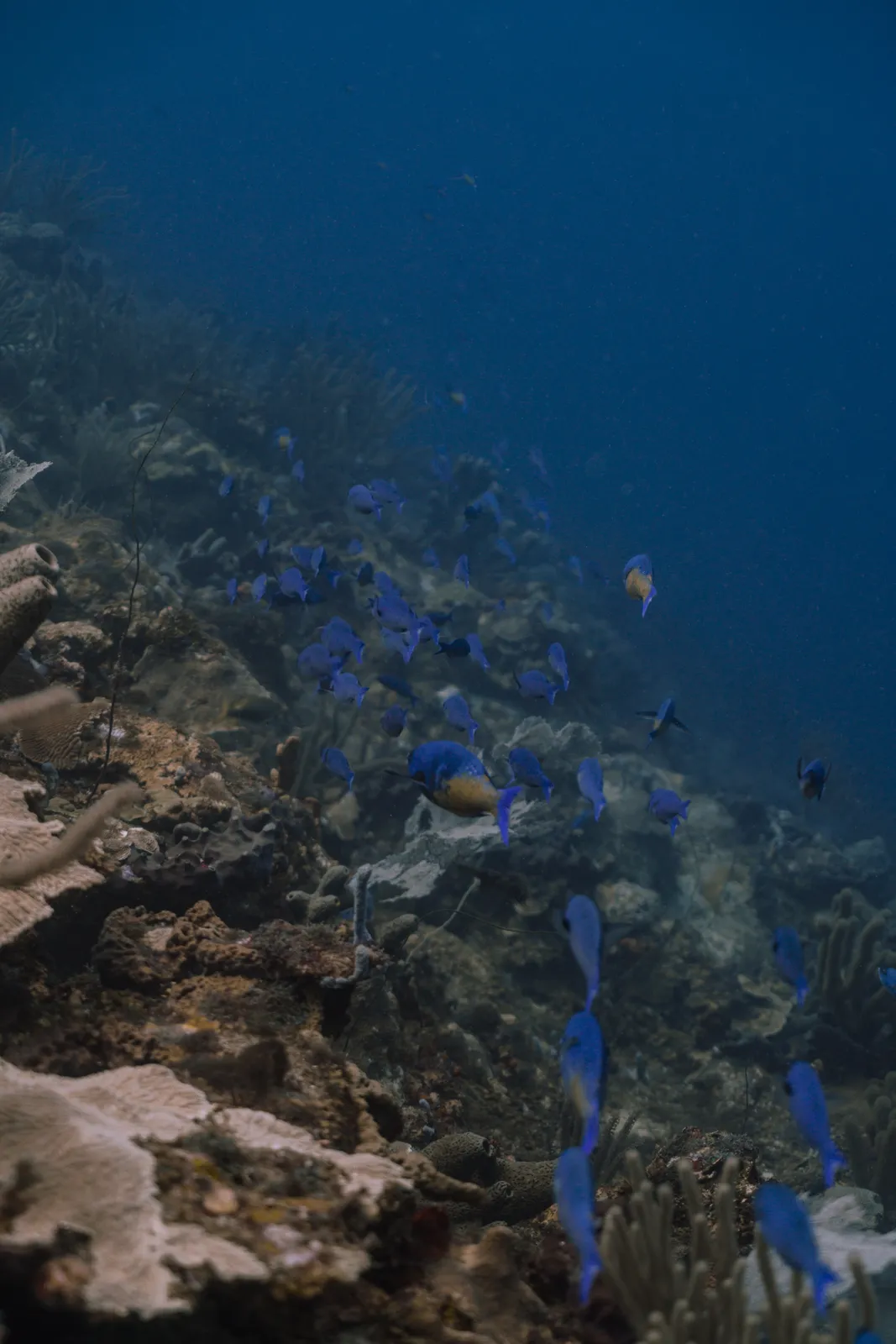
The Caribbean blue tang looks different: it is a more uniform powder blue as an adult and bright yellow as a juvenile, but it shares the same tail-spine and grazing lifestyle.
Behavior
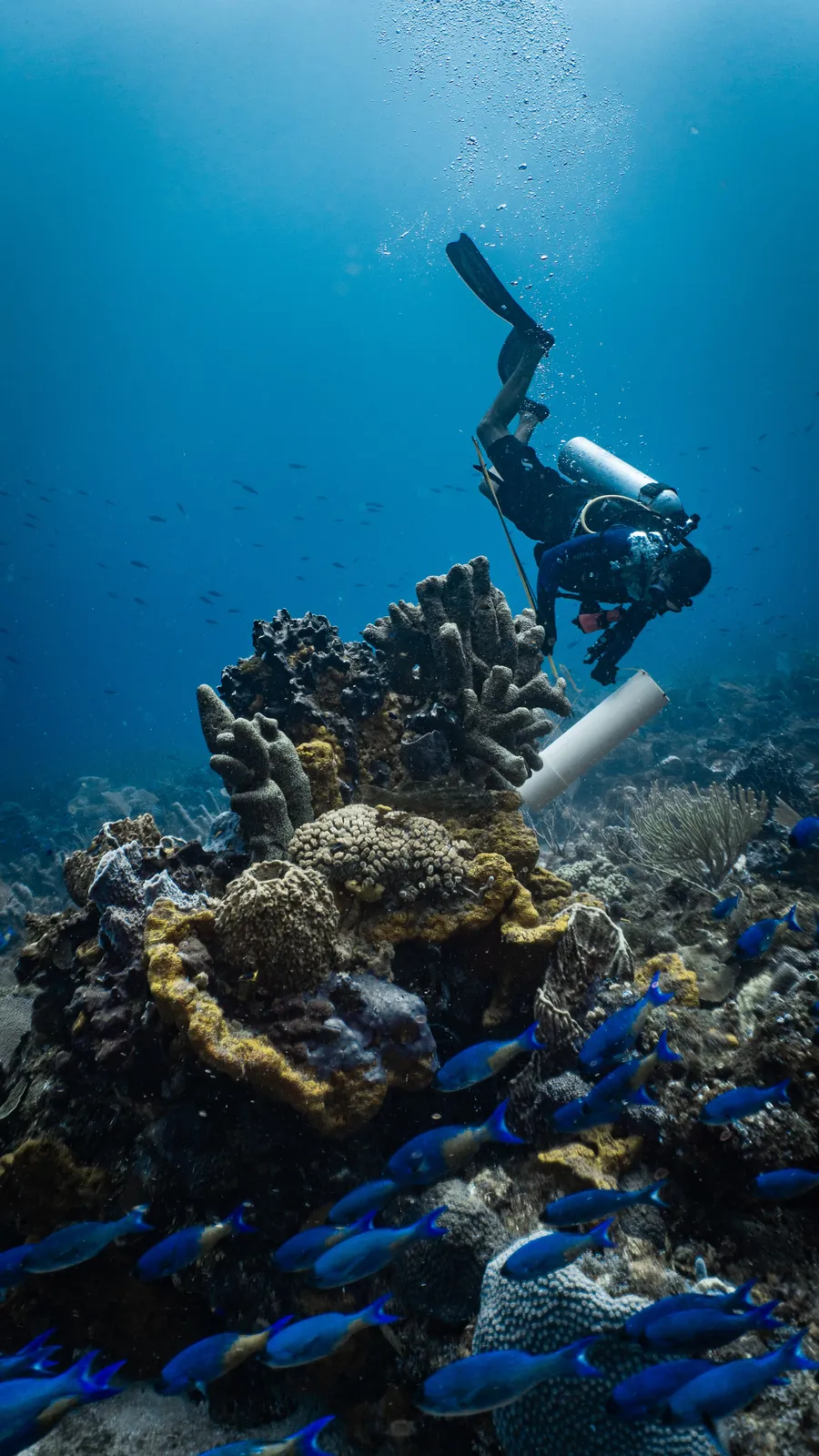
Blue tangs spend the day grazing algae off the reef, often in loose, roaming groups that can number in the hundreds. This constant grazing helps keep algae from smothering the coral.
The scalpel-like spine at the base of the tail is a defense, flicked at rivals or predators. Never handle a surgeonfish, since that spine can cut.
Where it lives
Dory's Pacific blue tang lives on Indo-Pacific reefs, from East Africa to Japan and the Great Barrier Reef. It shelters among branching corals when threatened.
The Atlantic blue tang, its close relative, lives throughout the tropical western Atlantic and Caribbean, which means you really can see a blue tang while diving Isla Fuerte.
Conservation
Blue tangs are not currently threatened as a species, but they are heavily collected for the aquarium trade and are very hard to breed in captivity. Wild collection can strain local populations.
Healthy reefs full of algae-grazing tangs are more resistant to being overgrown, so protecting the reef protects the whole grazing crew.
A diver's note from Isla Fuerte
You do not have to cross the Pacific to find Dory's family. The Atlantic blue tang drifts over the reefs of Isla Fuerte in shimmering blue groups, so the truth behind Dory is closer than you think. Meet it in warm, clear Colombian water, alongside parrotfish, angelfish and turtles.
Plan your reef day through our courses and dives and find the coral-rich sites on the interactive dive map.