One of the first questions every new diver asks is the most practical one: how long will the air last? The honest answer is that it depends, and learning what it depends on is a rite of passage. A tank does not hold a fixed number of minutes, it holds a fixed volume of air, and how quickly you use that volume changes with depth, effort and experience. Once you understand the factors, you can predict your own dives with real confidence. On the shallow reefs of Isla Fuerte, a relaxed diver can easily stretch a single tank close to an hour.
Volume, not minutes
A common recreational tank is the aluminum 80, which holds about 2200 liters of air compressed into an 11.1 liter cylinder at 200 bar. That figure, the free volume of air, is what actually matters, not the physical size of the metal.
Your dive computer or pressure gauge shows the pressure remaining, usually starting near 200 bar and ending when you surface with a safe reserve of around 50 bar. The gap between those numbers is the air you get to breathe, and it is the same underwater as it would be on land.
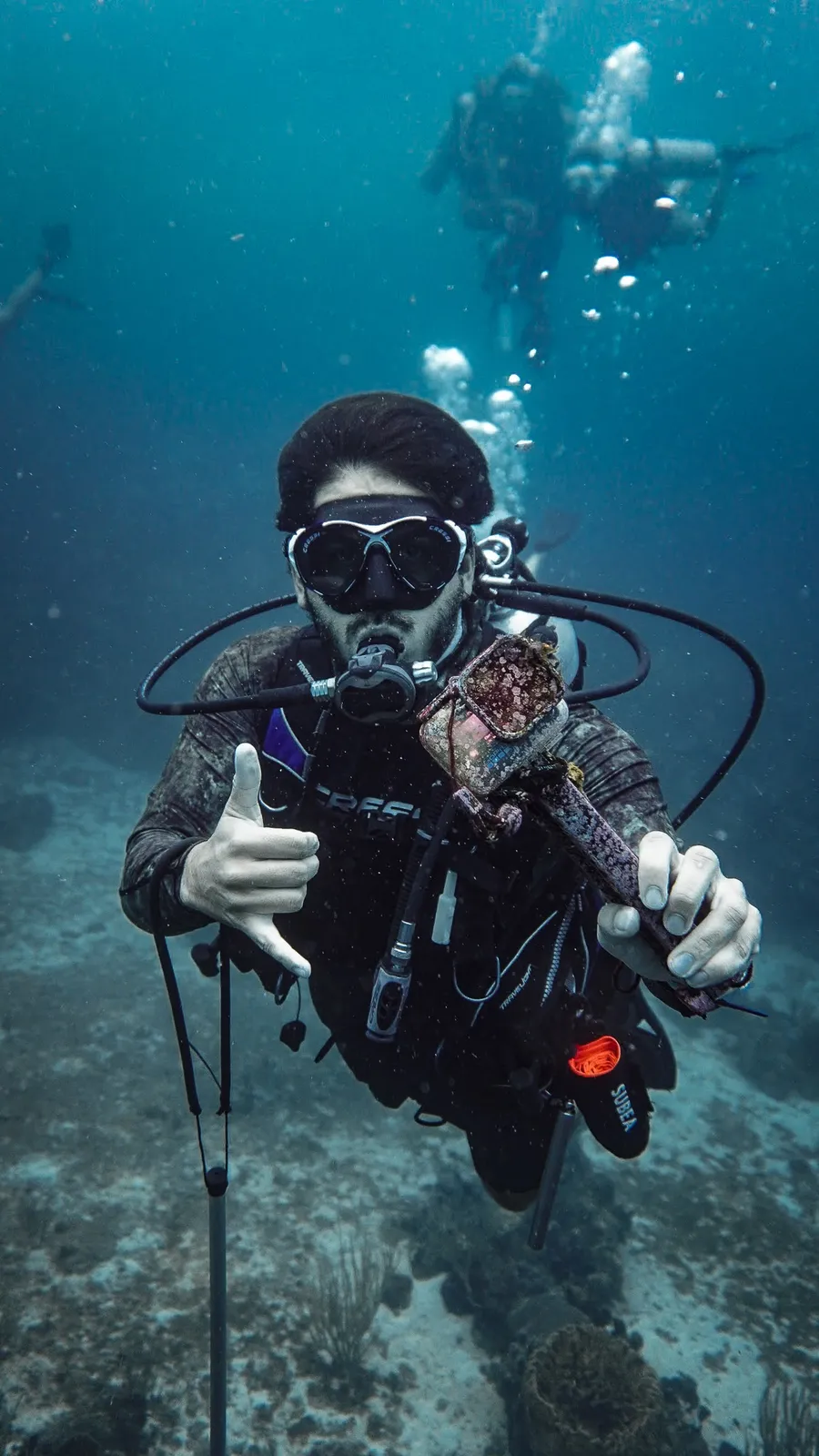
Depth burns air faster
The single biggest factor is depth. Because the air you breathe is compressed to match the surrounding pressure, a lungful at 20 meters contains three times as many molecules as the same breath at the surface.
That means you literally drain the tank faster the deeper you go, even breathing at the same calm rate. A tank that lasts an hour at 10 meters might last only half that at 30. This is one reason shallow reef diving gives such long, generous bottom times, and why deep dives are always shorter.
What you can control
Beyond depth, a lot comes down to you, and this is where new divers improve fastest. The main levers are:
- Breathing rate: slow, relaxed breaths use far less air than nervous, rapid ones.
- Buoyancy: hanging effortlessly beats constantly kicking to hold your position.
- Fitness and warmth: cold or exertion raises your consumption.
- Streamlining: dangling gear and poor trim create drag and burn energy.
This is why an instructor on the same dive often surfaces with far more air than a beginner. Calm is efficient.
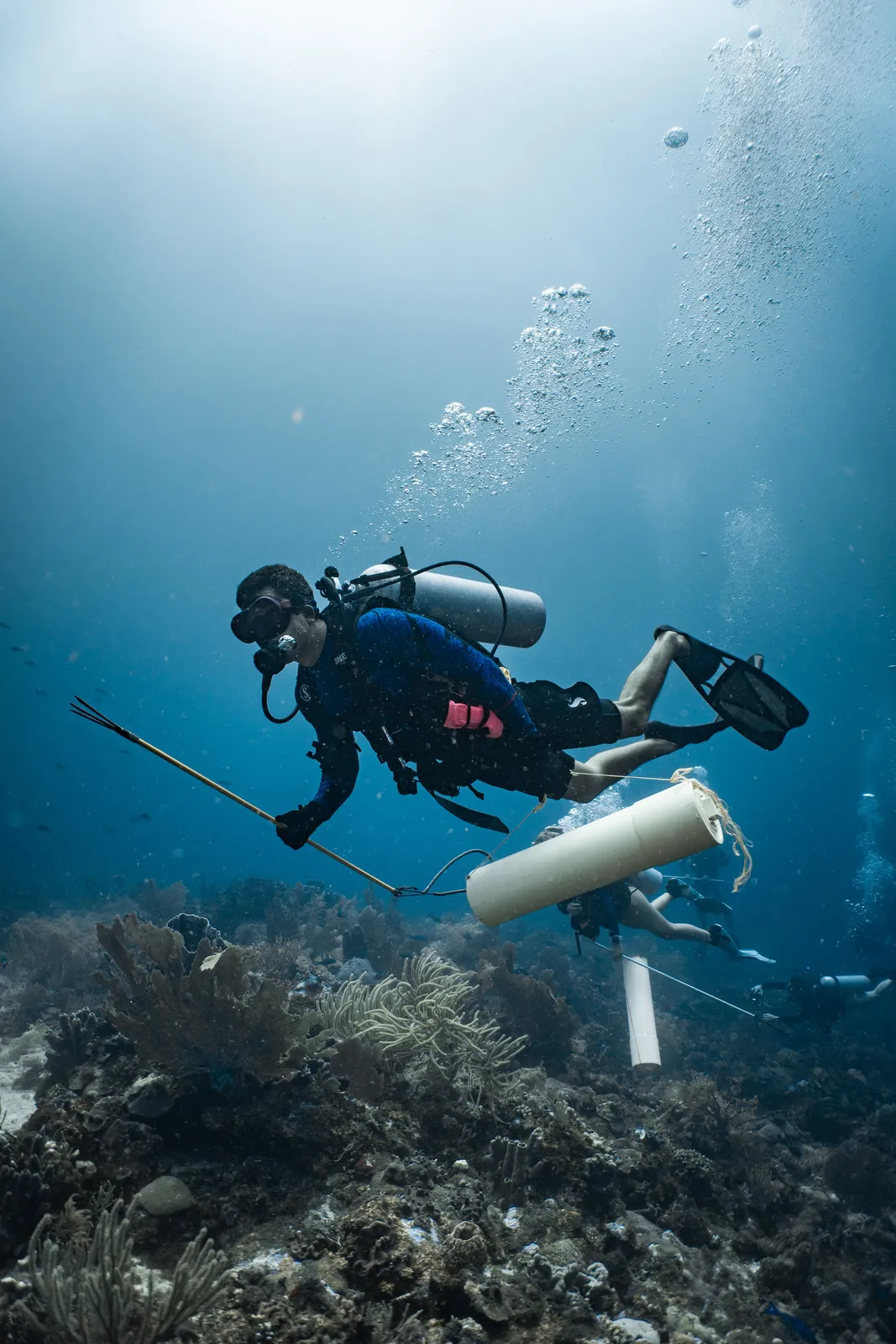
Long, easy dives on Isla Fuerte
Isla Fuerte is a wonderful place to learn just how far a tank can go, because so many of its 29 sites are shallow, warm and calm. Gentle reefs like Rosa Vieja and El Museo let you settle your breathing and simply enjoy, which naturally stretches your air.
Our certified instructors will help you read your gauge, plan a turnaround pressure and get more out of every fill. Warm 27 to 29 degree water also keeps consumption low. Plan your first long, lazy reef dive on our courses and dives page.