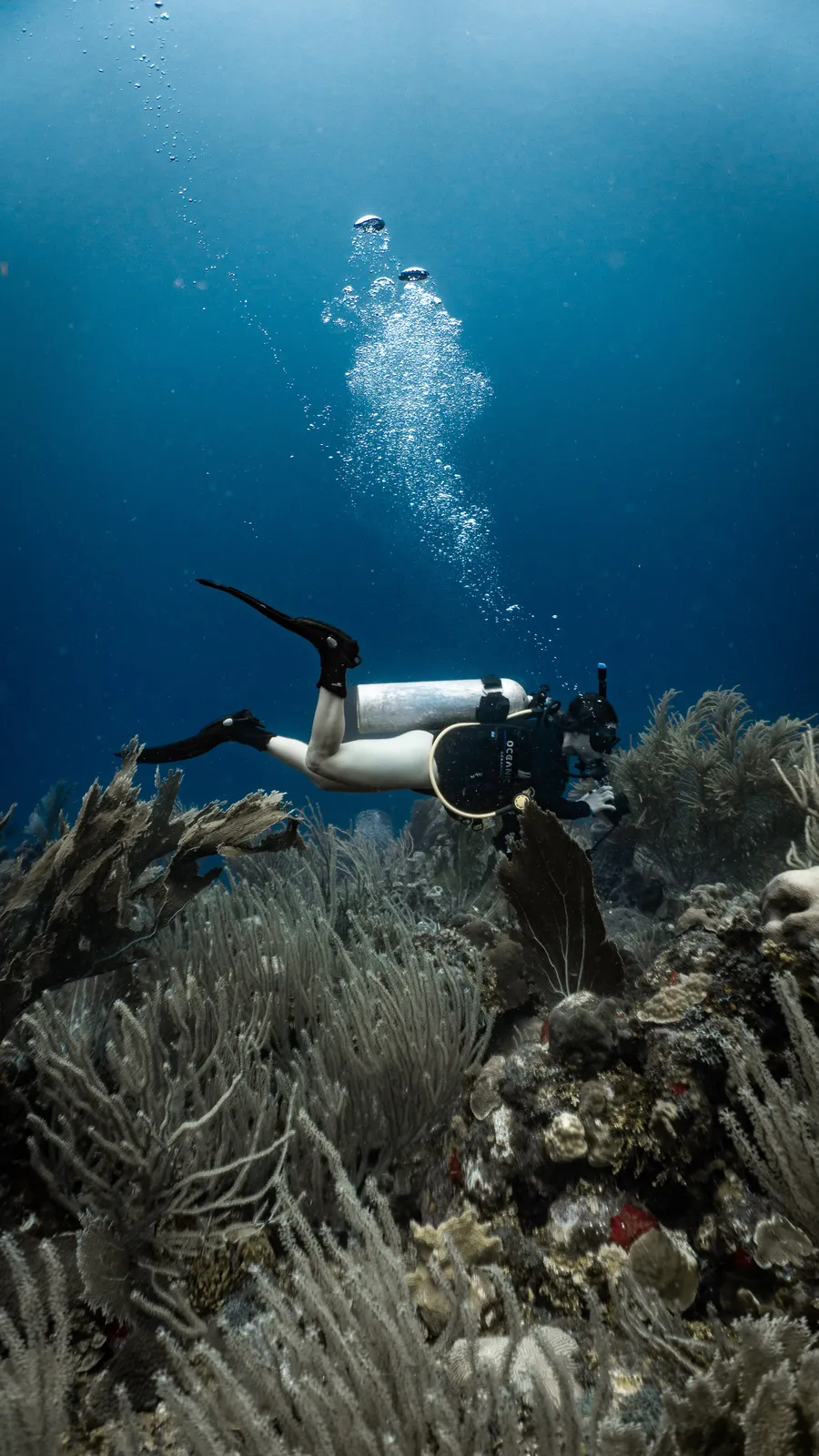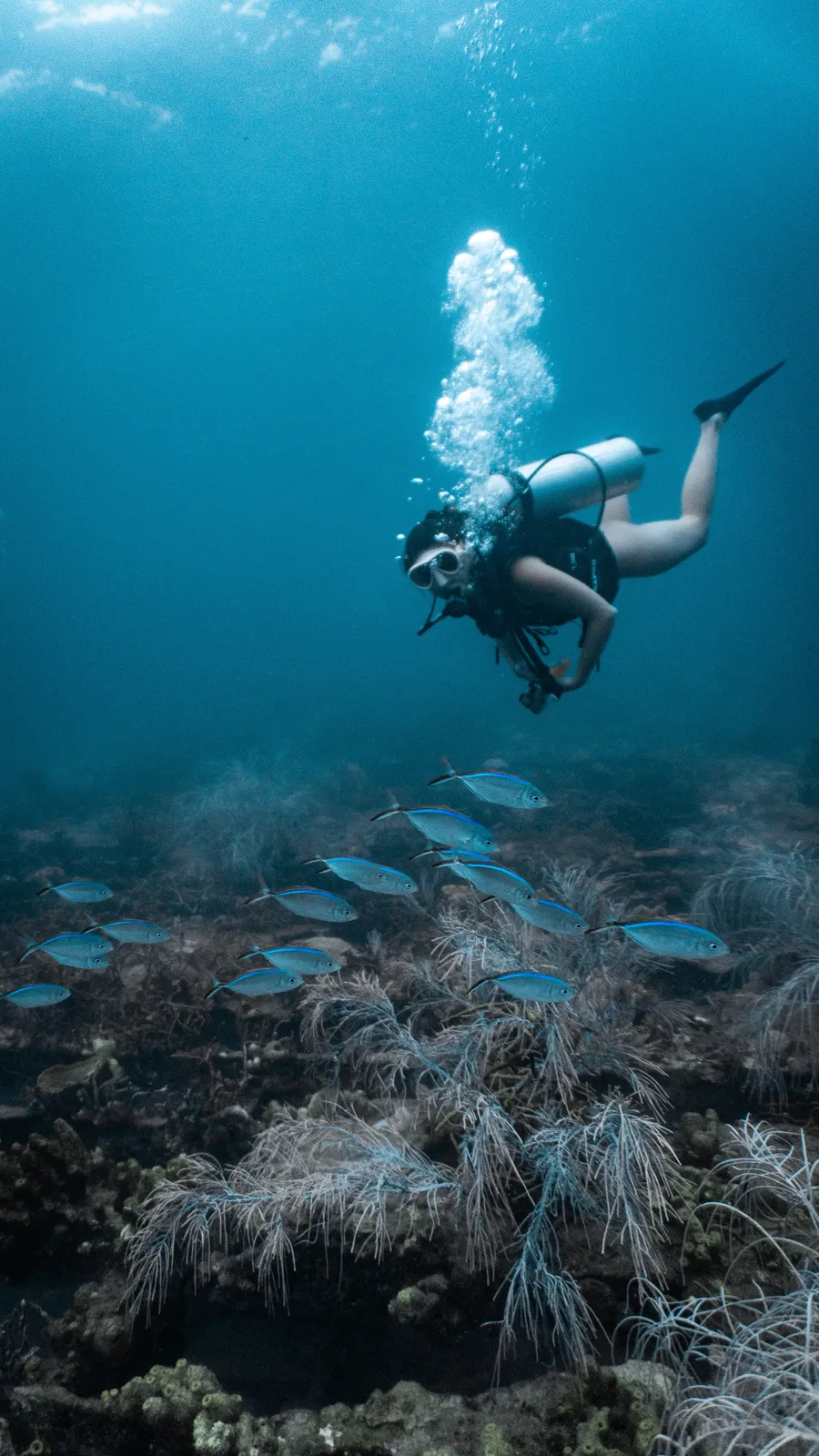
Almost everything divers do, from equalizing ears to planning ascents, comes down to one simple fact of physics: water is heavy, and the deeper you go, the more of it presses down on you. Pressure is the invisible force behind every rule you learn, and once you understand how it changes with depth, the rest of diving suddenly makes sense. It is not intimidating, just predictable, following a clean and reliable pattern. The warm, clear water of Isla Fuerte is a gentle place to feel these changes for the first time and understand them from the inside.
One atmosphere every ten meters
At the surface, the air alone already presses on you with what we call one atmosphere of pressure, or one bar. You never notice it because your body is built for it.
Water is far denser than air, so it adds pressure quickly. For every 10 meters you descend in seawater, the pressure increases by another full atmosphere. So at 10 meters you feel 2 atmospheres, at 20 meters 3, at 30 meters 4, and so on. This clean and steady relationship is the foundation of every dive table and computer.
Why your air spaces feel it
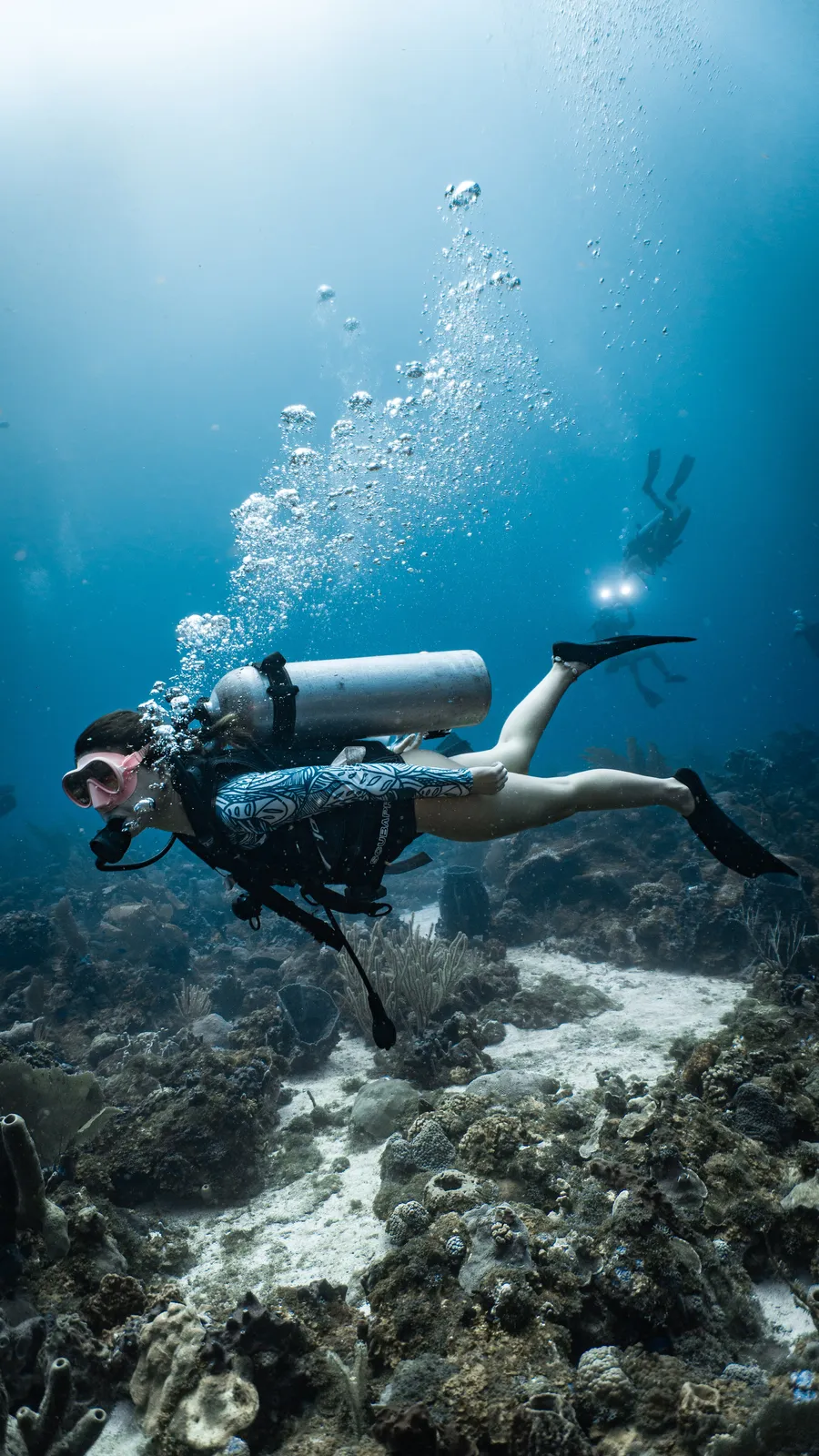
You do not feel pressure on your bones or muscles, because they are mostly solid and incompressible. What you feel are the air spaces in your body, mainly your ears and sinuses, and any air in your gear.
As pressure rises on the way down, those air spaces want to shrink, which is the pinch you feel in your ears. Equalizing simply adds a little air to balance them. This is also why you must never hold your breath: the air in your lungs expands as you rise and the pressure drops, and it needs somewhere to go.
How pressure shrinks air volume
There is a neat rule, Boyle's law, that captures the whole effect: as pressure doubles, the volume of a given amount of air halves. It explains several things divers notice:
- A balloon of air taken to 10 meters shrinks to half its surface size.
- Your wetsuit compresses a little at depth, so you lose some buoyancy.
- Your tank empties faster deep down, because each breath contains more compressed air.
- Your ascent must be slow, so expanding air and dissolved nitrogen release gently.
Every one of these follows directly from the same simple pressure-and-volume relationship.
Feeling physics on Isla Fuerte
The best way to truly understand pressure is to experience it gently, and Isla Fuerte is perfect for that. Many of its 29 sites are shallow, so you feel the biggest relative changes in the first 10 meters, exactly where a calm instructor can guide you through equalizing and breathing.
Nautilus is a PADI center with warm 27 to 29 degree water and certified instructors who explain the why behind every skill, not just the how. If reading about physics makes you curious to feel it, book a Discover Scuba or Open Water experience on our courses and dives page.