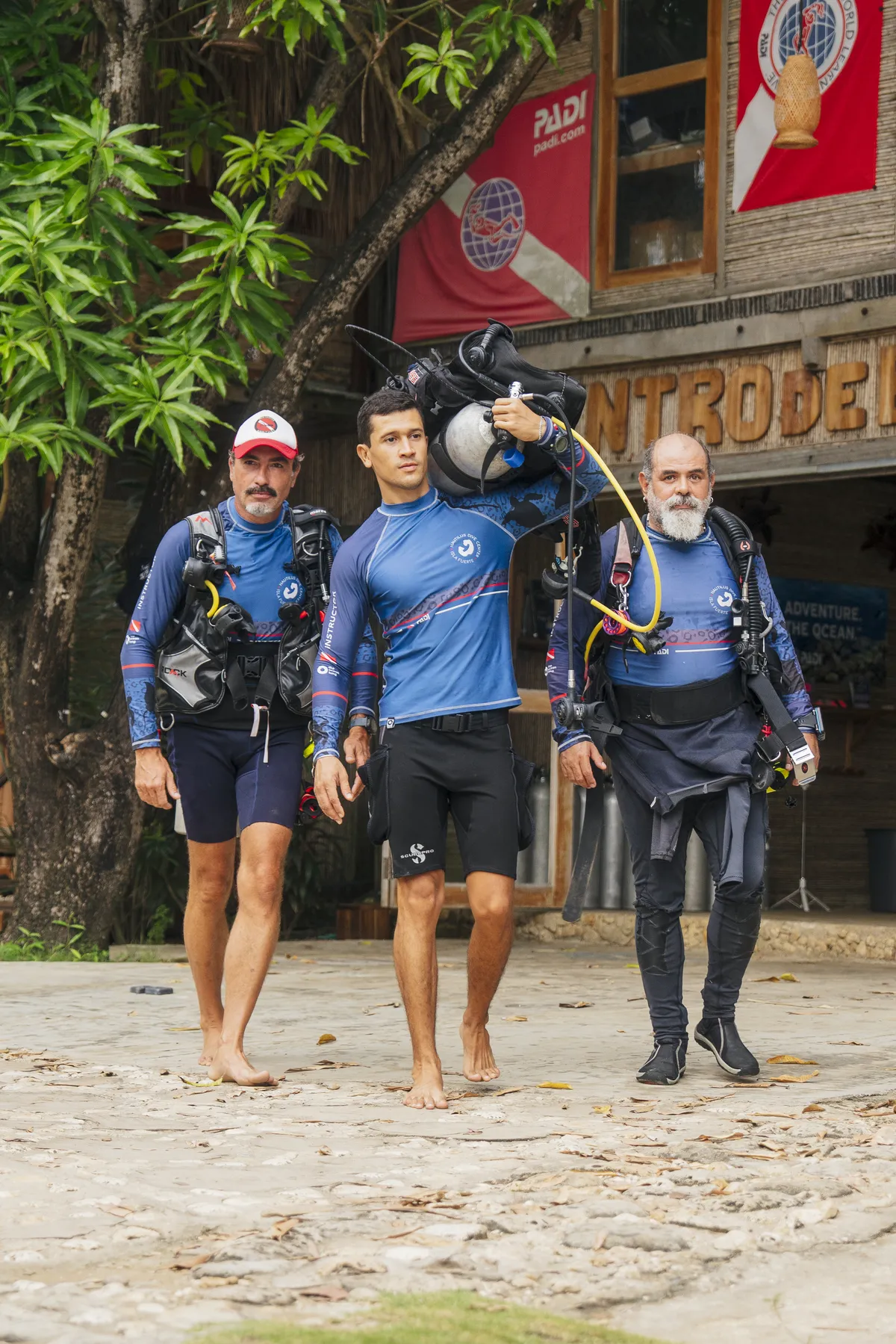
Fins are the most ancient idea in all of diving, borrowed straight from the fish and the frog, yet they remain the single most efficient way for a human to move through water. A good pair turns slow, lazy leg movements into smooth forward glide and lets you cover a reef without ever feeling out of breath. Understanding how they generate that thrust, and what the different styles are for, helps you swim better and choose the right pair. On Isla Fuerte, that easy propulsion is what lets you drift for an hour over coral without tiring.
Turning a kick into thrust
A fin works by increasing the surface area of your foot, so each kick pushes against a much larger column of water. Water is roughly 800 times denser than air, so even a gentle movement of a big blade shifts a lot of mass and drives you forward.
The key is that the blade flexes as you kick, forming a curved surface that directs water backward rather than just slapping it. Newton takes care of the rest: push water one way and it pushes you the other. That is why a slow, deliberate kick beats a fast, frantic one every time.
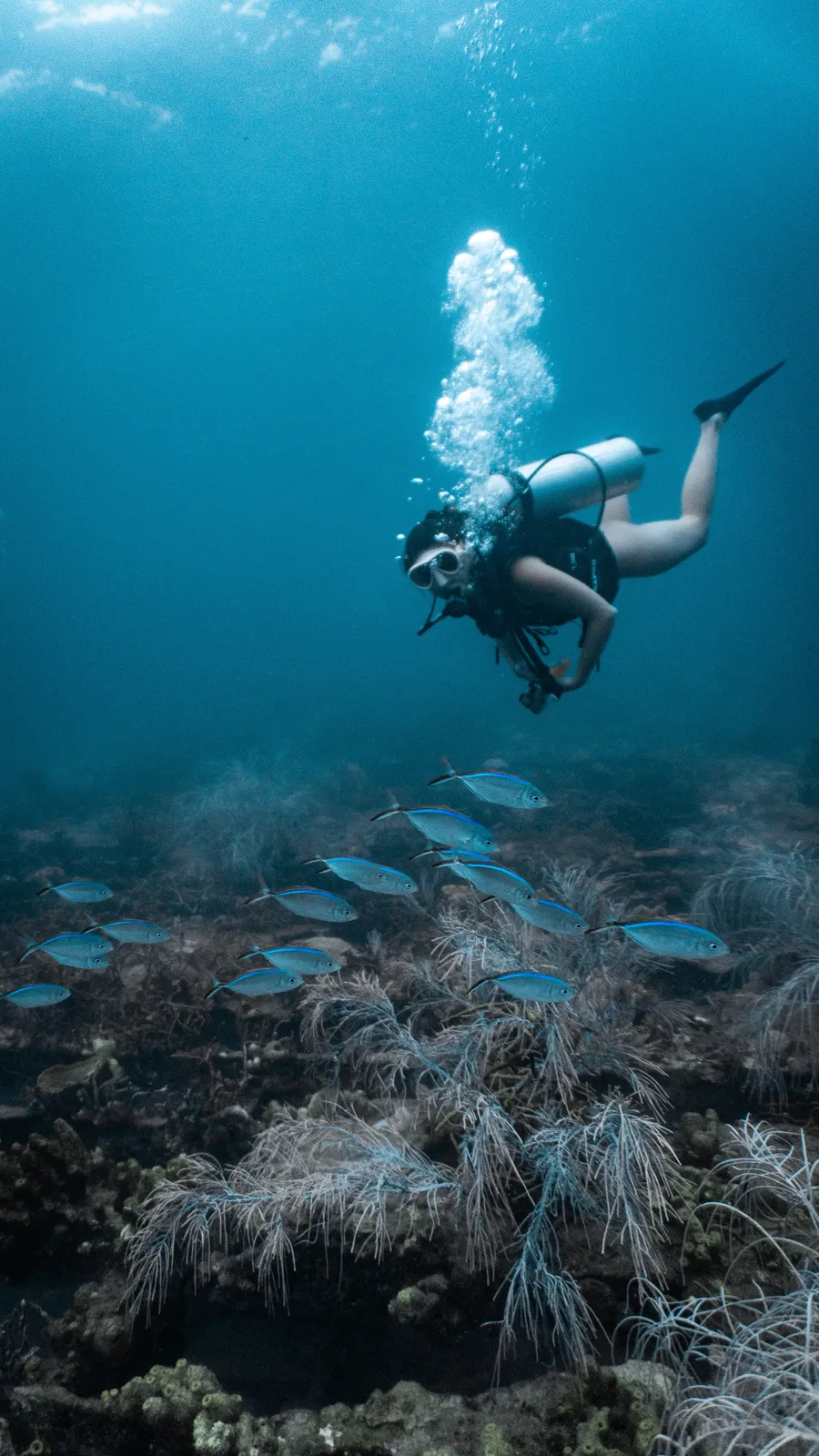
Full-foot versus open-heel
The first big distinction is how the fin attaches to your foot, and it shapes everything else. In short:
- Full-foot fins: worn like a slipper on a bare foot, light and simple, ideal for warm water and boat diving.
- Open-heel fins: worn over a neoprene boot with an adjustable strap, sturdier and warmer, better for shore entries and cooler water.
For warm tropical diving like Isla Fuerte, either works well, and rental fleets often carry both so you can find a comfortable fit.
Blade styles and kicks
Beyond the foot pocket, blades come in a few families, each suited to a style of kicking. Paddle fins are the classic stiff blade, great for powerful flutter kicks. Split fins divide down the middle and feel effortless with a fast, small flutter, though they give less push against current.
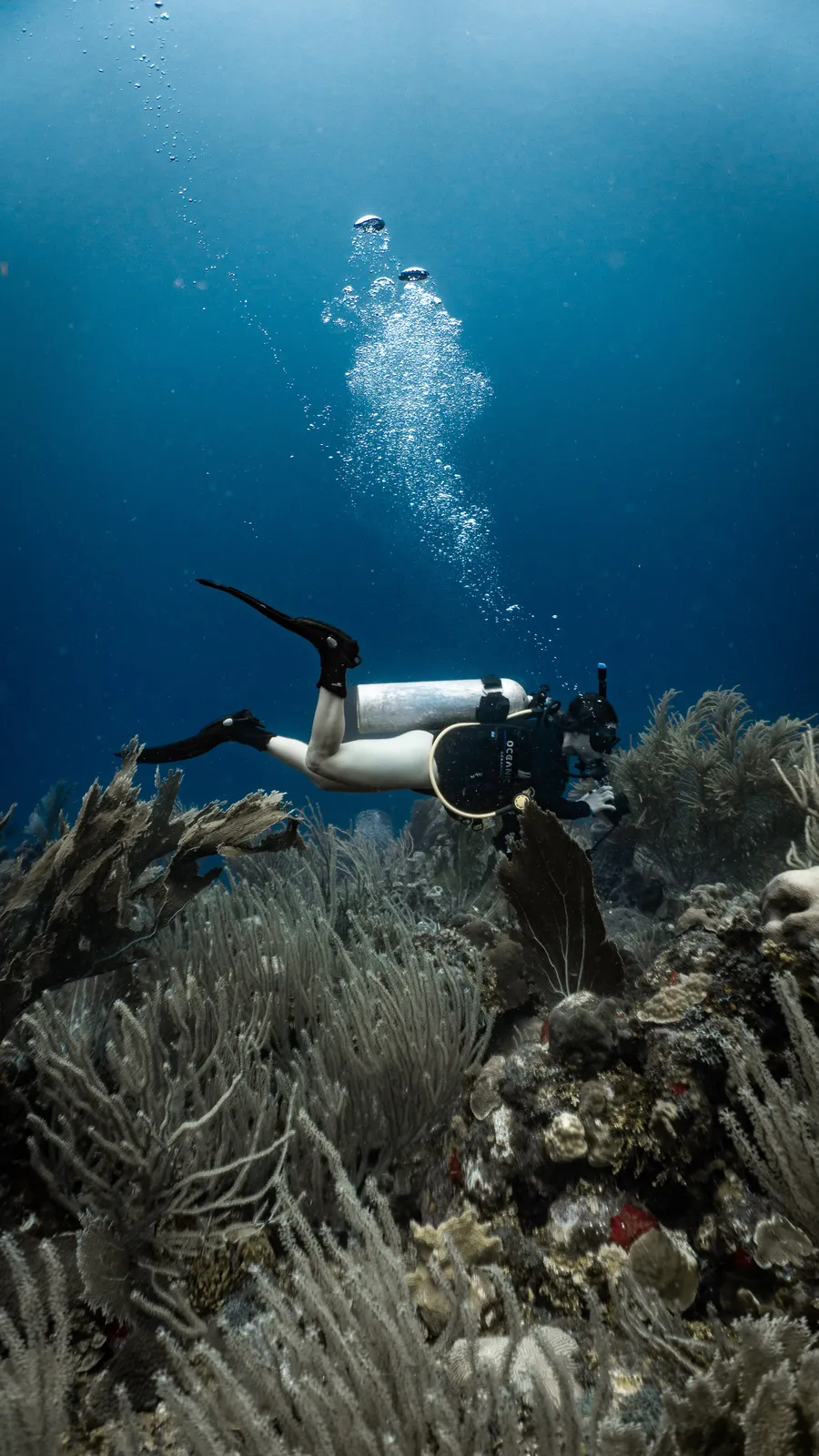
Many experienced divers prefer shorter, stiffer technical fins because they excel at the frog kick, a slow breaststroke-style movement that protects delicate coral by pushing water backward instead of down. The best fin is simply the one that matches your legs and the kick you want to master.
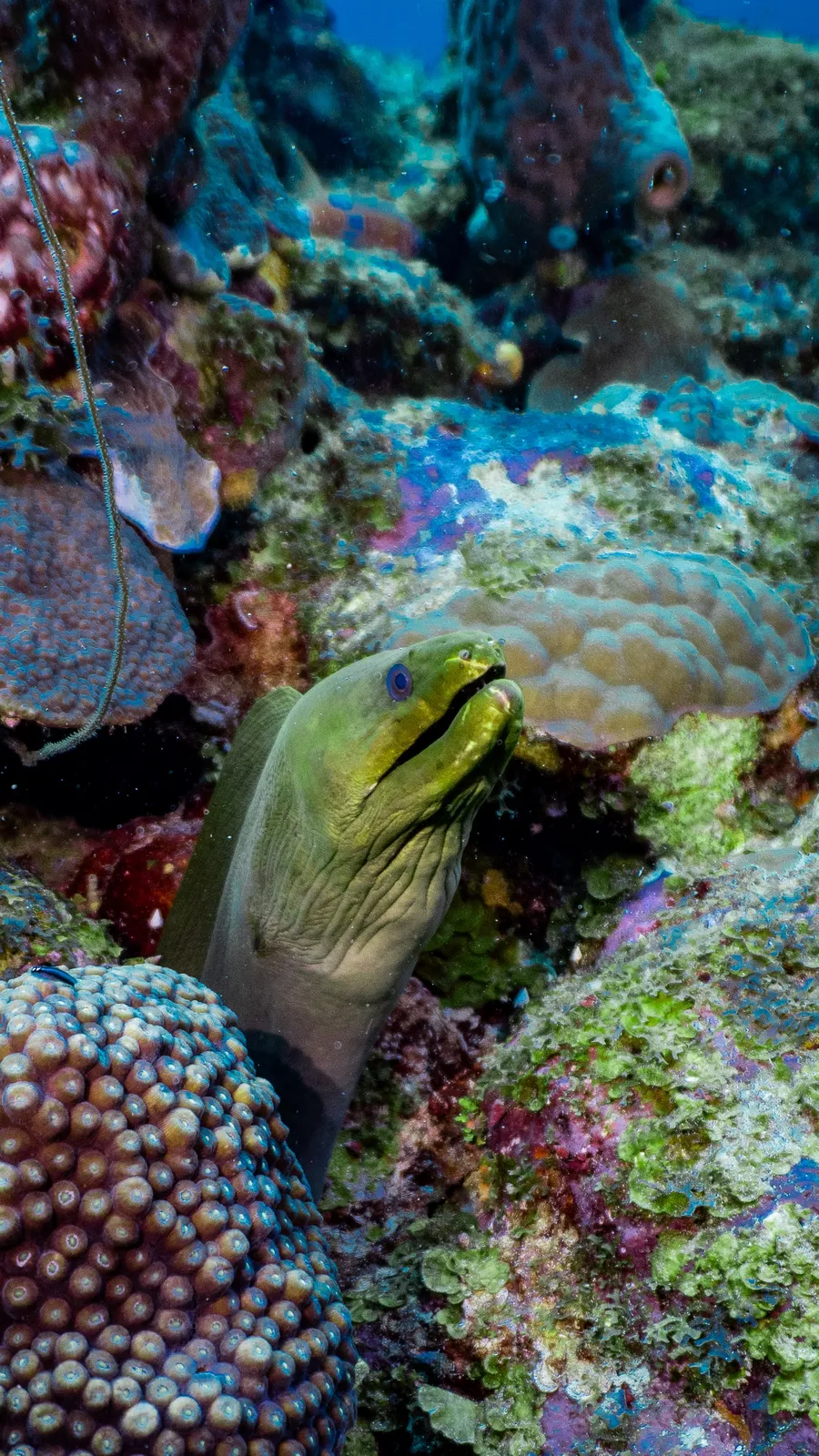
Gliding over Isla Fuerte's reefs
Good finning technique matters most exactly where the coral is healthiest, and Isla Fuerte has some of the best-preserved reefs of the continental Colombian Caribbean. A controlled frog kick keeps your fins well above the coral and protects the very thing you came to see.
Nautilus provides fins with all gear, and our certified instructors will help you dial in a relaxed, efficient kick during your dives and courses. It is one of the quickest skills to improve. Book a reef dive and feel the difference on our courses and dives page.