You cannot hold a normal spoken conversation while scuba diving, because the regulator in your mouth and the dense water make speech impossible to understand. Instead, divers communicate with a clear, standardized set of hand signals that everyone learns during training. You can make muffled sounds around the regulator, but they do not carry meaning the way words do above water. For anything important underwater, divers point, gesture and use signals, and it works remarkably well. Full-face masks with electronic communication units do exist, but they are specialist gear, not part of a normal recreational dive.
Why speech does not work
Two problems stop underwater talking. Your regulator fills your mouth so your lips and tongue cannot form words, and water is far denser than air, distorting any sound you do make.
The result is unintelligible mumbling. This is why every training agency teaches a visual language instead.
The universal hand signals
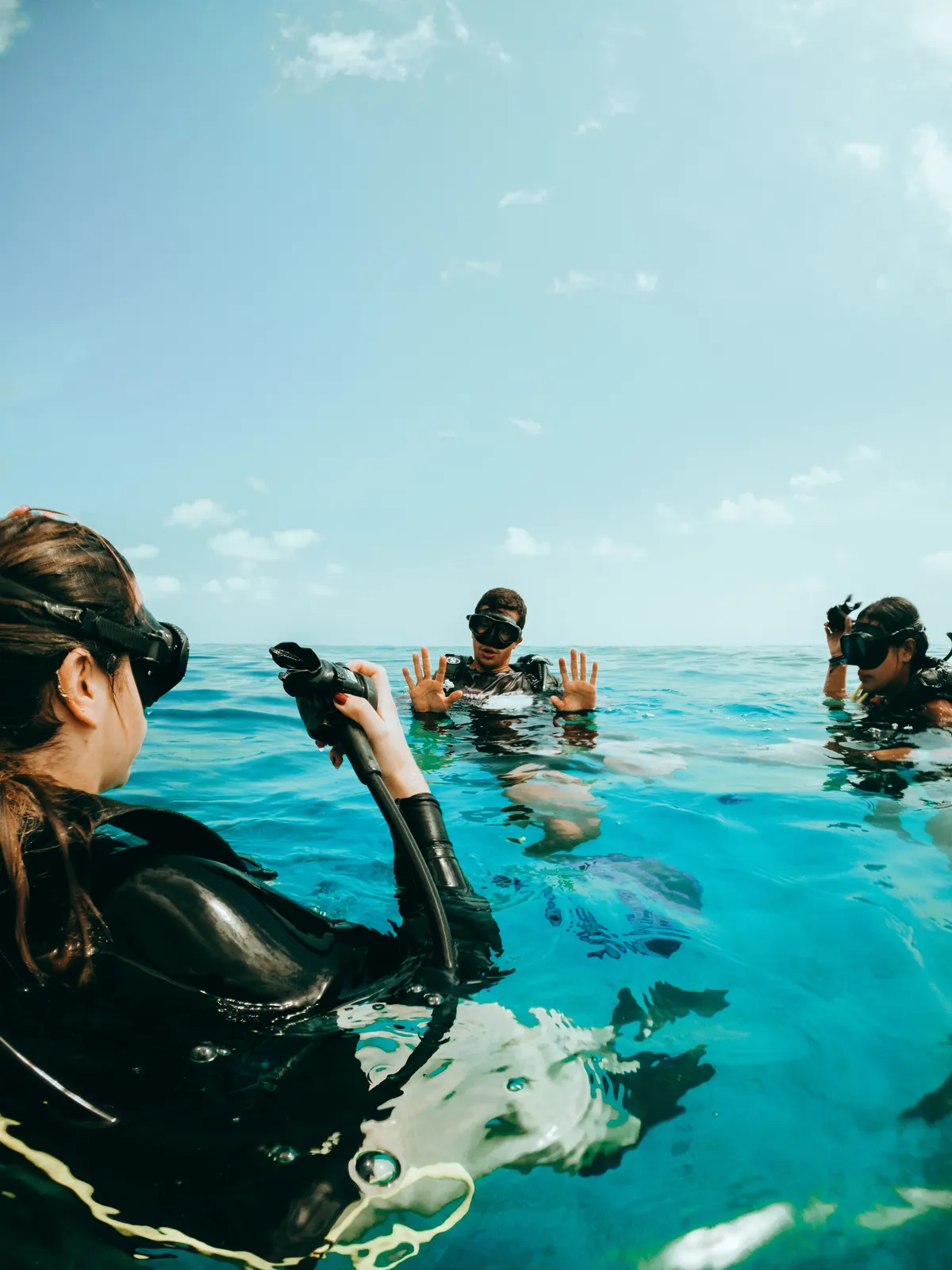
Divers rely on a shared vocabulary of gestures. The essentials include:
- OK: thumb and finger in a circle
- Up or down: thumb pointing that way
- Problem: flat hand rocking side to side
- Out of air: hand slicing across the throat
- Low on air: fist to the chest
You learn these in your first lessons, and they are the same worldwide, so you can dive with a stranger in any country and still understand each other. A handful of clear gestures turns out to be all the language a good dive needs.
Other ways divers communicate
Beyond hands, divers get creative. A tank banger or a shake makes a noise to get attention, and a slate or wet notes lets you write short messages.
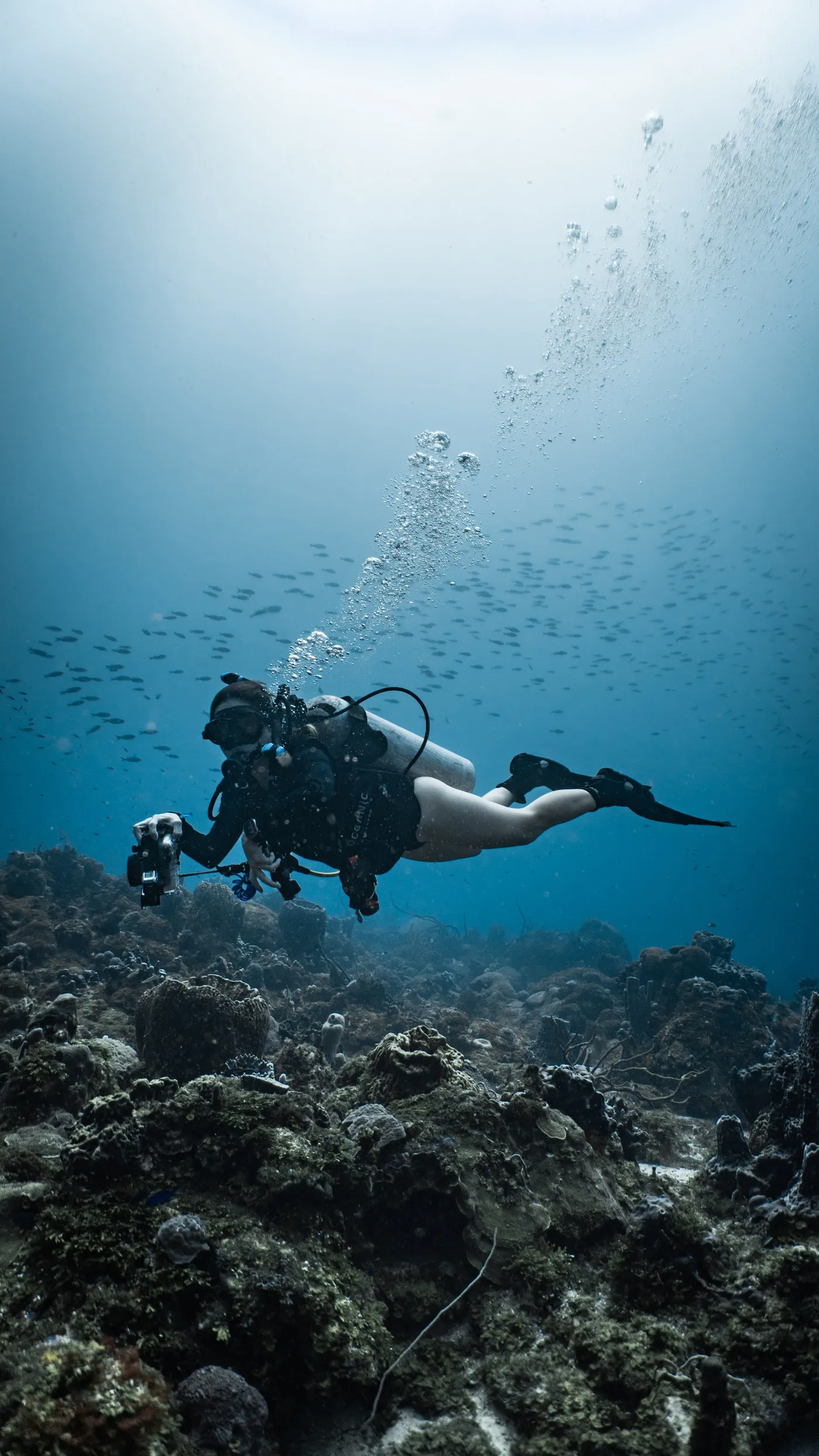
Eye contact and pointing cover most reef sightseeing. Good buddies develop an easy, intuitive rhythm over a few dives together, often understanding each other with just a glance. Over time, this quiet teamwork becomes one of the quietly satisfying parts of diving with a regular partner.
What about full-face masks?
Some professional and technical divers use full-face masks with built-in microphones, allowing real voice communication. These are common for commercial, scientific and rescue work.
For everyday recreational diving, though, they are rarely used. Hand signals are simpler, cheaper and perfectly effective for exploring a reef.
Learn the language in Isla Fuerte
Every Nautilus dive starts with a briefing where we review the hand signals you will use, so you and your instructor stay in easy communication throughout the dive. In the calm reefs of Isla Fuerte, that silent language quickly becomes second nature.
Part of the magic of diving is trading the chatter of the surface for a quieter, more mindful way to connect. Explore our courses and dives and learn to speak fluent reef.