The blue-ringed octopus is one of the ocean's most beautiful and most dangerous animals, a golf-ball-sized creature whose electric blue rings flash as a warning. Its venom is powerful enough to be life-threatening, yet it is shy, tiny and never aggressive if left alone. Divers travel to the Indo-Pacific specifically to photograph one, and finding it is a highlight of any macro trip. This guide covers where it lives, when to look, and the golden rule that keeps the encounter safe: look, never touch.
Where it lives
The blue-ringed octopus is found only in the Indo-Pacific, favoring shallow, warm reef and rubble habitats.
- Indonesia (Lembeh, Bali, Ambon): the reliable heart of blue-ring territory.
- The Philippines (Anilao, Dauin): macro capitals where guides know the spots.
- Australia: from tropical Queensland to the temperate south.
- Japan and Papua New Guinea: seasonal and site-specific sightings.
They favor sand, shells and small crevices, often near the debris of the shallows.
When to look
These octopuses can be found year round in the tropics, but the dry seasons that bring calm seas and clear water make macro spotting far easier. In Indonesia and the Philippines, roughly April to November offers the best conditions.
They are often more active toward dusk. A skilled muck-diving guide is worth their weight in gold here, because spotting a coin-sized octopus among rubble is genuinely difficult.
Look, never touch
This is the one animal where the standard reef advice becomes a strict safety rule. The blue-ringed octopus carries tetrodotoxin, and its bite can be painless yet serious. It bites only when handled or cornered.
Keep your hands to yourself, do not pick up shells or bottles without looking, and never try to provoke the blue rings for a photo. Admired from a respectful distance, it is a perfectly safe and unforgettable subject.
The same wonder, closer than you think
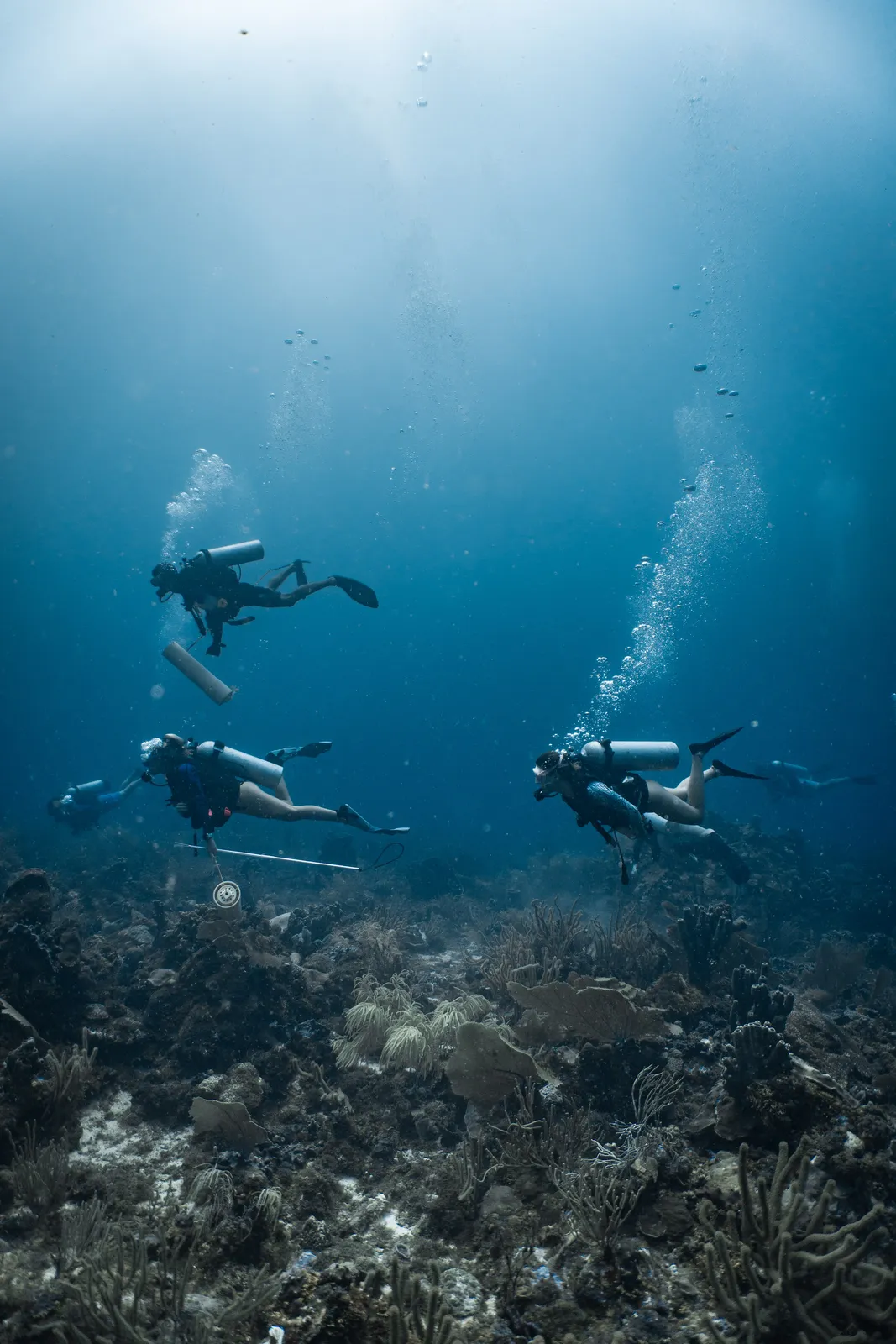
The blue-ringed octopus belongs to the Indo-Pacific, but the thrill of finding tiny, cryptic creatures is available much closer to home. On the quiet reefs of Isla Fuerte in the Colombian Caribbean, patient divers hunt for octopus, seahorses, nudibranchs and other small wonders that reward a slow, careful eye.
Nautilus teaches exactly that kind of mindful diving, in warm 27 to 29°C water across 29 lightly dived sites. It is the perfect place to learn the observation skills that make macro trips abroad so rewarding later. Start with our courses and dives, or browse experiences to design your first critter hunt.