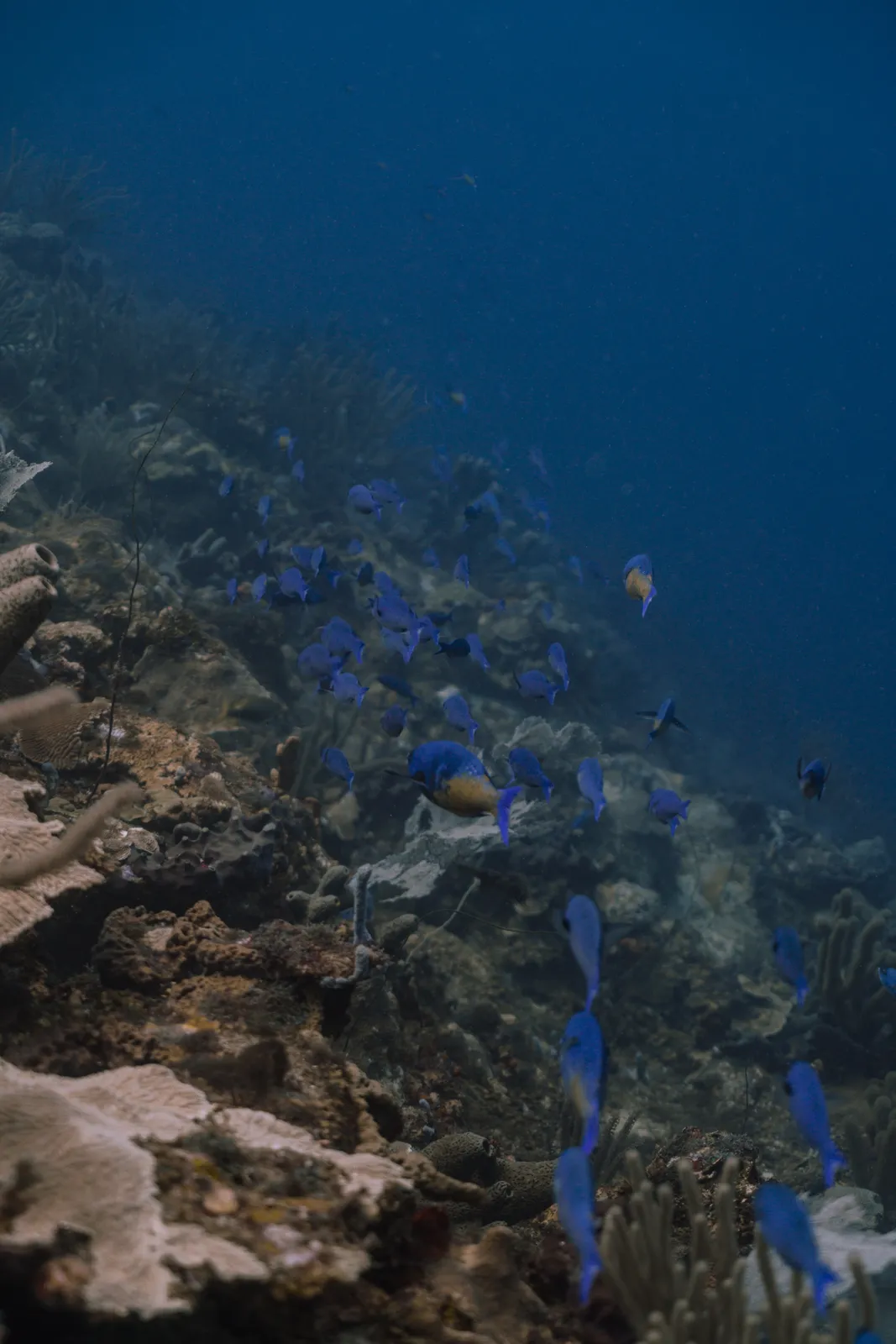
The parrotfish is one of the reef's most colorful and important residents, named for the fused, beak-like teeth it uses to scrape algae from coral. Its grazing keeps reefs healthy, and in doing so it performs an astonishing feat: it produces the white sand of tropical beaches. A single big parrotfish can create hundreds of kilograms of sand a year. Its constant grazing also clears space for young corals to settle and grow, making it one of the reef's most valuable gardeners. The next time you walk a Caribbean beach, remember you may be standing on parrotfish work, and on proof of a living, healthy reef nearby.
How to recognize it
Look for a bright, boldly colored fish with a distinctive beak formed by fused teeth, giving it a parrot-like face. Colors range through blue, green, pink and yellow.
Many parrotfish change color and even sex as they mature, so males and females of the same species can look completely different, which once confused scientists into naming them separately.
How it makes sand
The parrotfish scrapes algae and coral with its beak, and in the process it swallows bits of the hard coral skeleton. Inside its gut, powerful plates grind that coral into fine fragments.
What comes out the other end is clean white sand. Over a year a large parrotfish can produce hundreds of kilograms of it, quietly building the beaches we love.
Behavior and where it lives
Parrotfish graze the reef all day, and you can sometimes hear them crunching on coral. By night many wrap themselves in a mucus cocoon that hides their scent from predators.
They live on tropical reefs worldwide, including the Caribbean, so they are common on the reefs of Isla Fuerte, where their crunching and flashing colors are part of every dive.
Conservation
Parrotfish are among the most important fish for reef health, because their grazing stops algae from smothering coral. Where parrotfish are overfished, reefs often decline and turn algae-choked.
Protecting parrotfish, and not eating them, is one of the simplest ways to keep coral reefs and white-sand beaches alive for the future.
A diver's note from Isla Fuerte
The white sand around Isla Fuerte is, in part, a gift from its parrotfish, and the island's well-preserved reefs are full of them. As a PADI AWARE center running coral restoration and Reef Check monitoring, Nautilus works to keep these grazers, and the reefs they build, thriving.
Hear the reef crunch for yourself on our courses and dives, and learn more through our conservation experiences.